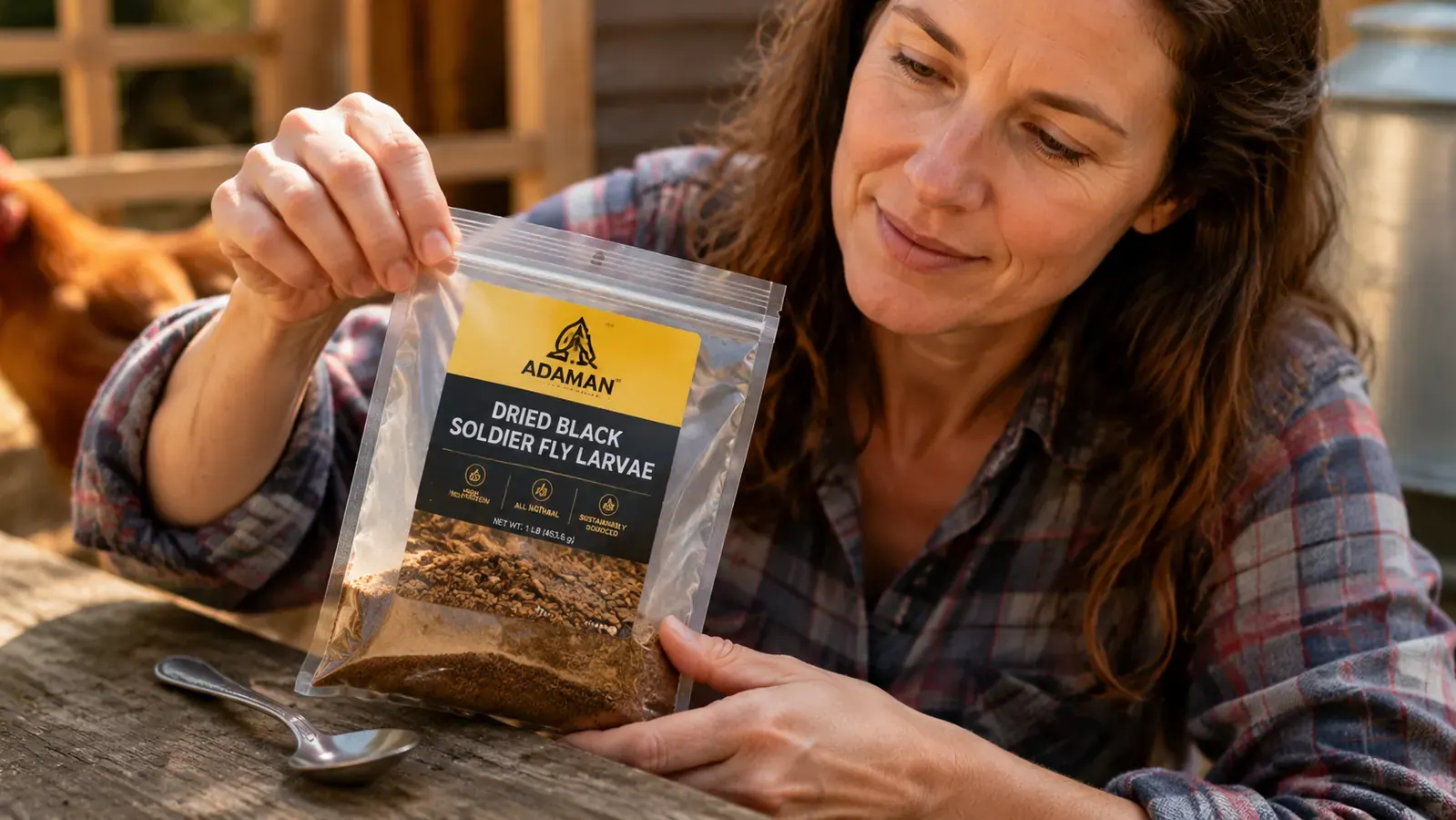
The bag arrived on a Tuesday and I knew immediately something was different. Not bad, exactly, but definitely not something I wanted to open inside the house. My daughter, Maren, walked into the mudroom, took one sniff, and asked if something had died in the recycling bin. That is how the Adaman Dried Black Soldier Fly Larvae 5 LBS entered our coop routine. I want to be upfront: this is not the review where I tell you the larvae smell like fresh air and my hens immediately looked five years younger. This is the review where I tell you everything the listing does not, including the shipping smell, the ration math, the dust at the bottom of the bag, and the one kind of flock keeper who probably should not buy the 5 LB size at all.
I keep six hens in a converted garden shed coop: two Buff Orpingtons, two Barred Rocks, and a pair of Easter Eggers. Marge, the dominant Buff, is the reason I buy anything in bulk. She will find a way to empty any feeder faster than physics should allow. After reading a bunch of comparisons between BSFL and dried mealworms, I decided to run a six-week honest test on the Adaman bag. Here is what I found.
The Quick Verdict
Excellent nutritional profile and flock enthusiasm, but the shipping smell is real, the bag needs a proper storage container, and small flocks should size down to avoid freshness issues.
Amazon Check Today's Price →Still feeding dried mealworms and wondering why your shells are soft?
BSFL have roughly 85 times more calcium than mealworms by weight. If you have a hen laying tissue-paper shells and you are already offering oyster shell on the side, this is the treat to try before you call the vet.
Amazon Check Today's Price on Amazon →The Shipping Smell: What Nobody Tells You
Let me save you the mudroom moment. When five pounds of dried insect larvae ship across the country in a poly bag inside a cardboard box, things get a little funky, especially if transit takes four or five days in warm weather. The smell is not rotten, it is more of a concentrated, earthy, fishmeal-adjacent odor. It fades once the bag is opened and given some air, and the larvae themselves do not smell bad once they are scattered in the feed bowl. But opening that package for the first time in an enclosed space is a commitment.
My practical fix: I now open new bags outside or in the garage and let them breathe for ten minutes before bringing them inside. If yours arrives and you think something has gone wrong, hold off before returning it. Give it air for a few minutes. If the larvae are dry, intact, and tan-to-dark-brown in color, they are fine. The smell is the shipping, not spoilage.
The Ration Math: How Much Per Hen, How Long the Bag Actually Lasts
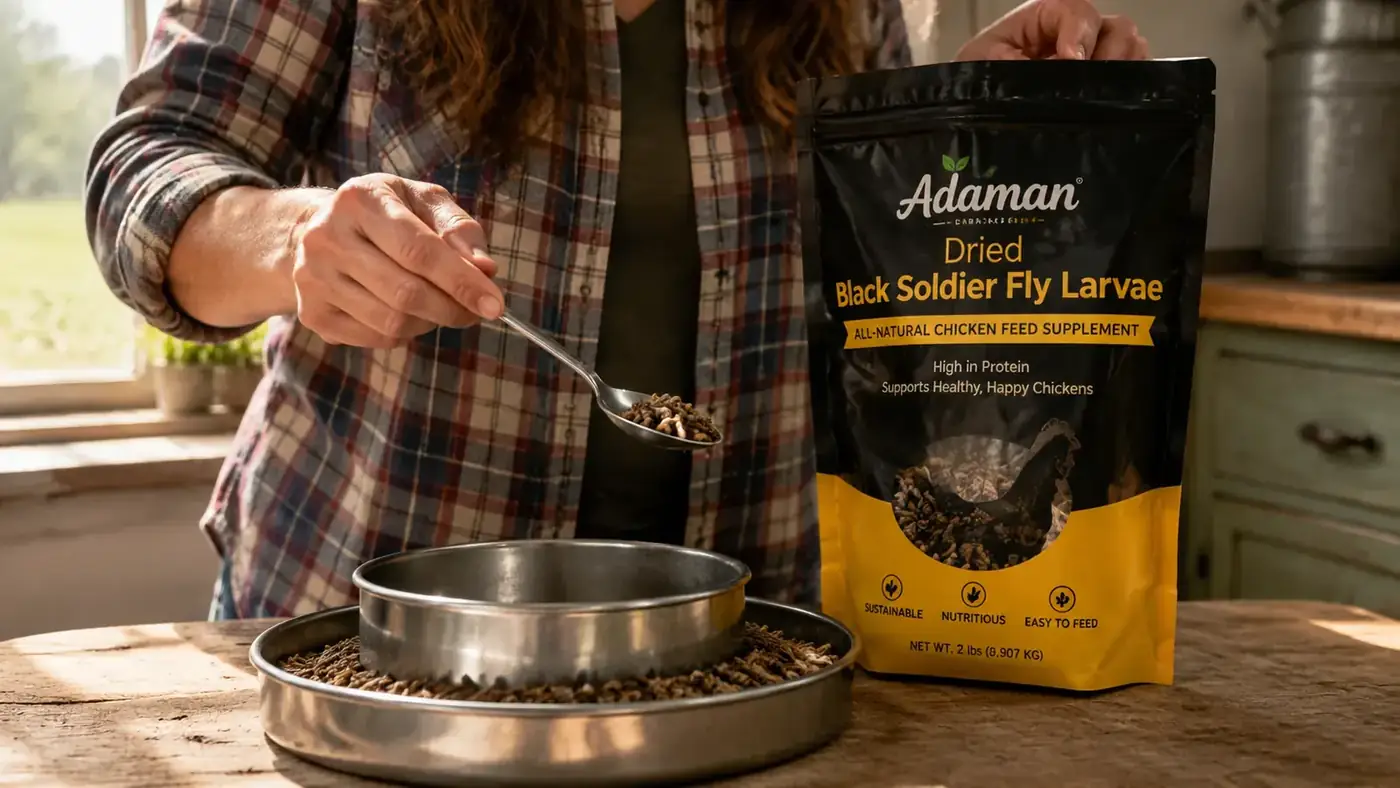
Most listings say something vague like 'feed as a treat.' That is not useful when you are standing in the run at 7am trying to figure out how much to scoop. So I did the math. The generally accepted guideline for high-protein treats is that they should not exceed 10 percent of a hen's total daily diet. A laying hen eats roughly a quarter pound (about 4 ounces or 110-120 grams) of feed per day. Ten percent of that is 11-12 grams of treats per bird. One rounded tablespoon of BSFL weighs roughly 8-9 grams. So for six hens, I am feeding six tablespoons total per day, split across two feedings.
At that rate, five pounds (2,268 grams) of BSFL lasts my flock of six about 42 days, or six weeks. For a flock of ten, you are looking at roughly 25 days. For a flock of three, that same bag could last you nearly three months if you keep to the 10 percent rule. That last scenario is where I would pause before buying the 5 LB size, and I will come back to that. But for a flock of six or more, this bag size makes sense economically.
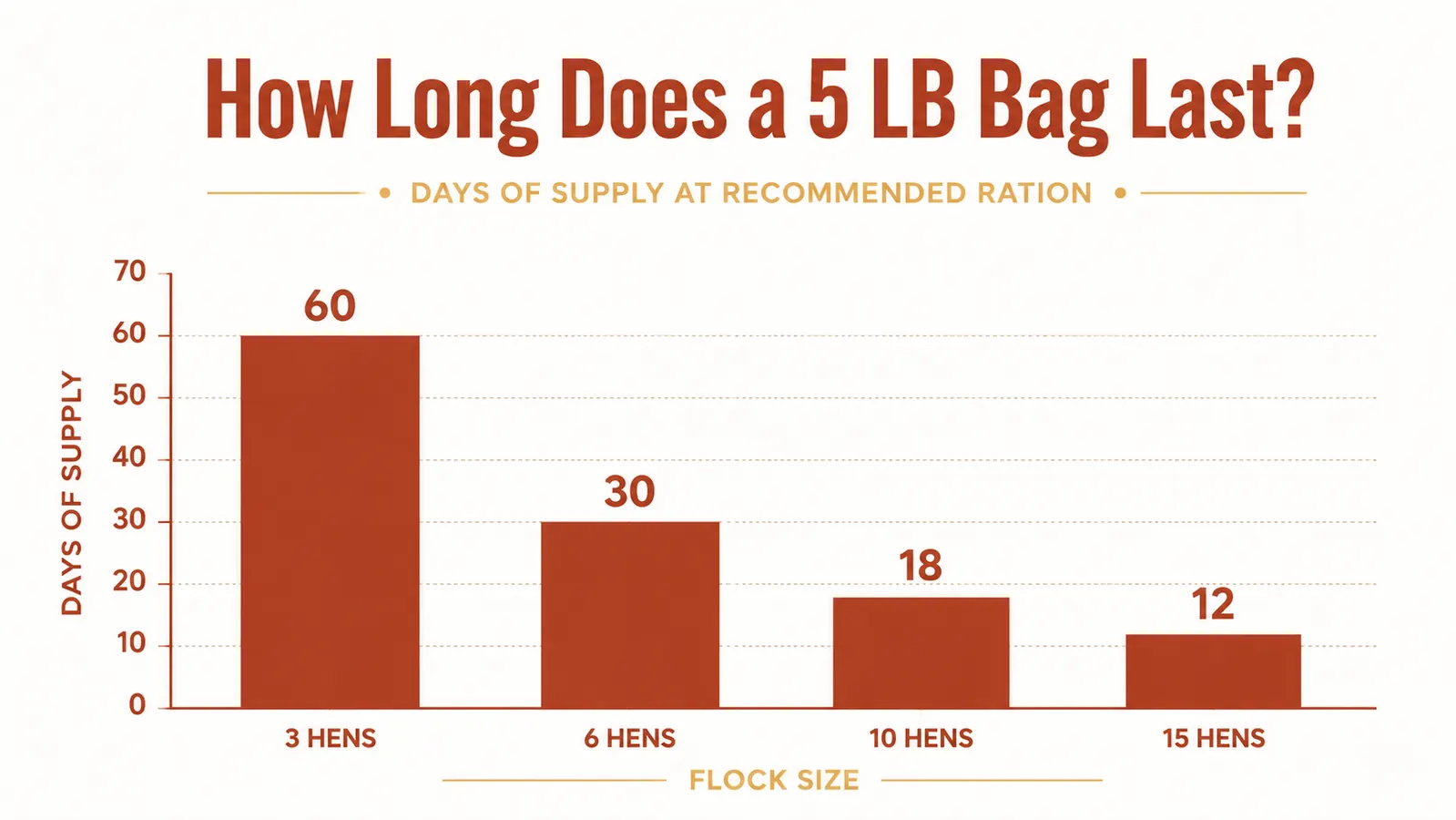
One rounded tablespoon weighs about 8-9 grams. Six hens, two feedings a day, and a 5 LB bag lasts exactly six weeks. That is the math the listing does not do for you.
The Storage Container Nobody Mentions
The resealable zipper on the Adaman bag is fine for the first week. After that, it starts to give you trouble. The bag is heavy, the zipper is narrow, and larvae spill if you are not precise. More importantly, an improperly sealed five-pound bag stored in a warm garage will pick up ambient moisture and start to clump. I lost about half a pound to a soft, stuck mass in the bottom corner before I figured this out.
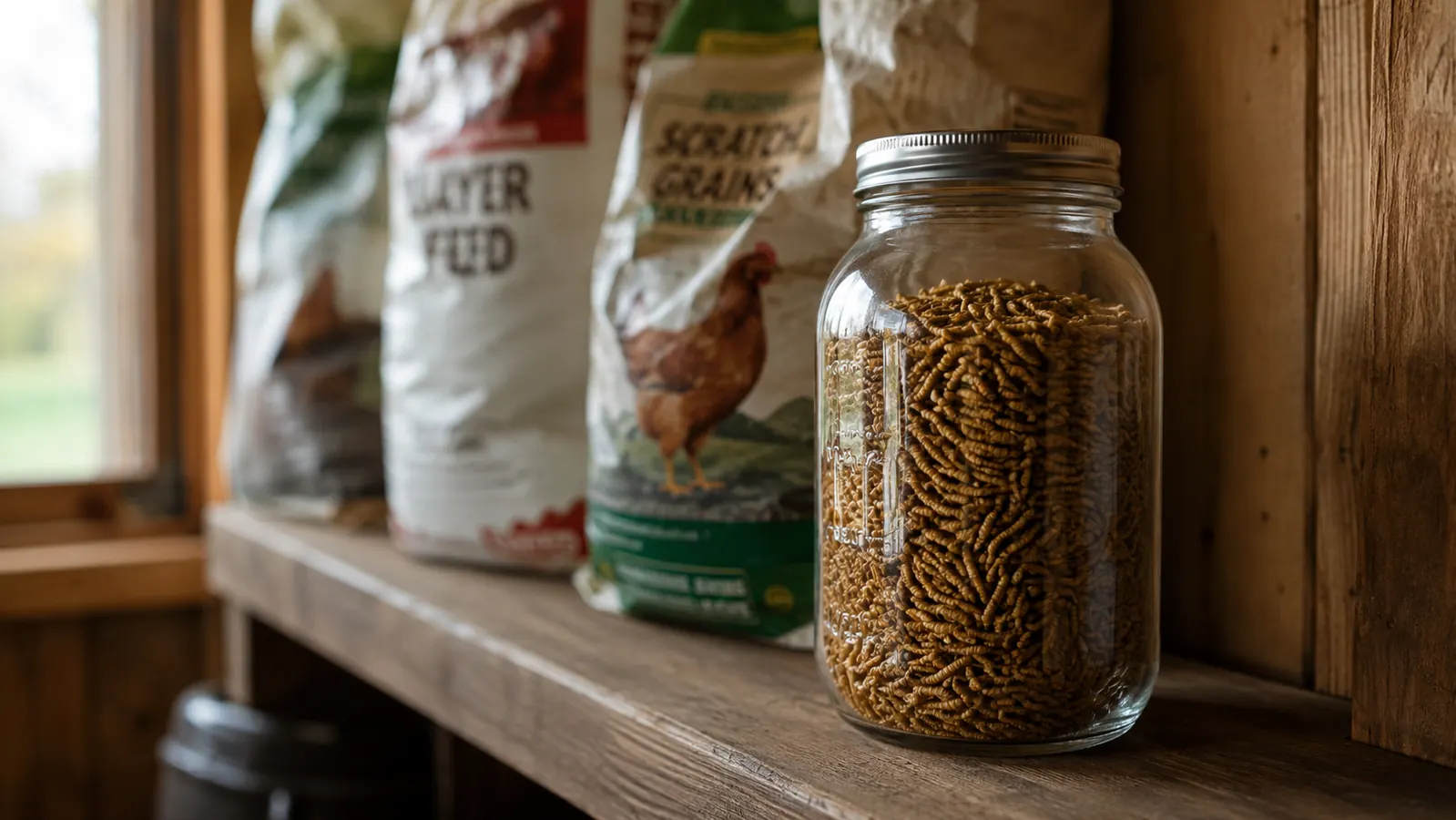
The fix is simple but nobody in any review I read mentioned it: transfer the whole bag to a wide-mouth glass jar or a hard plastic pet food canister the same day it arrives. I use a half-gallon wide-mouth mason jar for the first portion and a one-gallon glass jar for the rest. Stored this way, in a cool pantry or a climate-controlled mudroom, the larvae stay crispy and separate for months. The glass also keeps out any ambient smells from your feed storage area, which matters because dried BSFL will pick up odors from neighboring bags of scratch or cracked corn.
Is BSFL Actually Better Than Mealworms Long-Term?
The nutritional argument for BSFL over dried mealworms is real, not marketing. Black soldier fly larvae are approximately 40 percent protein and 30 percent fat, which is on par with mealworms. Where they pull ahead decisively is calcium: BSFL have a calcium-to-phosphorus ratio that supports bone and eggshell development far better than mealworms, which are actually calcium-negative at the wrong doses. For a laying flock, that matters.
After six weeks on Adaman BSFL as the primary treat (replacing dried mealworms entirely), here is what I noticed. Eggshells on all six hens became noticeably harder by week three. I do the fingernail press test on every egg before washing, and I went from cracking two or three thin-shelled eggs a week to zero. Feather quality on my younger Easter Egger, Juniper, improved too. She had been mid-molt when I started and her new feathers came in glossier than the previous set. I cannot credit all of that to the BSFL alone, but she also started eating more of her layer pellets alongside them, not less, which matters.
The only long-term caution I have is behavior, not nutrition. My hens figured out very quickly that I am the person who brings the good stuff. Within two weeks they were crowding the run gate at any hour, not just feeding time. One Barred Rock, Greta, developed a habit of flying at my hand before I could scatter the larvae. That is a training problem on my end, not a product problem, but it is worth knowing: BSFL are so palatable to chickens that they can make your birds pushy in a way that dried mealworms did not, at least with my flock.
Why I Had to Cut Back (and How I Fixed the Ratio)
Around week four I started noticing something that made me nervous. My hens were eating noticeably less layer pellet. Marge, the dominant Buff who normally cleans the feeder every morning, was leaving half of it. At first I thought there was a problem with the pellet bag, maybe moisture had gotten in. But the pellets were fine. The issue was that I had drifted from the six-tablespoon total I started with up to about twelve or fourteen tablespoons per day because the hens were so enthusiastic and, frankly, because it was fun to watch.
When treats make up 20 percent or more of a hen's diet, her appetite for balanced layer feed drops. That is a problem because the layer pellet provides calcium, vitamins, and amino acids that BSFL alone cannot fully replace. I went back to six tablespoons total for six hens, strict, for two weeks. Pellet consumption returned to normal by day ten. Eggshell quality did not suffer during the cut-back period, which suggests the BSFL I had already fed contributed to some residual calcium stores. But I am now much more deliberate about measuring. The tablespoon is sitting in the jar, not the bag, so I have to scoop and count.
What I Liked
- Noticeably harder eggshells within 2-3 weeks at proper ration
- Flock enthusiasm is immediate and consistent, good for bonding and hand-taming young birds
- Calcium-to-phosphorus ratio is meaningfully better than dried mealworms for laying hens
- 5 LB size is economical for flocks of 6 or more at roughly 6 weeks of supply
- Larvae are dry, clean, and uniform in size across the bag
- Dust at the bottom is normal, harmless, and actually easy to scatter into feed or mix with water
Where It Falls Short
- Shipping smell is strong on arrival, especially in warm weather; open outside the first time
- The resealable bag zipper is mediocre for a 5 LB bag; transfer to a jar immediately
- Hens become treat-addicted quickly, requiring discipline about daily ration limits
- 5 LB bag is too much for flocks of 3 or fewer unless you plan to share with a neighbor or freeze a portion
- No scoop or measuring guide included in the bag
What the Dust at the Bottom of the Bag Actually Is
About halfway through a fresh bag you will start seeing a layer of fine brown powder accumulating at the bottom. Some reviewers panic about this and think the product has degraded or been contaminated. It has not. That dust is simply broken larva fragments, the inevitable result of shipping a bag of dried insects across the country. Dried BSFL are brittle. They bump into each other in transit and some of them shed a fine powder. It is the same protein and fat as the whole larvae, just in smaller particles.
I actually find uses for it. A teaspoon of the dust stirred into a small amount of warm water makes a paste that I put on top of my flock's layer pellets during molt, when some hens are reluctant to eat. It also mixes well into scratch grain if you want to boost the protein content of a scratch feeding without overloading individual birds. Do not throw out the bottom-of-bag dust. It is not waste, it is just a different form of the same product.
Who Should NOT Buy the 5 LB Bag
This is the section I wish more reviews included. The 5 LB Adaman bag is not the right choice for everyone, and buying too large a quantity of any dried insect product is a real issue. At a strict 10 percent ration, a flock of three hens will take roughly 84 days to finish a 5 LB bag. Over that span, even with proper jar storage, you will see some quality degradation in the final weeks: the larvae become dustier, possibly less fragrant, and occasionally pick up off-odors if your storage area is not climate-controlled.
If you have three or fewer birds, look for the 2 LB option from Adaman or another brand, or split a 5 LB bag with a neighbor keeper when it arrives. The per-ounce price is slightly worse on the smaller bags, but you will not waste a pound or two to staleness, and your birds will always get a fresh product. The sweet spot for the 5 LB buy is a flock of five to twelve hens. Below five, go smaller. Above twelve, you are probably a farm and you know what you are doing.
Who This Is For
The Adaman 5 LB BSFL is the right buy if you keep a flock of five to twelve hens and you are serious about egg quality, not just entertainment treats. If you have any hen with thin shells, a flock in molt, or young birds building bone density for their first laying season, the calcium profile here is worth the upgrade from mealworms. It is also a good choice if you are trying to hand-tame pullets or reduce flock stress during a reintroduction, because the larvae are such a strong positive reinforcer.
Who Should Skip It
Skip the 5 LB size if your flock has fewer than four hens, if you do not have a sealed glass or hard-sided storage container already on hand, or if you are the kind of keeper who will free-feed treats without measuring. The larvae are genuinely good, but they are not a replacement for layer feed, and the bag size makes it easy to drift into over-treating before you notice the problem. Also skip if you are sensitive to strong smells and do not have an outdoor or garage location to first open the bag, because the shipping smell genuinely will catch you off guard.
Six weeks in, harder shells, glossier feathers, and one very pushy Barred Rock.
If you keep five or more hens and want the calcium and protein benefits without the guesswork, the Adaman BSFL 5 LB bag is the most cost-effective way to run a real test. Measure your ration, store it in a jar, and let your hens tell you the rest.
Amazon Check Today's Price on Amazon →