
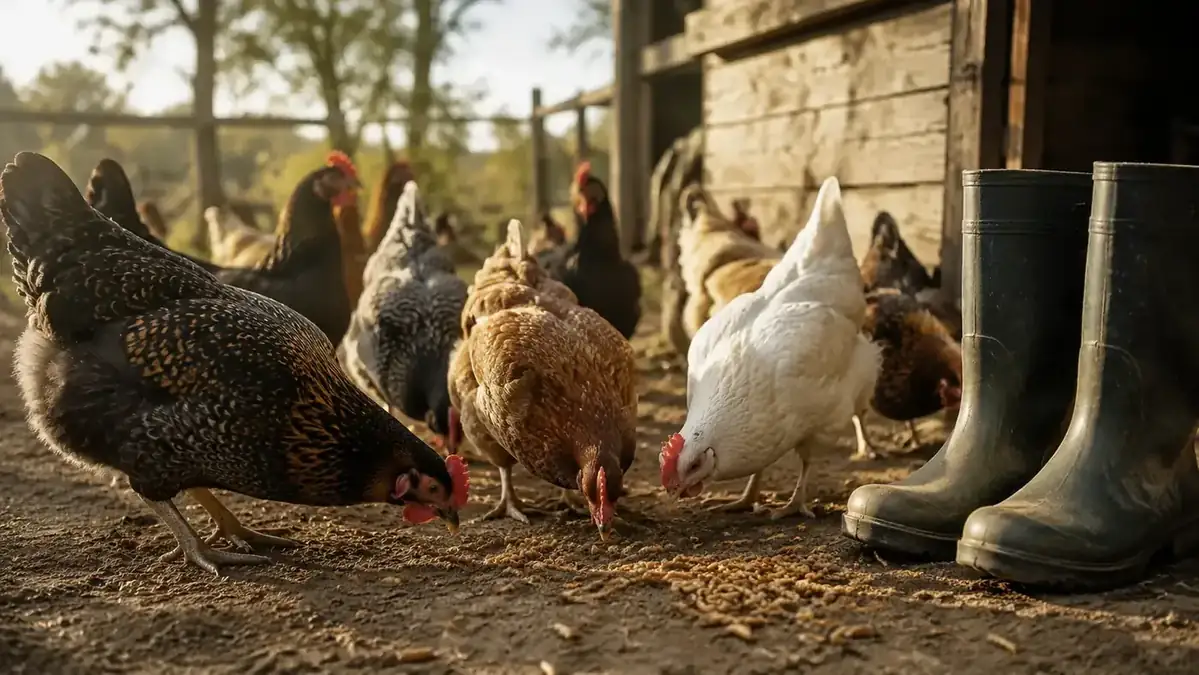
My Barred Rock, Dolores, had been laying eggs with shells so thin I could practically dent them with my thumbnail. I had crushed oyster shell in a feeder they could access free-choice, I was running a solid layer feed, and I had done everything the forums told me to do. The shells were still fragile enough that I was cracking two or three a week just collecting them. Then someone in my local flock group mentioned black soldier fly larvae, specifically the Adaman 5-pound bag, and said the calcium content was meaningfully higher than mealworms. I figured at a little over twenty dollars for five pounds, I had nothing to lose.
That was four months ago. I now have strong-shelled eggs, a flock that sprints across the yard the second I pick up the blue scoop, and a genuinely useful supplement in my rotation. This review covers what I tracked, what changed, what surprised me, and the one thing I wish I had known before buying.
The Quick Verdict
Legitimately the best treat upgrade I have made for my flock. Shell improvement was measurable within three weeks, molt recovery was noticeably faster, and the value per pound is hard to beat compared to mealworms.
Amazon Check Today's Price →Your hens are probably calcium-deficient and you don't know it yet.
Fragile shells, slow molt recovery, and lackluster yolks are all signs. Adaman BSFL delivers roughly 50 times more calcium than dried mealworms. A 5-pound bag runs well under $25 and lasts a small flock weeks.
Amazon Check Today's Price on Amazon →How I've Used It: Four Months of Daily Treats
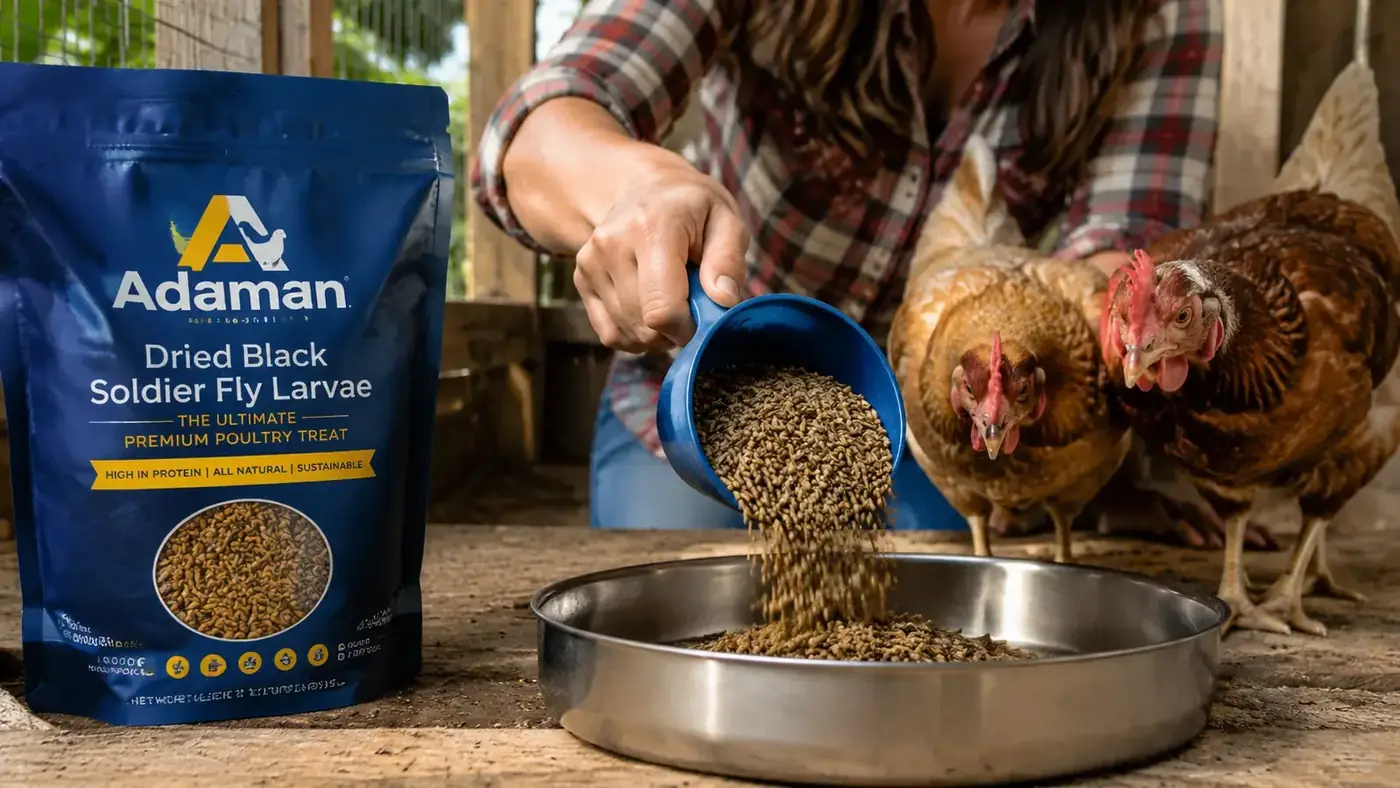
I have eight hens total: three Barred Rocks, two Easter Eggers, two Black Sex-Links, and one ancient Buff Orpington named Carol who has been with me since 2021. My routine was simple from the start. Every morning after opening the coop, I measure out roughly a quarter cup per bird, which works out to about two cups for the whole flock. I scatter it into a shallow metal pan so everybody can get to it without a lot of pecking-order drama. Done in thirty seconds.
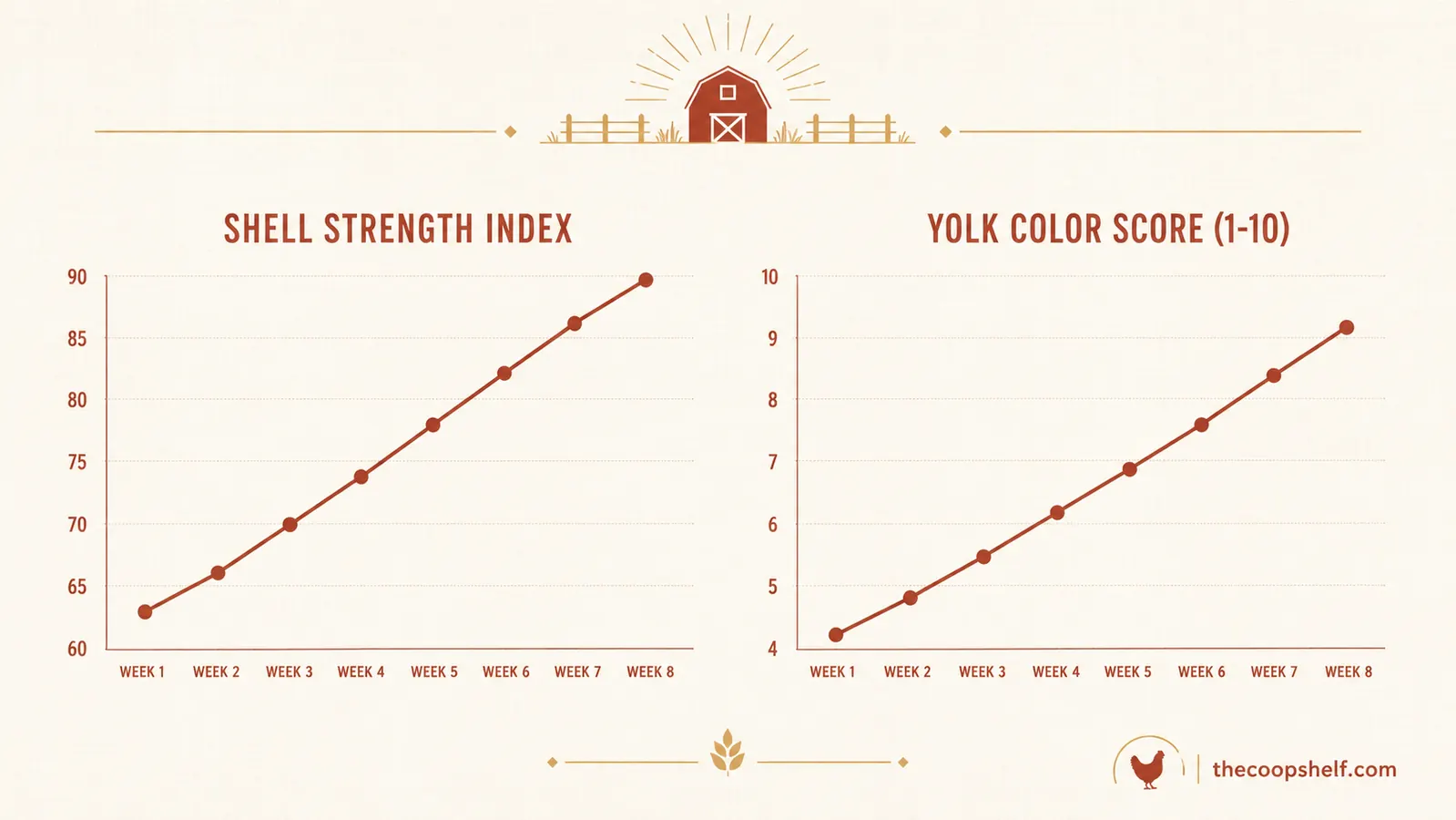
For the first two weeks, I ran a side test. I collected every egg, felt the shell with my fingers before setting it in the carton, and marked any that felt notably thin or flexible. Before BSFL, I was marking three to five eggs a week as fragile. By week three, that number had dropped to one. By week five, I had not marked a single egg in ten days. That is not a controlled lab study, but after four months of consistent results, I am confident it was the BSFL.
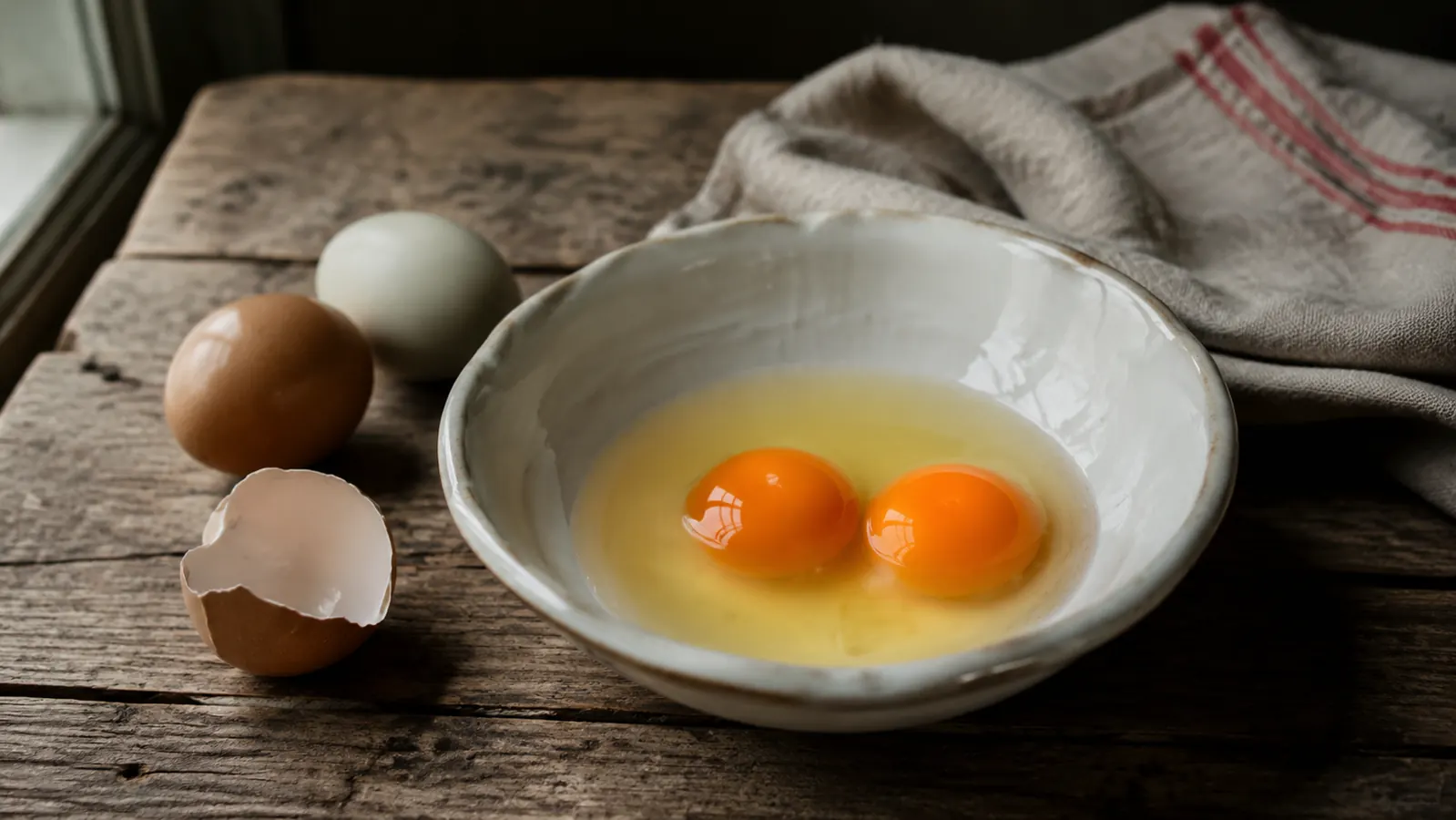
I also started eyeballing yolk color against a cheap yolk color fan I ordered from a poultry supply shop. Before BSFL, my average was landing between a 6 and 7 on the 15-point scale. Within six weeks of daily larvae treats, I was consistently seeing 9s and 10s from the girls who free-range in the afternoon. The Easter Eggers especially showed a jump.
The Calcium Story: Why BSFL Beats Oyster Shell Alone
Here is what clicked for me after a little reading. Oyster shell is calcium carbonate, which hens absorb reasonably well. But dried black soldier fly larvae deliver calcium in a form that is naturally bound inside actual food, not a mineral supplement. BSFL typically runs around 7,500 milligrams of calcium per kilogram, while dried mealworms come in closer to 133 milligrams per kilogram. That is not a rounding error. That is a different category.
Adaman markets this claim directly on the bag, and in my experience it holds up. I did not remove the free-choice oyster shell when I added the BSFL because I wanted the girls to regulate as needed. What I noticed is that the oyster shell feeder needed refilling less often after about a month. Whether the hens were self-selecting less or whether the BSFL was meeting more of their need, I cannot say for certain. But the net result was better shells, and that was the whole point.
Molt Recovery: The Result I Did Not Expect
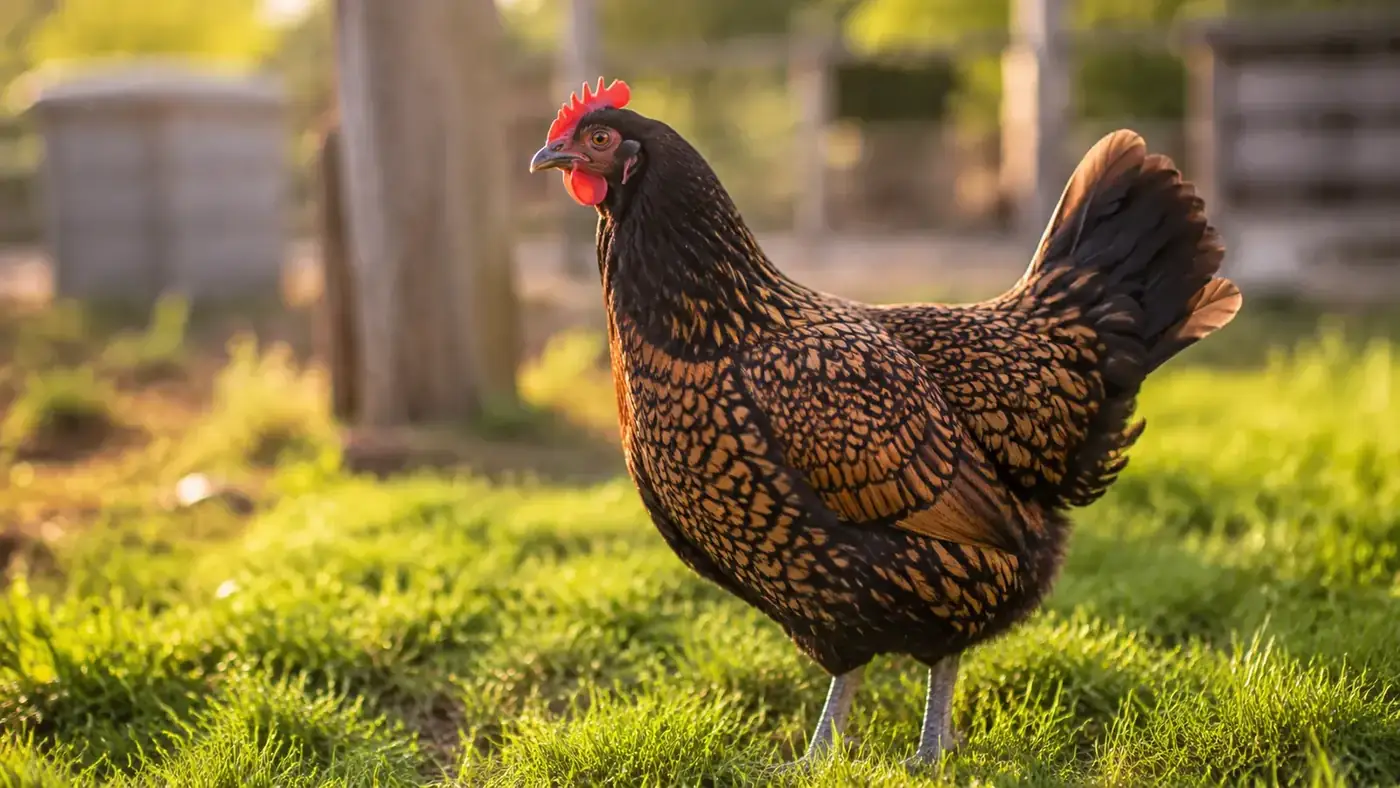
Two of my Barred Rocks went into a hard molt in early October. Dolores looked like something had attacked her for about three weeks, just patchy and miserable with pin feathers coming in all over her neck and back. Last year, her molt dragged on for about eight weeks before she looked presentable again and came back into lay.
This year, with BSFL in the rotation the whole time, Dolores was fully feathered and back to laying in about five weeks. Her coopmate Harriet was back in six. Feathers are roughly 85 percent protein, and BSFL runs about 40 to 42 percent crude protein by dry weight. I think that protein availability made the difference. The new feathers also had noticeably more sheen than I remembered from previous years. Dolores looked genuinely good by mid-November.
Dolores looked like something had attacked her. Last year that molt dragged for eight weeks. This year, with BSFL in the rotation every day, she was fully feathered and back to laying in five.
The Flock's Reaction: They Chase the Bucket Now
I want to talk about the behavioral side because it is both delightful and something you should manage intentionally. Within about a week of starting BSFL, my hens made the connection between me picking up the blue scoop near the feed shed and something good happening. By week two, they were running toward me before I had even dipped into the bag. Now, four months in, if I walk anywhere near that shed in the morning, I have eight hens at my feet and Carol trying to climb my boot.
That engagement is genuinely fun if you enjoy your flock's company, which I do. But it also means you have to be disciplined about quantity. Treats, even nutritious ones like BSFL, should stay at or under 10 percent of daily intake so layer feed stays the foundation of the diet. I measured out my quarter-cup-per-bird serving for a few weeks until I had the right portion dialed in by eye. If you just free-pour, they will eat until the bag is empty and then ignore their pellets for the rest of the day. I learned this during week one.
BSFL vs Dried Mealworms: Which One Actually Does More?
I used dried mealworms for about two years before switching to BSFL, and the honest comparison is not even close for a laying flock. Mealworms are high in fat, which hens love, and they do provide protein. But the fat content in mealworms can cause weight gain in confined birds if you are not careful, and the calcium content is essentially negligible. Mealworms are a reward. BSFL is a reward that also does something.
The other practical difference is cost per pound. Mealworms in comparable 5-pound bags tend to run noticeably higher than the Adaman BSFL. You are paying more for an inferior nutritional profile. For free-ranging flocks that get enough protein from bugs and forage, mealworms might be fine. For laying hens in a smaller run who need that calcium boost, BSFL is the better call. I still keep mealworms on hand for training purposes because they drive more frantic behavior, but BSFL is the daily supplement now.
For a full nutritional breakdown and cost-per-serving comparison, I put together a detailed head-to-head in the article on BSFL vs dried mealworms for chickens.
Storage, Smell, and the Practical Stuff
Five pounds is a meaningful amount of dried larvae. In my experience with eight birds using a quarter cup each daily, a 5-pound bag lasts me about three to four weeks. The bag itself has a resealable top, which I appreciate, though I moved mine into a glass jar with a tight lid after a month just because the reseal on the bag started losing its grip.
Smell is real. Dried BSFL has an earthy, slightly fishy smell that is not offensive outdoors but you would not want this bag open in a pantry. I keep mine in the feed shed alongside the layer pellets and scratch grains. At room temperature with the jar sealed, I have not had any issue with freshness through about three months of storage. The larvae stay dry and the hens react the same way to the last scoop as they did to the first.
One note on texture: the larvae are lightweight and small, maybe half a centimeter long. They do blow around on a windy day if you scatter them on hard ground. I switched to using the metal pan for that reason, which also makes it easier to see that all eight birds are getting a fair share.
What I Liked
- Measurable shell improvement within three to four weeks for my flock
- Faster molt recovery compared to prior years without BSFL
- Significantly higher calcium content than dried mealworms
- Flock engagement is immediate and consistent
- Good value per pound compared to mealworms of similar quality
- Resealable bag, dry texture, stores well in a sealed container
Where It Falls Short
- Earthy smell means outdoor or shed storage is better than indoors
- Hens will overeat if you free-pour, requires portion discipline
- Small larvae blow around on windy days, a flat pan helps
- Reseal on bag loses effectiveness after a few weeks of use
What Surprised Me Most
Honestly, the speed. I expected to see gradual change over a few months. What I did not expect was the shell improvement showing up within three weeks. That is a short window for a dietary change to produce a measurable physical result. It tells me either the hens were genuinely calcium-deficient in a way the oyster shell alone was not correcting, or BSFL calcium is absorbed more readily than I assumed. Probably some of both.
The other surprise was Carol, my elderly Buff Orpington. She has slowed down considerably in her laying over the past two years, which is normal for an older bird. I was not expecting BSFL to change that, and it did not bring her back to a daily layer. But her feather condition improved noticeably, and she seems more engaged during treat time than she has been in a while. She is not running across the yard with the younger girls, but she makes her way over with purpose. I will take it.
If you want to understand how these larvae affect yolk color specifically, and what other feed changes pair well with BSFL for the deepest orange yolks, I covered the full approach in my piece on how to get deeper, richer egg yolks from your backyard flock.
Who This Is For
If you have laying hens who are producing thin or fragile shells, and you have already tried free-choice oyster shell without full resolution, BSFL should be your next move. It is also an excellent supplement during molt season when your birds need both calcium and protein to rebuild feathers and return to lay quickly. At the price point, it is one of the most cost-effective improvements you can make to a laying flock's diet without changing your base feed. I'd also recommend it for anyone who wants to build a stronger daily routine with their birds. The flock engagement alone makes morning chores more enjoyable.
Who Should Skip It
If your birds are already on a high-calcium layer feed and producing beautiful hard-shelled eggs with no issues, BSFL is more of a bonus than a fix. You will still get the flock engagement and the protein boost, but the dramatic shell improvement I saw was almost certainly amplified by a pre-existing deficiency. Also, if you have a very small flock of one or two birds, a five-pound bag is a lot of larvae to work through before it gets stale. You might look for a smaller bag to start before committing to the full five pounds.
Four months in and I would not go back to mealworms as my daily treat.
The Adaman 5-pound bag is the best value I have found for a calcium-rich, high-protein flock supplement. My shells are stronger, my molt recovery was faster, and my girls sprint toward me at treat time every single morning.
Amazon Check Today's Price on Amazon →