
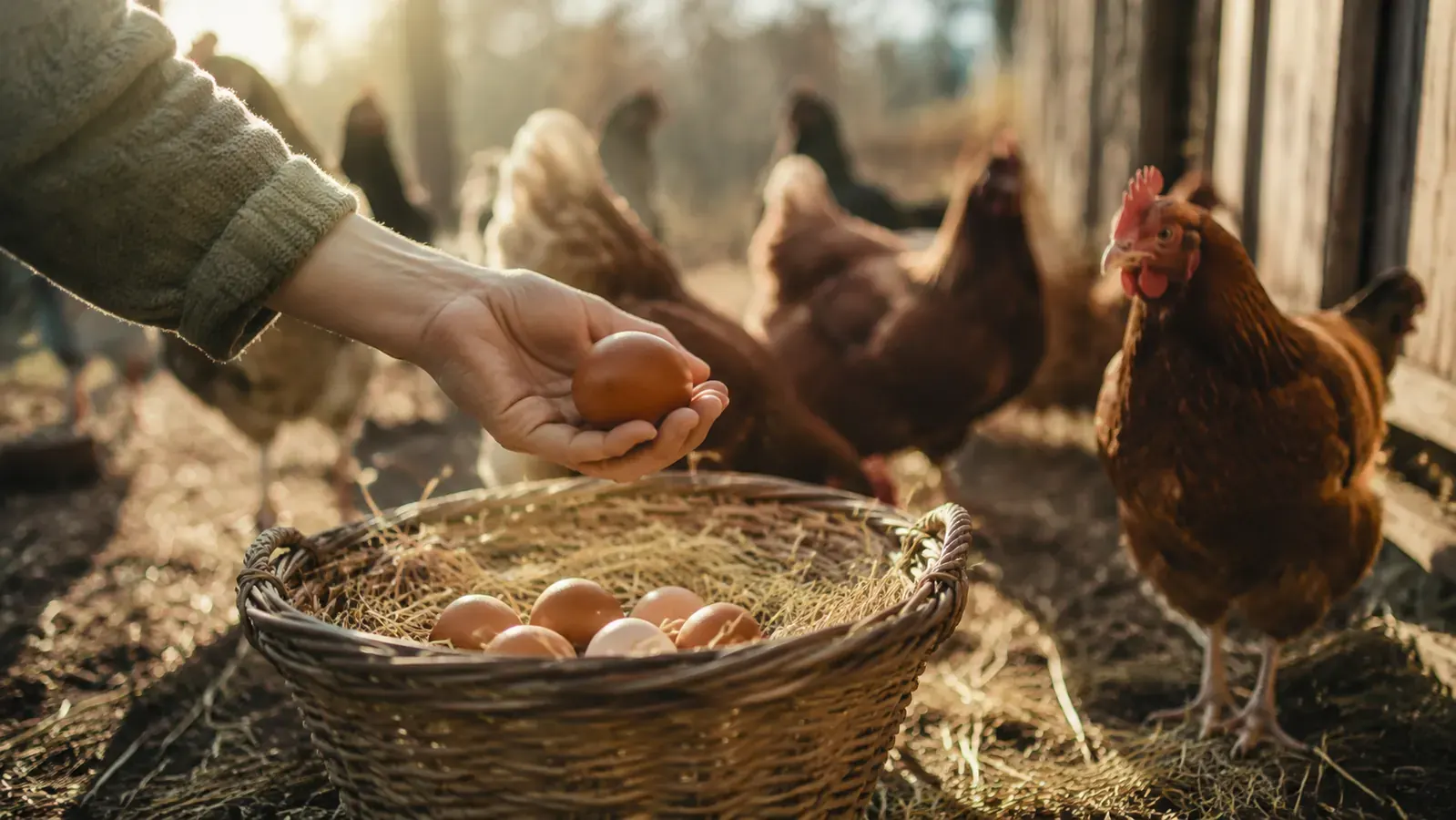
I was pulling eggs from the nest box one Tuesday morning back in late October when one of them just sort of folded. Not cracked. Not dropped. It bent in my hand like wet cardboard, and the membrane inside was the only thing holding the yolk in. I stood there in the run holding a floppy egg and felt genuinely unsettled. That was not a healthy chicken doing that.
My three Buff Orpingtons, Hattie, Birdie, and the one we just call The Duchess, had been laying all summer without a single complaint. But as we moved into fall, the shells started going strange on me. Dented. Wrinkled at the fat end. One that crumbled when I dried it too hard with a dish towel. I knew what thin shells meant in a general sense: calcium problem. What I didn't know yet was why three hens on a name-brand layer feed with a separate oyster shell feeder were coming up short.
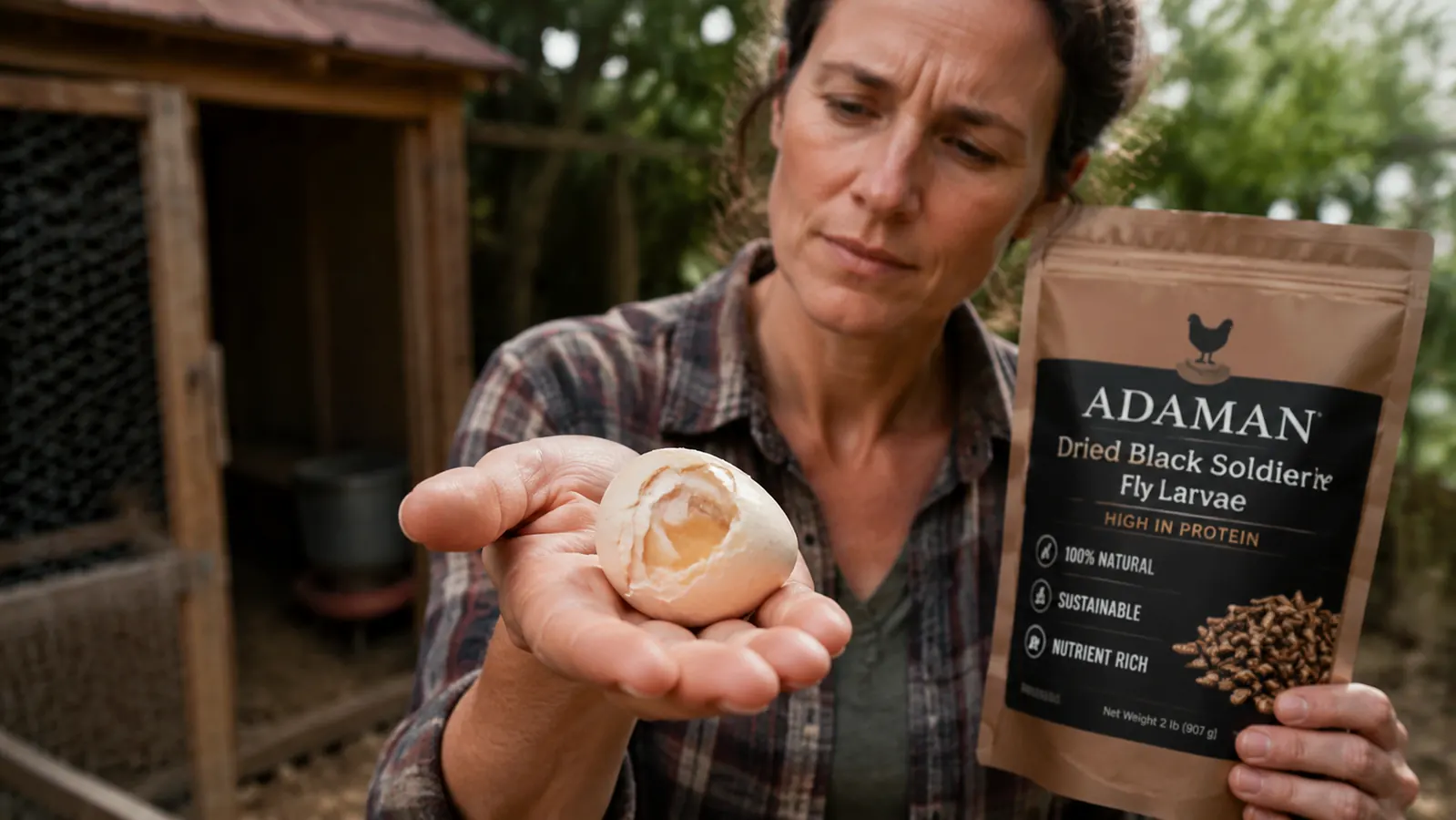
I added more oyster shell. I switched from a 16% protein layer crumble to a 18% pellet. I found a poultry vitamin pack at the co-op and stirred it into their water for two weeks. The shells stayed papery. The Duchess laid an egg in week three of that experiment that had a crease running lengthwise like someone had pinched it. I took a photo. I started a notes document. I got a little obsessive about it, which is what chicken people do.
The Duchess laid an egg with a crease running lengthwise like someone had pinched it. I took a photo. I started a notes document. I got a little obsessive about it, which is what chicken people do.
A woman in my local Facebook group mentioned black soldier fly larvae when I posted about the thin shells. She said she'd had the same problem with her older hens and that BSFL had more bioavailable calcium than oyster shell, which was the first time I'd heard that framing. I'd always thought of BSFL as a protein treat, something you throw out when you want a riot in the run. I didn't know you could think of it as a calcium delivery mechanism.
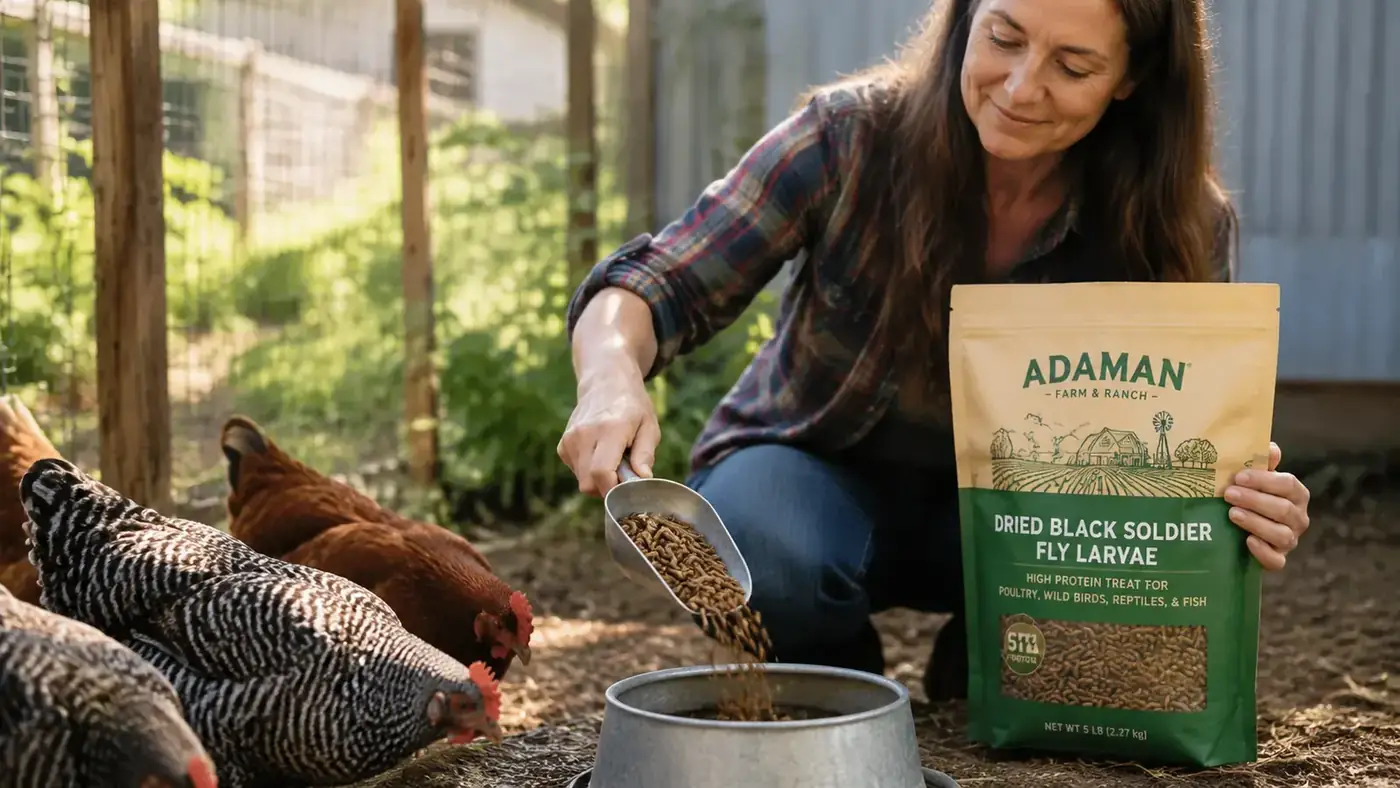
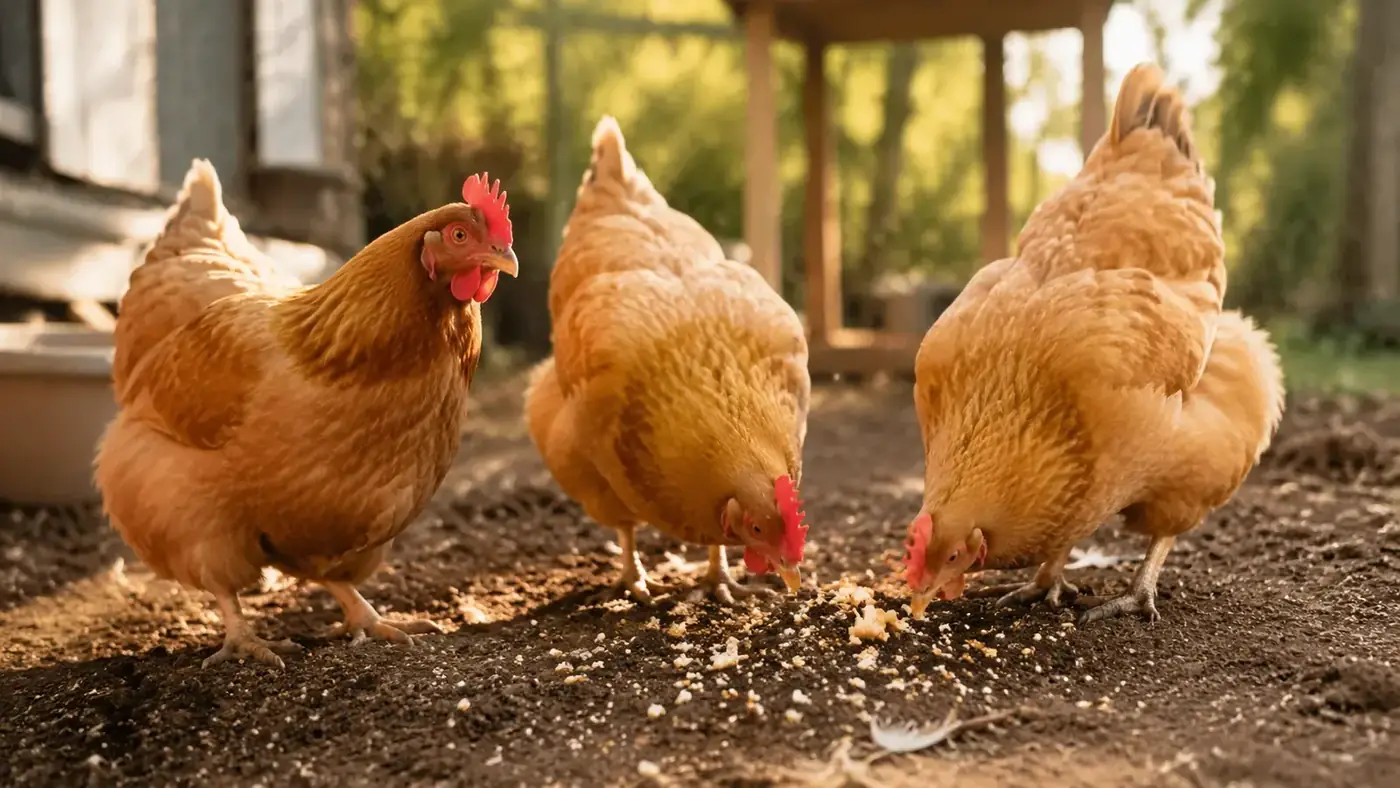
I ordered the Adaman Dried Black Soldier Fly Larvae, the five-pound bag, because I figured if it worked I'd want more and if it didn't I'd have wasted the same money either way. The bag arrived in two days and I opened it in the run. Hattie knocked Birdie out of the way. The Duchess made a sound I've never heard from her before. They were fully convinced before I even set the bag down.
If your hens are laying thin-shelled eggs and the oyster shell feeder isn't fixing it, this is worth trying.
Adaman BSFL has 4.7 stars across more than 3,400 reviews, and the calcium content is significantly higher than standard dried mealworms. The five-pound bag lasts a long time at a handful-a-day serving.
Amazon Check Today's Price on Amazon →I gave them a small handful in the morning, tossed right on the ground so they'd scratch for it. About two tablespoons per bird, once a day, every morning for the first week. Nothing dramatic happened in the first seven days. The shells were still on the thinner side. Hattie laid one that dented when I pressed my thumbnail against it, which I did on purpose as a test. I kept going.
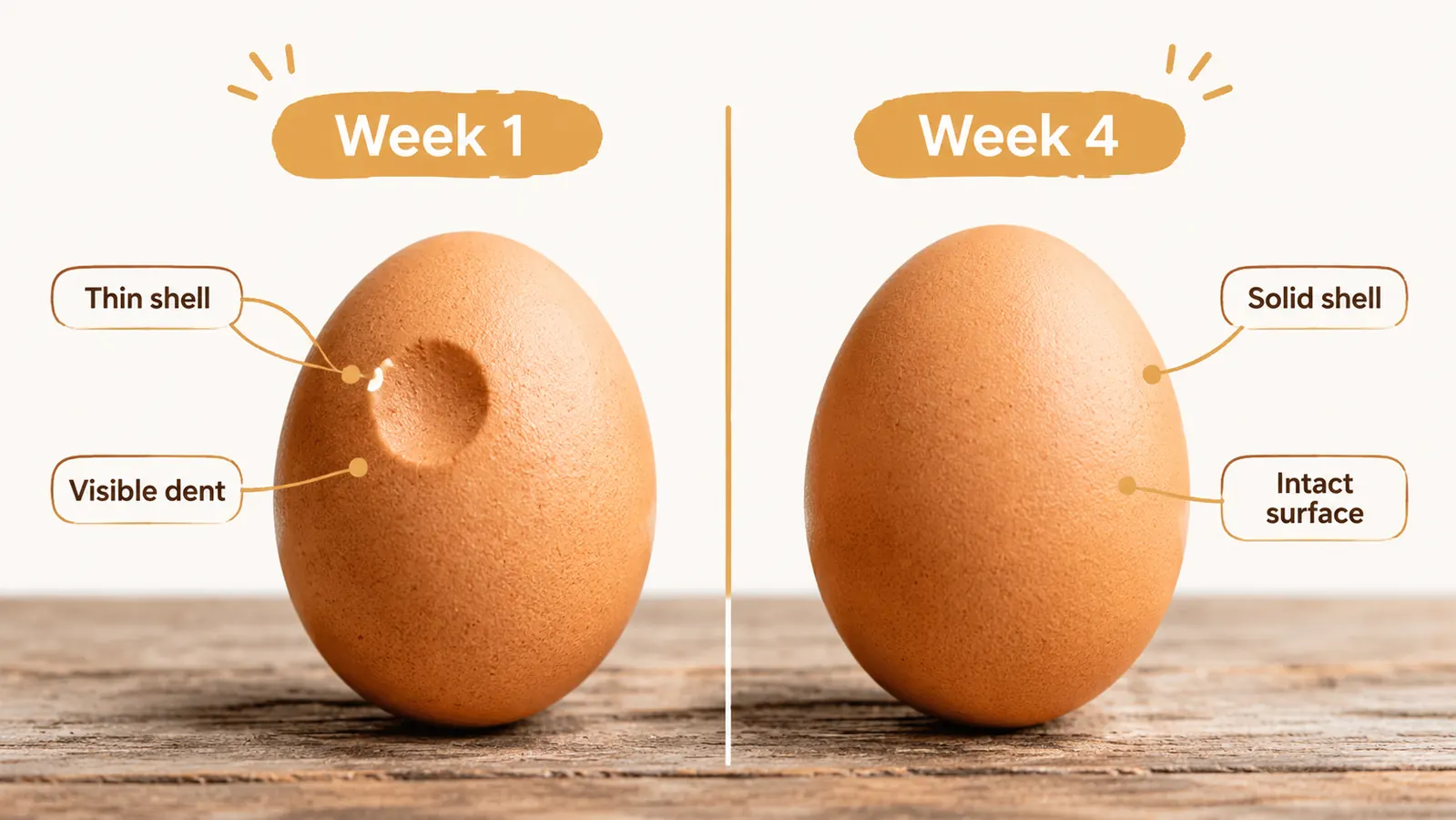
Week two things started shifting. The eggs weren't perfect but they stopped denting when I pressed them. The crinkles at the fat end smoothed out on Birdie's eggs first. She's the youngest of the three and probably had the most metabolic reserves to work with, so I wasn't surprised she turned around fastest. The Duchess took until day 19 before I noticed her shells had real resistance to them when I pressed lightly.
By week four I was doing the thumbnail test daily because I was so pleased with the results I wanted to document every day. All three hens were producing eggs I'd have been embarrassed to sell before: clean, firm, smooth, with that good dense weight when you hold them. The Duchess's wrinkle egg was a memory. I still have the photo on my phone but I stopped comparing it to current eggs because there was nothing left to compare.
What I'd Tell You If We Were Sitting at My Kitchen Table
Here's the honest summary. If you've got a good layer feed and free-choice oyster shell and you're still seeing thin, soft, or wrinkled eggs, it might not be a calcium quantity problem. It might be a calcium absorption problem. Hens need certain things in place for calcium to actually land in the shell instead of passing through, and from what I've read, the way calcium is packaged in BSFL makes it more accessible to the bird than ground oyster shell in a separate dish they may or may not eat.
I'm not a vet. I'm not a poultry nutritionist. I'm someone who had three hens with a shell problem, tried the usual fixes, and then tried something different. The Adaman BSFL is what moved the needle for me, starting to show results around week two and pretty clear by week four. If your situation is anything like mine, it's a cheap enough experiment to run. Worst case, your hens have a memorable two weeks of morning treats. Best case, you stop cracking eggs in half with your bare hand.
The five-pound bag is still going strong after six weeks at a small handful daily across three birds. I'll keep it in the morning routine permanently now. It's become as automatic as filling the waterer.
Four weeks from floppy eggs to shells that actually hold up. Worth trying.
The Adaman five-pound bag runs about twenty-three dollars and lasts weeks at a small daily serving. If thin shells are a problem in your flock right now, this is the first thing I'd add before spending more on supplements.
Amazon Check Today's Price on Amazon →