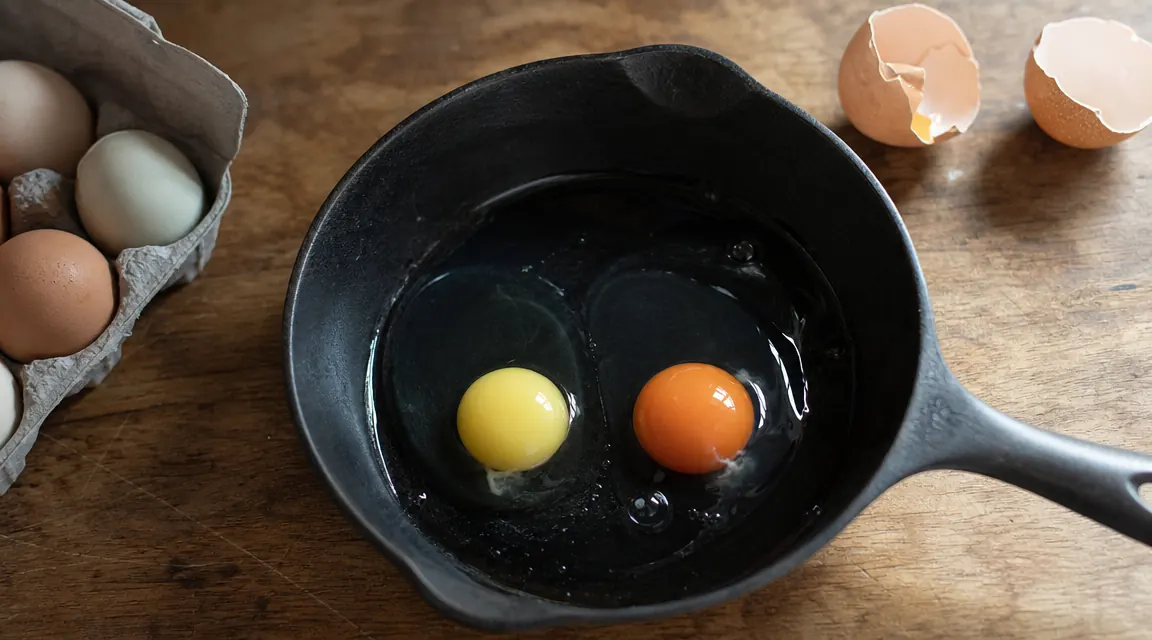
The single biggest lever for deeper yolks is feeding Adaman dried black soldier fly larvae alongside good pasture time, that is the short answer before we get into the why. I brought a dozen eggs from my girls to my neighbor's house last spring and cracked them into a bowl right next to a carton she had from the grocery store. The difference was almost embarrassing. Her store eggs had yolks the color of a tennis ball. Mine looked like small suns. She immediately wanted to know what I was feeding them, and I realized I had never actually written any of it down in a logical order. So here it is: the complete sequence I use to push yolk color as deep orange as I can get it, from the biggest lever to the smallest.
Before we get into the steps, it is worth understanding why grocery store yolks are pale in the first place. Commercial hens spend their lives in confinement with zero access to pasture, green plants, insects, or sunlight. Yolk color comes almost entirely from carotenoid pigments, specifically xanthophylls, that a hen absorbs from her diet and deposits directly into the yolk. No carotenoids in the feed, no color in the yolk. Commercial operations do sometimes add synthetic carotenoids like canthaxanthin to their feed precisely to fake the color. Your backyard hens do not need that trick because you can give them the real thing.
The quickest single upgrade for yolk color: add BSFL to your daily treat routine
Adaman Dried Black Soldier Fly Larvae (5 lbs) hit 85 times more calcium than mealworms, plus the fatty acid profile that supports yolk pigmentation. Rated 4.7 stars across more than 3,400 Amazon reviews. My flock goes absolutely sideways for these.
Amazon Check Today's Price on Amazon →Step 1: Get Them Off the Lawn and Onto Real Forage
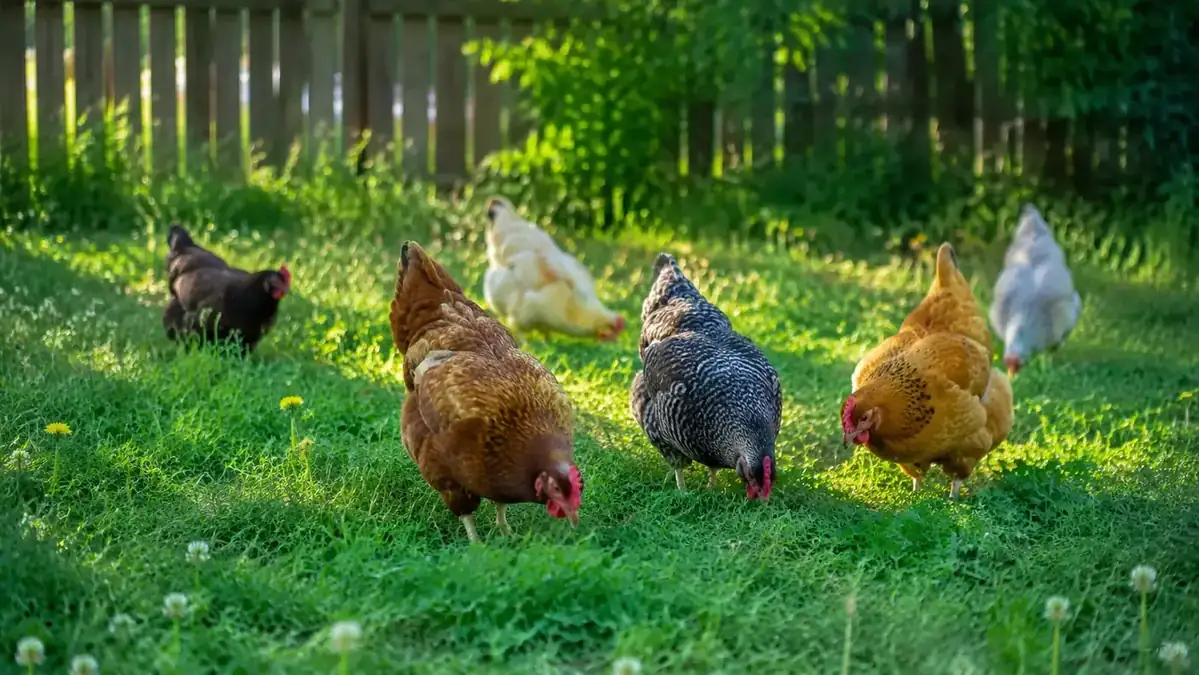
If your hens are confined to a bare dirt run all day, nothing else on this list will matter very much. Pasture and forage time is the foundation. When hens can graze freely on living grass, clover, dandelions, plantain, and whatever insects are crawling around underfoot, they are loading up on xanthophylls, lutein, and zeaxanthin. Those are the pigments that turn a yolk orange. Even two to three hours of supervised free-range time in the afternoon makes a visible difference within two weeks.
If your yard is not safe for free-ranging (hawks took one of my Dominiques last August and I have not forgotten it), rotate a chicken tractor over fresh grass sections, or grow a cut-and-come-again patch of kale and Swiss chard right next to the run and toss a double handful in every morning. The point is that your hens need access to living green material on a daily basis, not just a sprinkle every few days.
Practical floor: aim for at least 10 square feet of living forage per bird per day, whether through direct access or cut greens. If you are in a northern climate and the grass is dead from November through March, this step becomes harder, which is exactly why the later steps on the list matter more in winter.
Step 2: Add Dried Marigold Petals to Their Feed
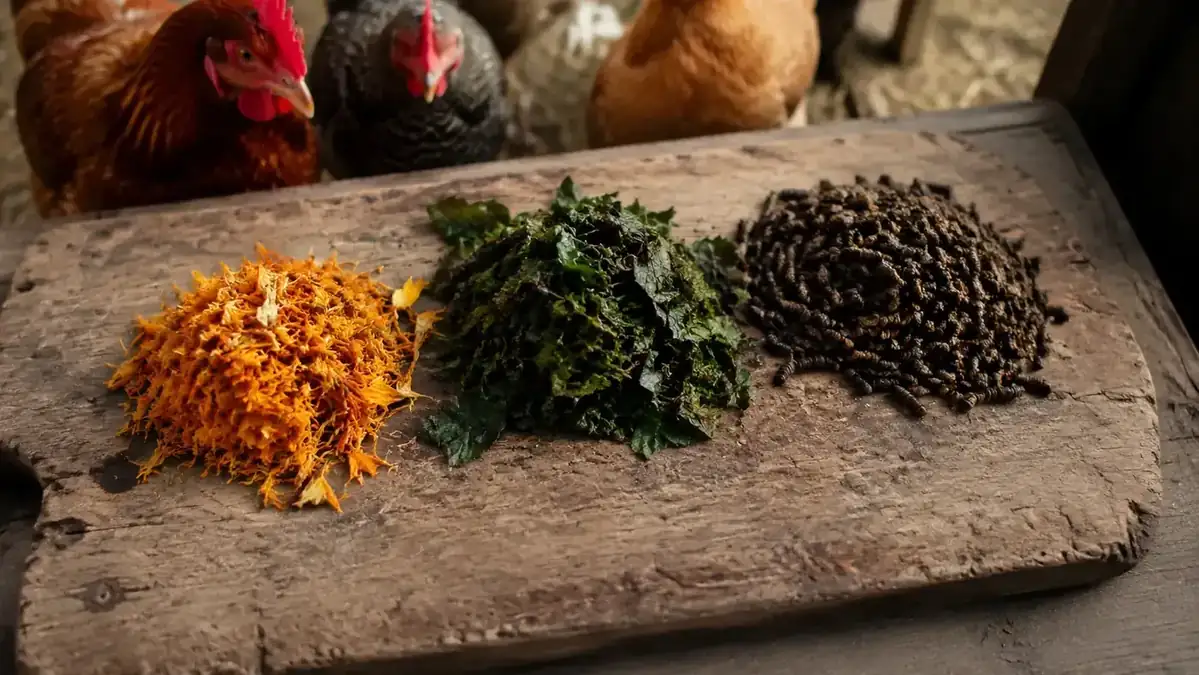
This one feels almost too simple, but it works. Marigold petals, specifically the Calendula and African Marigold (Tagetes erecta) varieties, are among the highest natural sources of lutein and zeaxanthin available. Commercial egg producers who want orange yolks without synthetic dyes use exactly this: dried marigold meal added to the feed ration. You can do the same thing at home for almost nothing.
Grow a bed of Tagetes erecta (the tall African marigold, not the little French kind) in your yard, let them flower heavily, and deadhead them into a paper bag to dry. Once dry, crumble the petals by hand and mix them into the layer feed at roughly a quarter cup per gallon of feed. You can also buy food-grade dried marigold petals in bulk online if you do not want to grow them. Either way, this is a low-effort addition that stacks nicely on top of everything else.
Step 3: Load Up on Dark Leafy Greens Every Day
Kale, Swiss chard, spinach, and beet greens are all loaded with the xanthophyll pigments your hens need. Dandelion greens are arguably the best bang for your buck because they are free, they grow everywhere, and the hens go absolutely nuts for them. I pull a grocery bag full of dandelion leaves from my yard every two days in spring and summer and toss them into the run. My four Buff Orpingtons and two Easter Eggers clean them up in about four minutes.
One thing to avoid: iceberg lettuce. It has almost zero nutritional value for chickens and can cause loose droppings if fed in excess. Stick to dark, leafy, pigment-dense greens. Cabbage, collard greens, and turnip greens are all good options. If you are doing cut-and-come-again gardening, plant kale near the run and just flip it over the fence. The birds do not care that it is not pretty.
Yolk color is a direct readout of what your hen has been eating. You can see the last two weeks of her diet every time you crack an egg.
Step 4: Add Adaman BSFL as the Daily Protein and Calcium Treat
This is the step that made the biggest measurable difference in my flock once I already had the first three in place. Black soldier fly larvae (BSFL) contribute to yolk color through two pathways that dried mealworms do not match. First, BSFL have a fatty acid profile that includes lauric acid and a balanced omega-3 to omega-6 ratio. Fat-soluble carotenoids need dietary fat as a carrier; they do not deposit into the yolk efficiently without it. The quality of the fat matters. Second, BSFL are rich in calcium at a level roughly 85 times higher than dried mealworms, which means your hens are not burning calcium stores to make shells. That freed-up biological capacity shows up in the whole egg, not just the shell.
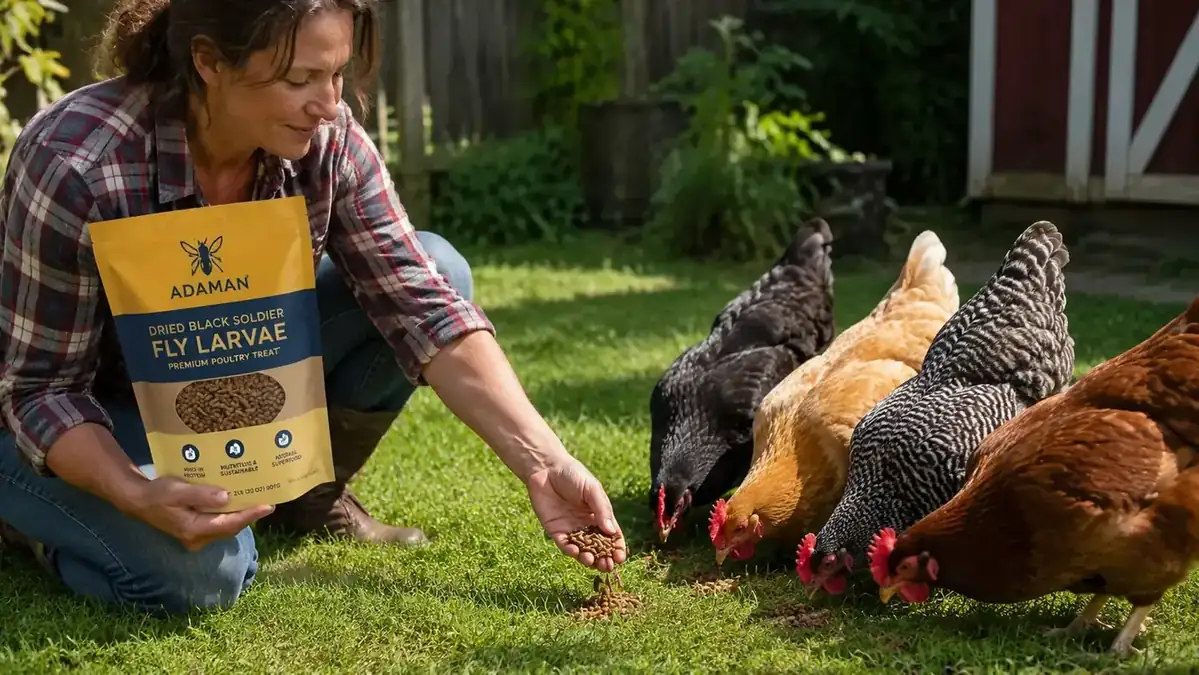
I use Adaman Dried Black Soldier Fly Larvae (the 5-lb bag) and feed one tablespoon per hen per day, mixed into a small bowl with a splash of water so they do not inhale the dust. My girls hear the crinkle of that bag from inside the coop and they pile up at the pop door before I even open it. The 4.7-star rating across over 3,400 reviews is not an accident; these things are legitimately the treat chickens want most. One important note: keep it to about one tablespoon per hen per day. More than that and they start treating the BSFL as a meal rather than a supplement and they will leave their layer feed untouched. The layer feed is still where most of the balanced nutrition comes from.
Timing matters slightly too. I feed the BSFL in the afternoon, about two hours before the pop door closes. That way the hens have had a full morning of grazing and have eaten their layer feed in the morning. The BSFL acts as the afternoon topper rather than the first thing they fill up on.
Step 5: Check and Optimize Their Water Situation
Hydration is one of the most overlooked factors in egg production and yolk quality. A hen that is even slightly dehydrated lays fewer eggs, and the eggs she does lay have less vibrant yolks because the metabolic processes that deposit carotenoids into the yolk sac are water-dependent. I learned this the hard way one August when we hit a stretch of 95-degree days. Egg production dropped, and the yolks on the eggs that did come through were noticeably more washed out. I put a second waterer on the shaded side of the run and production came back within a week.
Practical check: a standard laying hen needs about half a liter of water per day under normal conditions, and up to a full liter in summer heat. If you have six hens and one three-gallon waterer, the math works out fine in cool weather, but in July that waterer needs to be full and cool every single morning. In winter, if you are running a heated waterer, make sure it is not overheating the water. Hot water discourages drinking. Lukewarm is fine; hot is not.
How to Test Whether Your Changes Are Working
The best tool for tracking yolk color progress costs nothing: the Roche Yolk Color Fan, also called the DSM Color Fan. It is a laminated fan of color swatches numbered 1 through 15 that runs from pale yellow (1) to deep orange-red (15). Commercial egg producers use it to hit a specific yolk color score required by their buyers. Grocery store eggs typically score a 6 to 8. A well-supplemented backyard hen on good pasture with BSFL and marigold petals in the mix should score a 12 to 14. The original Roche Fan is available online and it makes a genuinely useful benchmarking tool. Take a photo of each week's yolks next to the fan and you will have a clear visual record of whether your changes are moving the needle.
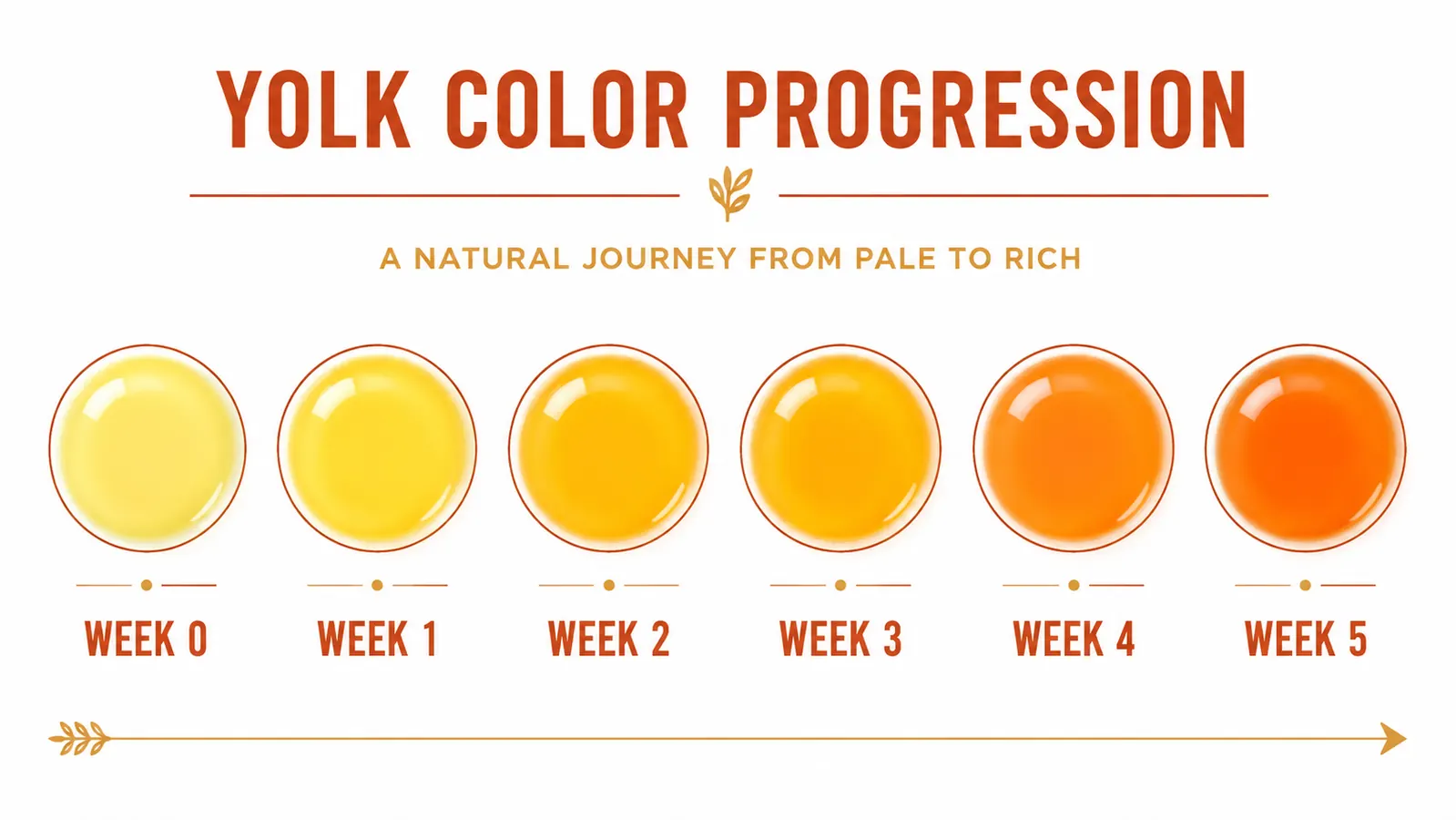
Changes to yolk color typically show up in two to three weeks because that is roughly how long it takes for the current nutritional inputs to cycle through into the developing yolk. If you make all five changes at once (which I recommend), you should see a clear difference by the end of week two and a full-expression result by week four.
What Else Helps (And What Does Not)
A few things that come up in chicken Facebook groups that are worth addressing. Paprika: yes, it contains capsaicin and some carotenoids, but the quantities required to meaningfully shift yolk color are high enough that most hens will refuse the feed. It is not worth the effort compared to marigold petals. Carrots: contain beta-carotene, which converts to vitamin A in the hen and has some effect on yolk color, but it is a weak pigment source compared to the xanthophylls in marigold and dark greens. Red pepper flakes: same issue as paprika. Corn: yellow corn does contain some xanthophylls and contributes to a mild yellow yolk color, which is why corn-fed chicken in Europe is marketed as having yellow flesh and yolks. But it is not high enough in the right carotenoids to push you into deep orange territory on its own.
What genuinely does not work: switching to an expensive feed brand without changing anything else. Feed brands that claim orange yolks without specifying marigold meal or pasture access in the ingredient panel are usually just marketing. Read the label. If you see Tagetes meal or marigold extract listed, that is a real pigment source. If you see only corn, soy, and vitamins, the yolk color will depend entirely on what your hens find on their own.
Putting It All Together
Here is the full daily routine I run for my six hens (four Buff Orpingtons, two Easter Eggers, flock ages 1 to 4 years): morning layer feed in the feeder, run door opens for three hours of free-range time in the back paddock, a double handful of kale and dandelion greens tossed in mid-morning, one tablespoon of Adaman BSFL per bird in a small bowl around 3pm, fresh water checked and topped off morning and afternoon in summer. That is it. The marigold petals go directly into the feed bin at a quarter cup per gallon whenever I mix a new batch. Total extra time over a plain feeding routine: maybe eight minutes a day.
The result is yolks that score a consistent 12 to 13 on the color fan from April through October, and an 11 in the dead of winter when forage access is limited. People who have never had a backyard egg before genuinely react when they crack one. That reaction never gets old. And now that you know exactly which levers to pull, you can engineer that same result in your own flock.
Start with the BSFL and notice the difference in two weeks
Adaman Dried Black Soldier Fly Larvae is the single fastest dietary upgrade for yolk color in a flock that already has some forage access. One 5-lb bag lasts six hens about six weeks at the recommended daily ration. Over 3,400 five-star reviews and my hens would riot if I stopped buying it.
Amazon Check Today's Price on Amazon →