
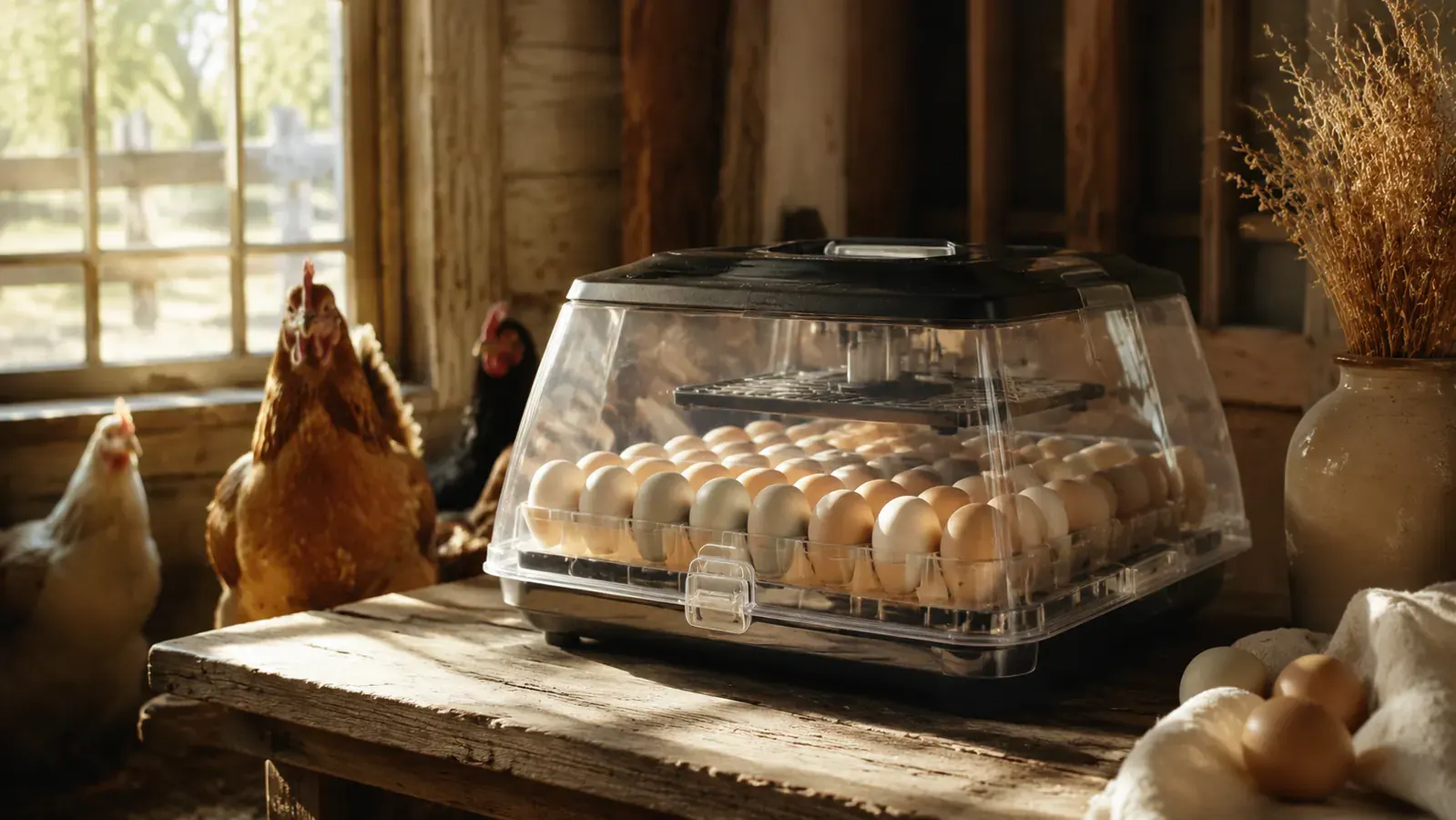
I want to talk about my second hatch. Not the first one, which I wrote about separately and which went pretty well. The second one is the one where I trusted the humidity display without verifying it, and I ended up opening the lid on day 21 to find six eggs that had internally pipped and then died trying to zip. Six chicks that made it to the finish line and then ran out of strength. That hatch taught me more about this machine than the first one ever did, and I'm going to tell you everything I know.
The MATICOOPX 30-egg incubator has a 4.4-star rating and almost 2,000 reviews on Amazon. A lot of those reviews are from people who had one good hatch and called it done. This review is for the people who want to know what happens on your third round, after the beginner's luck has worn off and you're actually reading the numbers.
The Quick Verdict
A capable mid-range incubator if you pair it with a calibrated hygrometer from day one. Trust the built-in display alone and your lockdown mortality will be higher than it needs to be.
Amazon Check Today's Price →If you've got 18 to 30 eggs waiting and no better option in your price range, this machine works.
The MATICOOPX incubator is mid-tier in price and capable in practice. Just read this review first so you know what you're walking into.
Amazon Check Today's Price on Amazon →The Humidity Display: What It Shows vs. What's Actually Happening
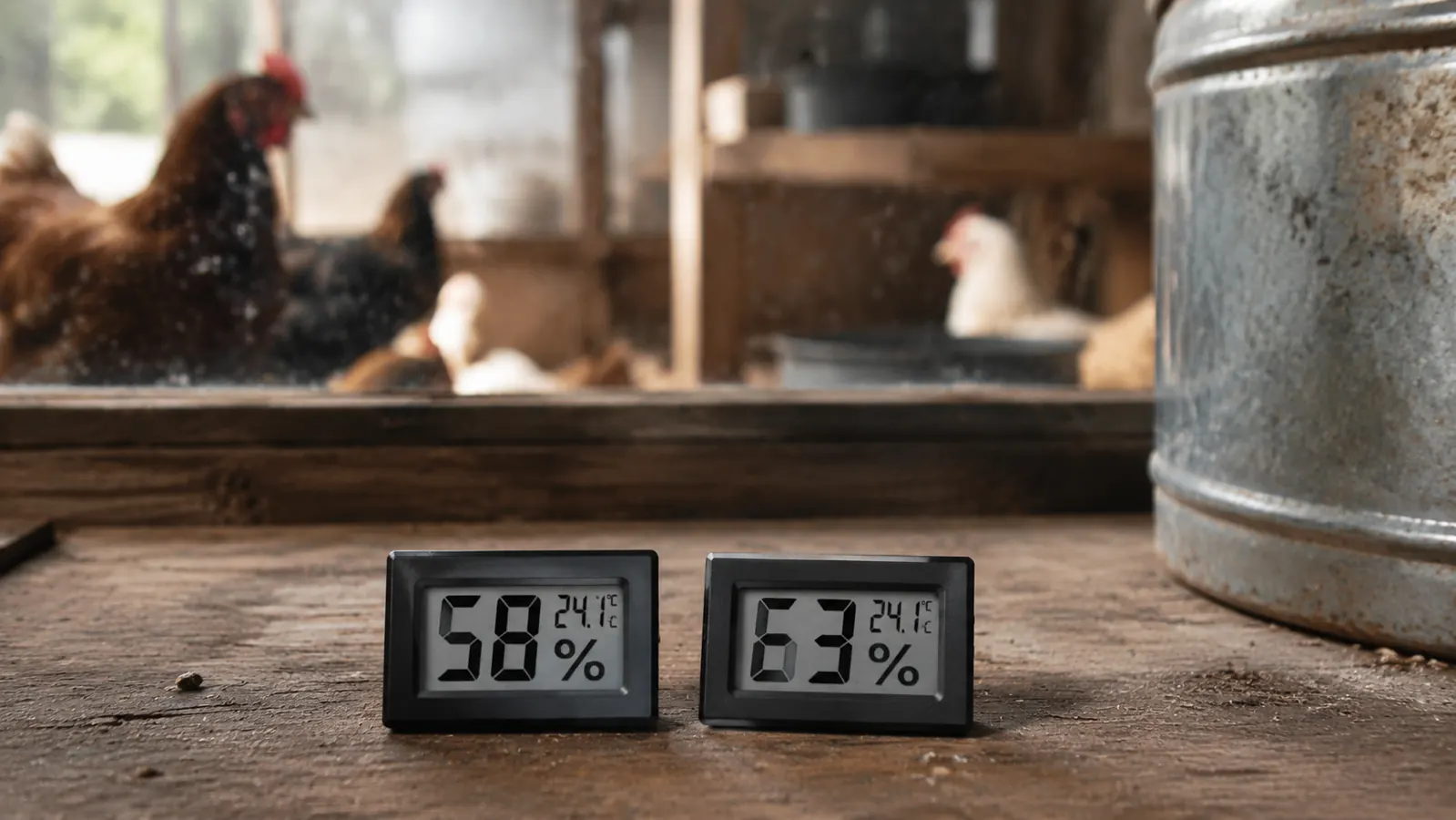
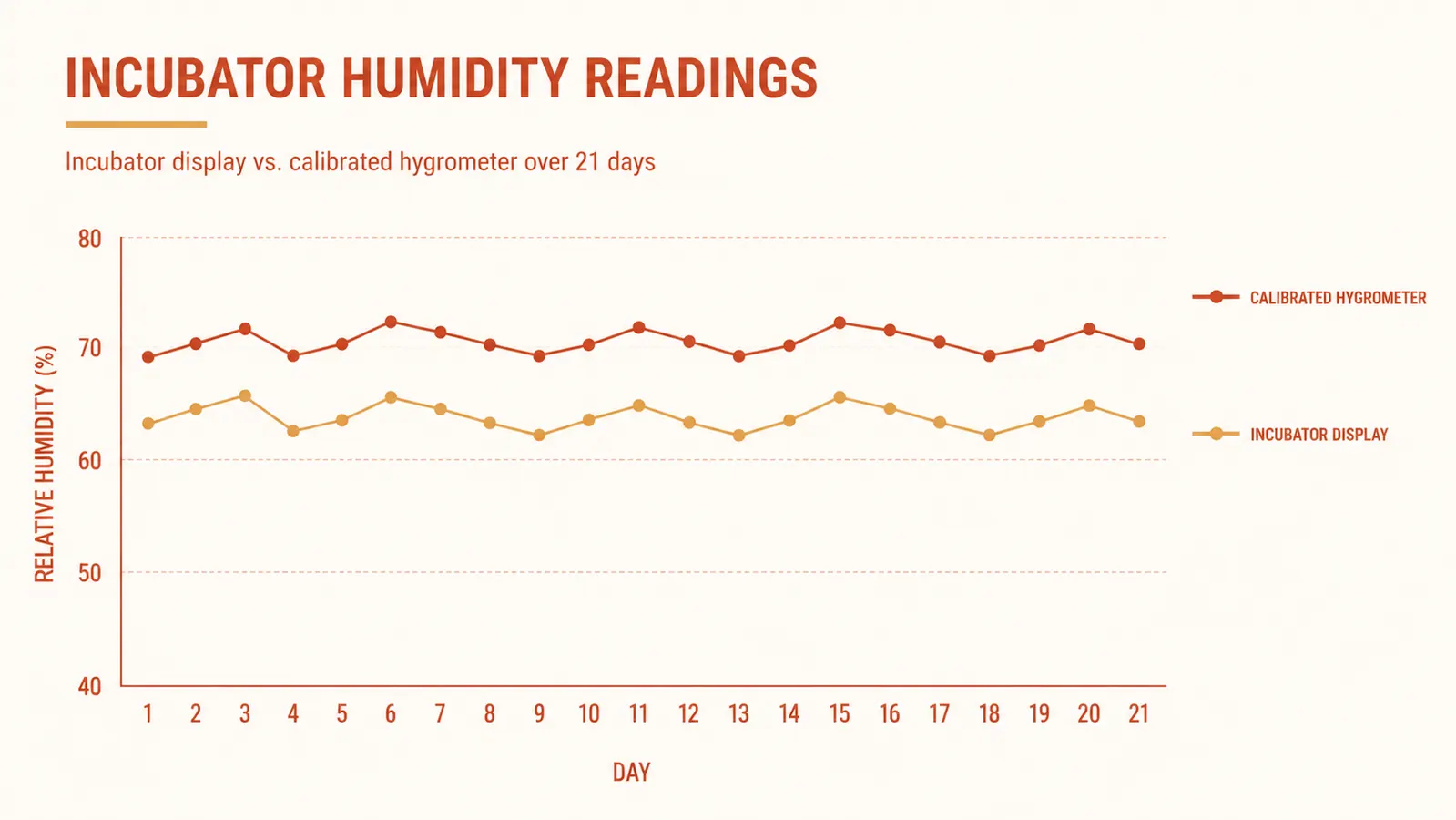
The MATICOOPX lists a humidity display as a headline feature, and it does have one. The problem is that it consistently reads low compared to a calibrated reference hygrometer. In my setup, the incubator display ran about four to six points below what my AcuRite digital hygrometer was reading when they sat side by side in the same environment. That may not sound like a lot, but during incubation you want relative humidity between 45 and 55 percent, and during lockdown (days 18 through 21) you want it up around 65 to 70 percent. A five-point underread can push you from 'normal' into 'too dry' without the display ever telling you something is wrong.
I reached out to a handful of people in my local chicken-keeping group after my second hatch. Two of them had the same machine, and one of them had also lost late-term eggs to a dry hatch after relying on the built-in numbers. The other had bought a cheap hygrometer off Amazon to run alongside it after reading a forum thread, and her hatch rates were consistently in the high seventies and low eighties. The machine is telling you something. It is just not telling you the exact truth.
The display reads about five points low in my setup. Five points feels minor until you lose six pipping chicks on day 21 and realize your 'fine' humidity was actually 'too dry' the whole time.
How to Calibrate: Adding a Second Hygrometer
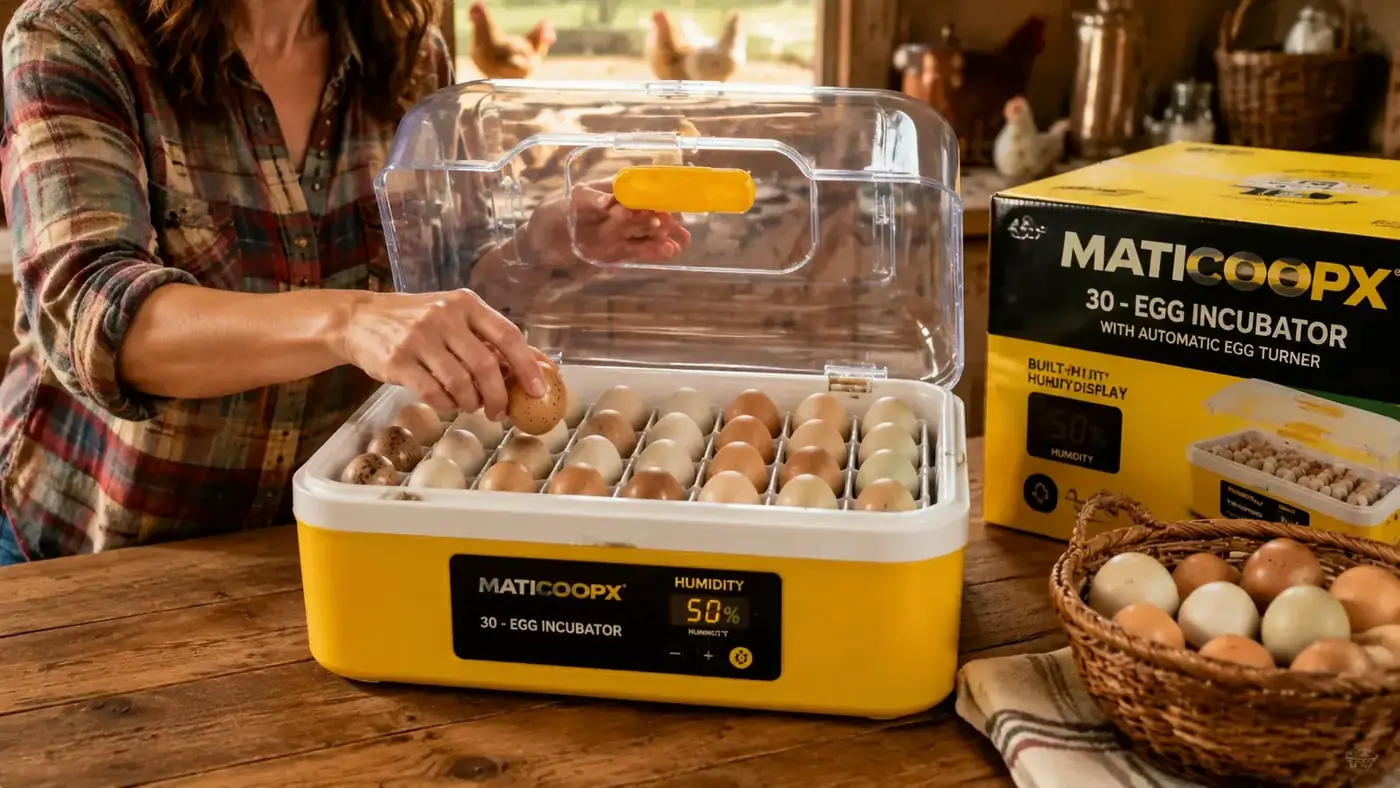
The fix is not complicated, but the manual does not mention it. Buy a second hygrometer. I use the AcuRite 01083 but any decent digital unit in the ten to fifteen dollar range will do the job. Place it inside the incubator next to your eggs from day one. Run it for 24 hours alongside the built-in display and note the difference. That difference becomes your calibration offset. If the incubator says 50 percent and your AcuRite says 55 percent, you know the machine runs five points low and you target 60 to 65 on the display to hit the 65 to 70 you actually need for lockdown.
Write the offset on a sticky note and tape it to the side of the machine. I am not joking. You will forget the number on day 14 when you are stressed about a suspicious-looking egg and trying to remember whether that cloudy spot is a late developer or a quitter. The sticky note costs you nothing. The forgotten offset could cost you a batch.
There is one more thing the manual glosses over: the water channels at the bottom of the incubator affect humidity differently depending on how many you fill. The machine has two separate channels and the manual instructs you to fill one for incubation and both for lockdown, but it does not tell you that filling the second channel mid-hatch will cause a humidity spike of ten to fifteen points for several hours before it stabilizes. Add water slowly during lockdown and check your reference hygrometer every few hours rather than assuming the display update means you are set.
The Fan Noise: Honest Assessment
The MATICOOPX uses a small circulation fan to keep temperature even across all 30 egg slots. This is a real advantage over still-air machines at this price point, and the temperature consistency I measured corner to corner was within about 0.3 degrees Fahrenheit, which is genuinely good. The tradeoff is that the fan is audible. Not loud enough to be annoying from another room, but if your incubator sits on a nightstand or in a bedroom, you will hear a low steady hum. In my house it lives on a shelf in the spare room and the noise is a non-issue. In a small apartment bedroom it might bother a light sleeper.
The fan also runs continuously, which is correct and how it should work. I mention this because a few Amazon reviewers left one-star ratings claiming the fan was 'always on' as though that were a malfunction. It is not. A still-air incubator at this price would give you uneven temperature across the egg rack and lower hatch rates. The fan is a feature, not a bug, and the noise level is moderate and steady, not intrusive.
What the Manual Leaves Out
The included manual is thin. It covers basic setup and a brief overview of temperature and humidity targets, but it skips several things you will need to know if you have never hatched before. Here is what I had to learn on my own or pull from online forums.
First: the automatic egg turner runs on a timed cycle and does not signal when it moves. You cannot tell by looking whether it has actually turned recently or whether the motor is working. The only way to verify is to watch it for 90 minutes and confirm the eggs have shifted. Do this once in the first 24 hours. The turner failed on someone in my chicken group mid-hatch and she did not notice until day 12. She lost nearly the whole batch.
Second: the built-in egg candler is a nice bonus feature but not strong enough to candle dark-shelled or thick-walled eggs well. My Marans eggs were almost impossible to read with it. A dedicated candling flashlight or a strong phone torch through a toilet paper roll will get you better results. The candler is a convenience feature for light-shelled eggs, not a substitute for real candling.
Third: the temperature calibration button adjusts the display reading but does not independently verify the probe. Before your first hatch, cross-check the incubator's temperature reading against a separate probe thermometer for at least 12 hours. My unit ran about 0.2 degrees high, which is minor, but I wanted to know.
Lockdown Anxiety and What to Actually Do
Day 18 is when most first-time hatchers spiral. You remove the egg turner, stop turning by hand, fill the second water channel, bump humidity to lockdown levels, and then you do not open the lid again until the hatch is complete or you are sure an egg needs help. The MATICOOPX holds temperature and humidity well during lockdown if your calibration is right going in. Where people go wrong is opening the lid because they cannot hear any peeping on day 20 and they panic.
Internal pipping (where the chick breaks into the air cell) can happen without any sound you can hear through the shell. External pipping, where you see the first crack in the shell, usually comes 12 to 24 hours after internal pipping. Full zip and hatch can take another 12 to 24 hours after that. Forty-eight hours from first pip to hatch is not unusual and is not a crisis. Every time you open the lid during that window you drop humidity sharply, and a chick that is mid-zip can dry out and get stuck before it finishes. Close the lid. Get a cup of coffee. This is the hardest part.
The MATICOOPX does not assist you in any of this decision-making. There is no pip detector, no alert, no countdown from day 18. You are managing lockdown yourself. That is true of every incubator in this price range and most above it, but it is worth saying for people who assume the machine will flag when action is needed. It will not. The machine holds the environment. You manage the process.
What I Liked
- Forced-air circulation keeps temperature even within 0.3 degrees corner to corner across all 30 slots
- Fully automatic egg turner frees you from 3x-daily manual turning during incubation days 1 through 18
- 30-egg capacity is genuinely useful for standard flocks wanting a real batch hatch
- Built-in egg candler is handy for light-shelled eggs and does not require removing eggs from the machine
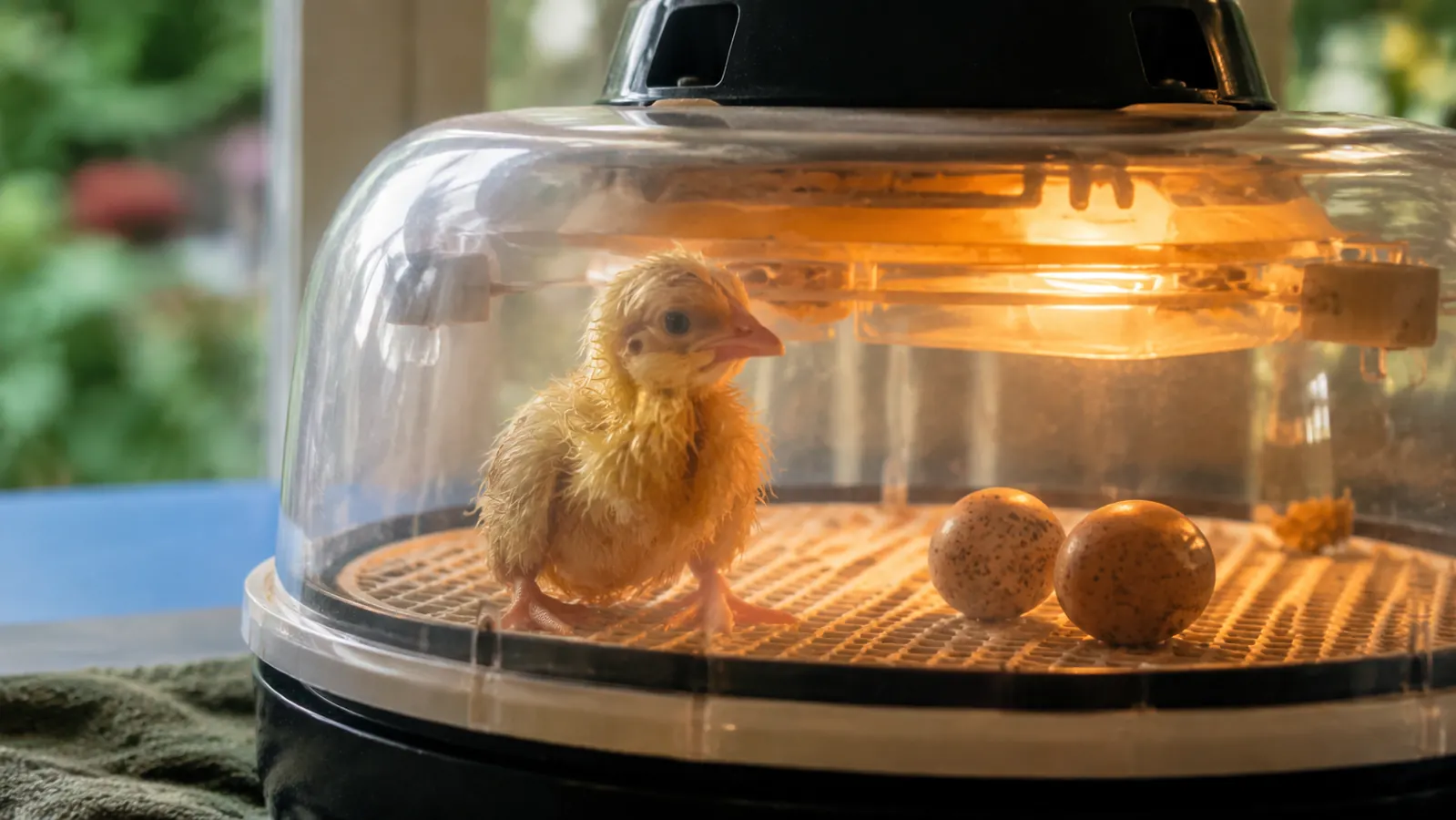
- Transparent lid lets you watch the hatch without opening the incubator
- Temperature holds steady once dialed in, recovers quickly from brief door openings before day 18
Where It Falls Short
- Humidity display reads four to six points low in my experience; requires a second calibrated hygrometer
- Manual is thin and skips important information about water channel behavior during lockdown
- Egg turner failure gives no alert; you must manually verify it is working in the first 24 hours
- Fan is audible and runs continuously; not an issue in a spare room but noticeable in a bedroom
- Built-in candler is too dim for dark-shelled breeds (Marans, Welsummer)
- Overkill for keepers who only want to hatch 6 to 10 eggs at a time; a smaller unit would waste less energy and take up less counter space
Who Should Not Buy This Incubator
If you have one broody-friendly hen and you mostly let her handle hatching, but you occasionally want to hatch six eggs when no one goes broody, this machine is more than you need. A 30-egg incubator running at one-fifth capacity is not ideal. The humidity dynamics change when the egg mass is low because there is less moisture coming off the eggs themselves to help stabilize relative humidity. You will fight humidity swings more than you would in a machine sized to what you are actually hatching. A 7-egg or 12-egg incubator in the forty to sixty dollar range will be easier to manage for small batches and will not take up half your counter.
This machine is for keepers who are regularly hatching 18 to 30 eggs per round, who want the auto-turner, and who are willing to do the setup work of adding a second hygrometer and learning their unit's calibration offset before trusting it with a full batch. If that describes you, the MATICOOPX earns its price. If you are hatching six Ameraucana eggs every few months and you just want something that works without reading forum threads, consider sizing down.
Who This Is For
You want this incubator if you are running 20 to 30 eggs at a time, you are willing to spend fifteen minutes calibrating it with a second hygrometer before your first hatch, and you like having an auto-turner because you have a job and cannot turn eggs by hand three times a day. It performs well at its price point. The hatch rates on my third batch, after I understood the humidity offset and started managing lockdown correctly, were 23 out of 28 fertile eggs. That is 82 percent, which is a solid number for a home incubator. The machine is capable. You just have to know it.
It is also a good choice if you are stepping up from a cheap still-air machine that gave you uneven hatches because of hot and cold spots across the egg rack. The forced-air circulation in this one is a genuine upgrade and the temperature consistency made a real difference in my developmental outcomes compared to the no-name still-air unit I used before.
Final Verdict
The MATICOOPX 30-egg incubator is not a set-it-and-forget-it machine, and it is dishonest to sell it as one. The humidity display needs a calibration partner. The manual needs a second, more useful page. The egg turner needs a verification step in the first day. None of these are deal-breakers, but together they mean that the people who have terrible results with this machine are usually the ones who trusted it without checking, and the people who have great results are the ones who spent an extra hour in the first 24 hours making sure the numbers are right.
I kept mine. I will use it again this spring when my Buff Orpington cross eggs are ready. But I will put my AcuRite hygrometer in on day one, write the offset on the sticky note, watch the turner move at least once before day two, and go make coffee when day 20 comes and I want to open the lid. The machine rewards the keeper who respects the process. If that is you, it is worth the price.
Know what you are getting into and it is a solid machine for a full-batch hatch.
The MATICOOPX 30-egg incubator works well for keepers hatching 18 to 30 eggs at a time who are ready to calibrate it properly. Check the current price before your next batch.
Amazon Check Today's Price on Amazon →