
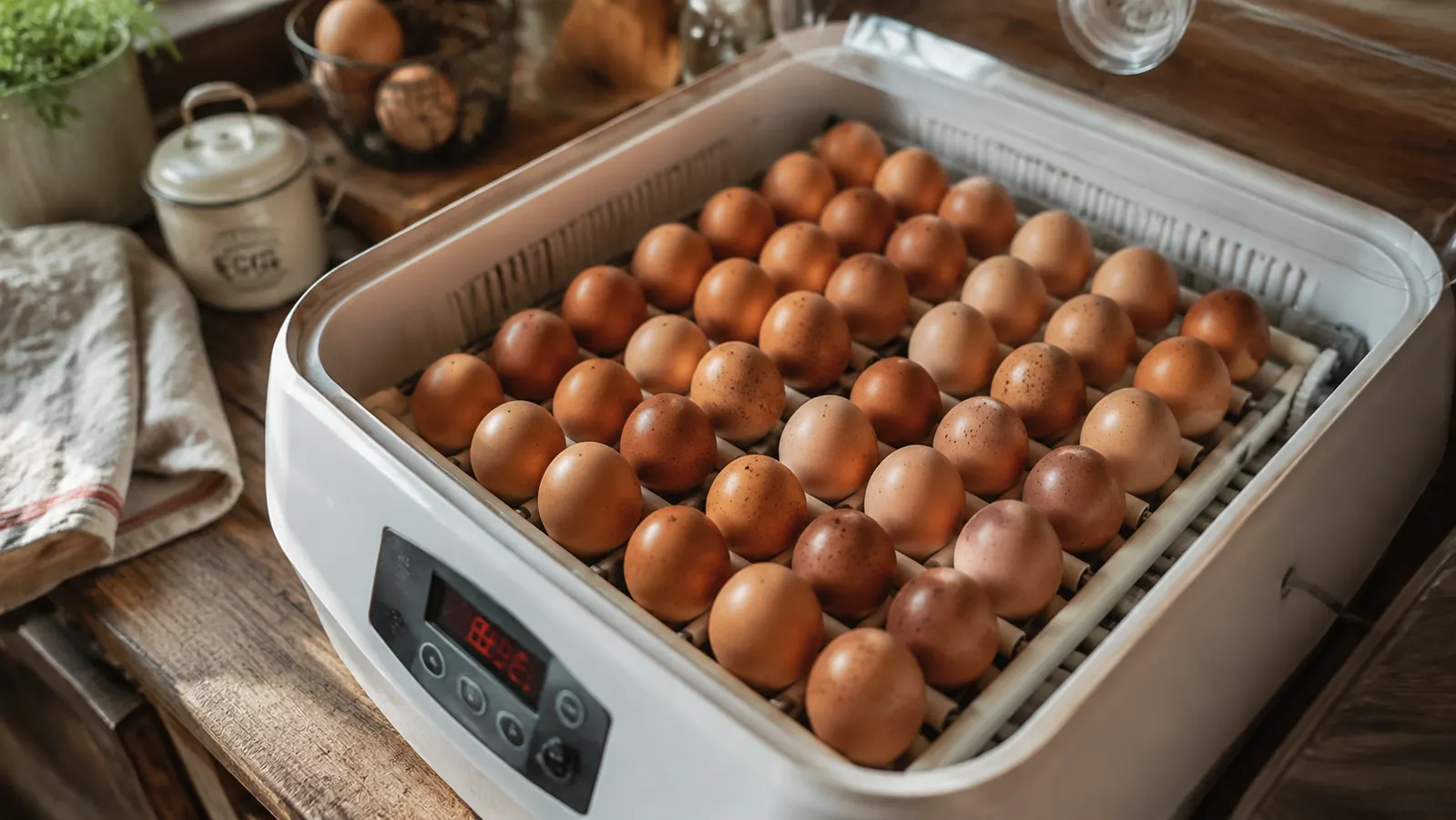
My first hatch was a disaster. Fourteen eggs went in. Three chicks came out. Two of those three were shrink-wrapped inside their shells and needed help I probably should not have given them. I blamed the eggs, blamed the weather, blamed everything except what actually went wrong: I made almost every beginner mistake in the book, and I made them with total confidence.
Since then I've run enough hatches to know exactly where things go sideways for first-timers. Most of these mistakes are not about skill. They're about not having the right information on day one, and sometimes about not having an incubator that shows you what you need to see. Here are the ten that come up over and over again, plus what to do instead.
Want to skip most of these mistakes from hatch one? The MATICOOPX shows you live humidity and temp so you're not flying blind.
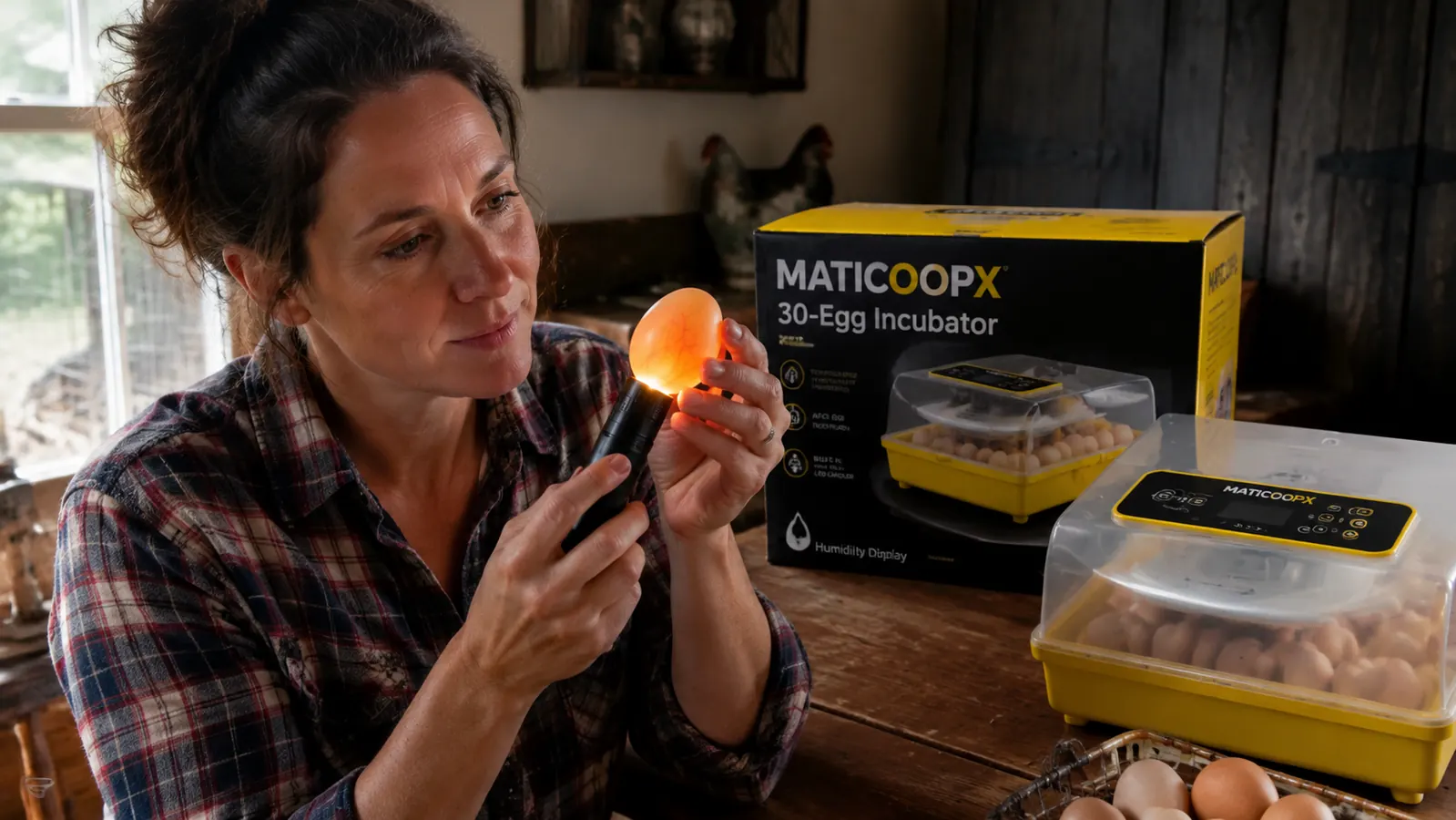
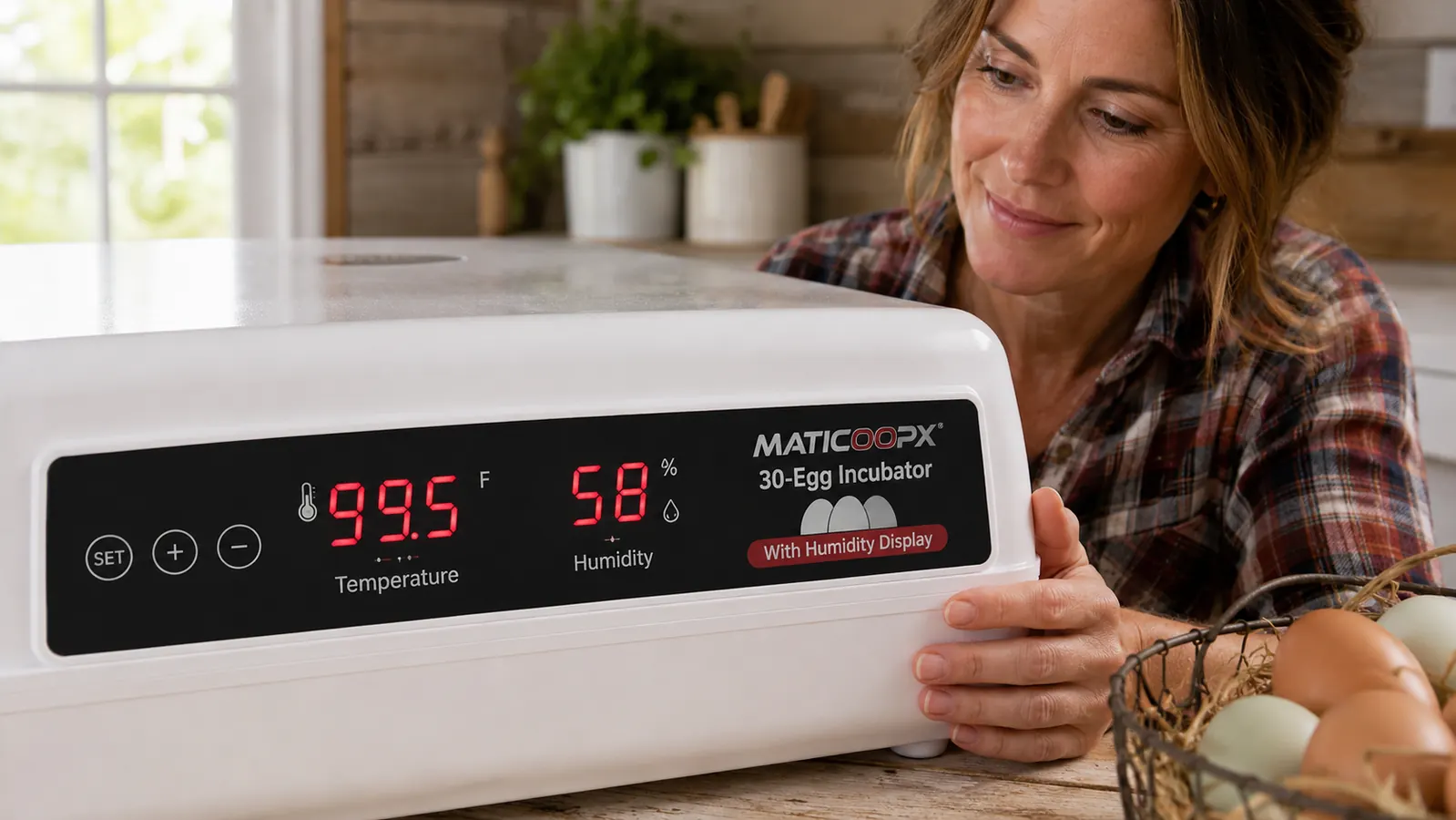
The MATICOOPX 30-Egg Incubator has a built-in humidity display, automatic egg turner, and egg candler included. It's the setup I wish I'd started with.
Amazon Check Today's Price on Amazon →Skipping a Thermometer Cross-Check on Setup Day
The built-in thermometer on cheap incubators can read two to three degrees off, and two degrees is the difference between a good hatch and a dead-in-shell batch. Before you ever set eggs, run your incubator for 24 hours with a secondary calibrated thermometer inside and compare. The MATICOOPX uses a dual-sensor system that reads both temperature and humidity simultaneously, which gets you much closer right out of the box, but I still put a probe thermometer in mine on the first run just to confirm. Trust but verify.
Storing Eggs at the Wrong Temperature Before Setting
If you collect eggs over several days before incubating, storage matters more than most people think. Eggs stored above 65 degrees start developing unevenly. Stored below 50 degrees, the germinal disc can be damaged. The sweet spot is 55 to 60 degrees, pointy end down, tilted slightly and turned once a day. I keep mine in a cool corner of my mudroom away from drafts. Once you've got your batch ready, set them all at the same time so they're on the same development schedule inside the MATICOOPX turner.
Running Humidity Too Low for the First 17 Days
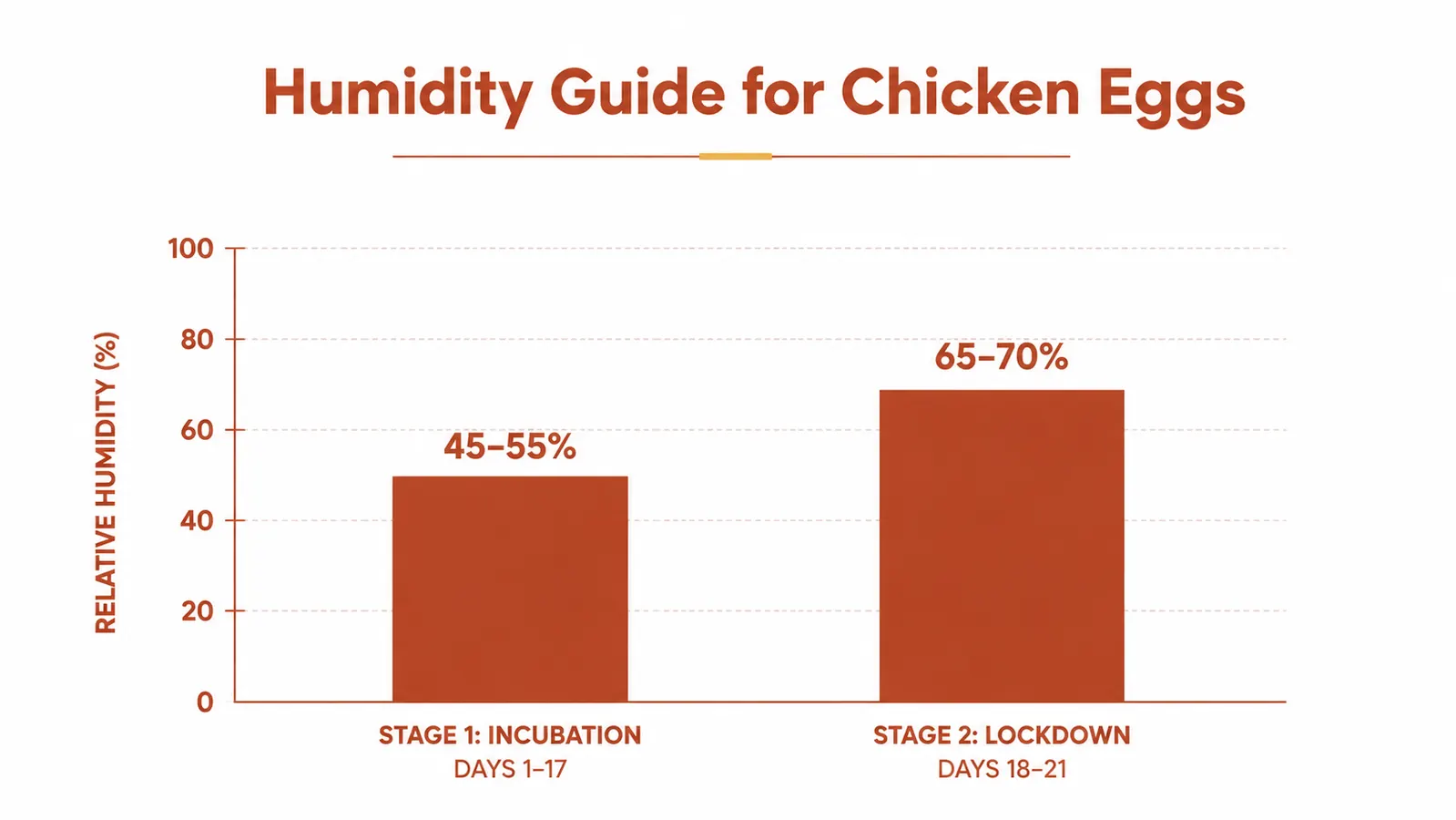
Most first-timers obsess over temperature and completely ignore humidity. Low humidity during incubation (days 1 through 17) causes the air cell to grow too large, and by lockdown the chick has no room to position itself for hatching. Target 45 to 55 percent during this phase. The MATICOOPX has a live humidity display right on the front panel so you can see at a glance whether you need to add water or crack the port. Before I had that display, I was guessing.
Forgetting to Bump Humidity at Lockdown
Day 18 is when everything changes. The automatic turner stops, the eggs go horizontal, and humidity needs to jump to 65 to 70 percent. This higher humidity softens the membrane so the chick can break through. I've seen hatchers forget to bump humidity entirely on day 18 and then wonder why their chicks died pipping. Set an alarm, make the change, and check it again six hours later. The MATICOOPX shows you the number clearly so there's no ambiguity about where you are.
Opening the Lid During Lockdown
I cannot stress this enough: once you hit day 18, close the lid and leave it alone. Every time you open the incubator during lockdown you lose humidity instantly, and that moisture loss can shrink-wrap a chick against its membrane just as it's trying to pip. If a chick is rocking, vocalizing, or pipping the shell, that's normal. Leave it alone. The MATICOOPX lets you monitor temp and humidity through the transparent top panel without ever cracking the lid, which is exactly the kind of feature that saves a hatch.
Every time you open the lid during lockdown you drop humidity in seconds. That single habit kills more chicks than any equipment failure I've seen.
Candling Too Late to Remove Quitters
If an egg quits developing and you leave it in the incubator, it can eventually weep or explode and contaminate your other eggs. Candle on day 7 to identify clear eggs and obvious quitters, and again on day 14 to catch anything you missed. A quitter on day 14 looks like a dark mass with no movement and a large air cell. The MATICOOPX includes an egg candler in the box, which saves you from buying one separately and fumbling around in the dark with a flashlight and a paper towel tube.
Not Turning Eggs (or Turning Them Unevenly)
Eggs need to be turned at least three times a day during incubation, ideally five times, to prevent the yolk from sticking to the shell membrane. If you're turning by hand and you go more than 12 hours between turns, you're in trouble. The MATICOOPX has an automatic turner that rotates eggs on a set schedule, which means no 2am alarms, no skipped turns because life got busy, and no question about whether you did it already. For first-timers this alone is worth the upgrade from a budget box.
Placing the Incubator in a Drafty or Sunny Spot
Temperature fluctuations from outside sources, a window, a heating vent, a door that opens and closes, wreck your internal stability even if your incubator is reading correctly. Put your MATICOOPX in an interior room away from windows, not in the garage where temps swing 20 degrees between morning and afternoon. A stable ambient environment helps your incubator hold steady without the heating element cycling hard, which is better for both consistency and the life of the machine.
Setting Shipped Eggs Too Soon After Arrival
If you bought hatching eggs online, they've been jostled, chilled, heated, and potentially held at odd angles for days. The air cells can detach. When shipped eggs arrive, set them pointy end down at room temperature for 12 to 24 hours before they go into the incubator. This lets any scrambled air cells settle before you add the heat and motion of incubation. I learned this after a 12-egg shipped batch gave me two chicks. After resting arrivals first, my rates from shipped eggs doubled.
Helping a Chick Out of the Shell
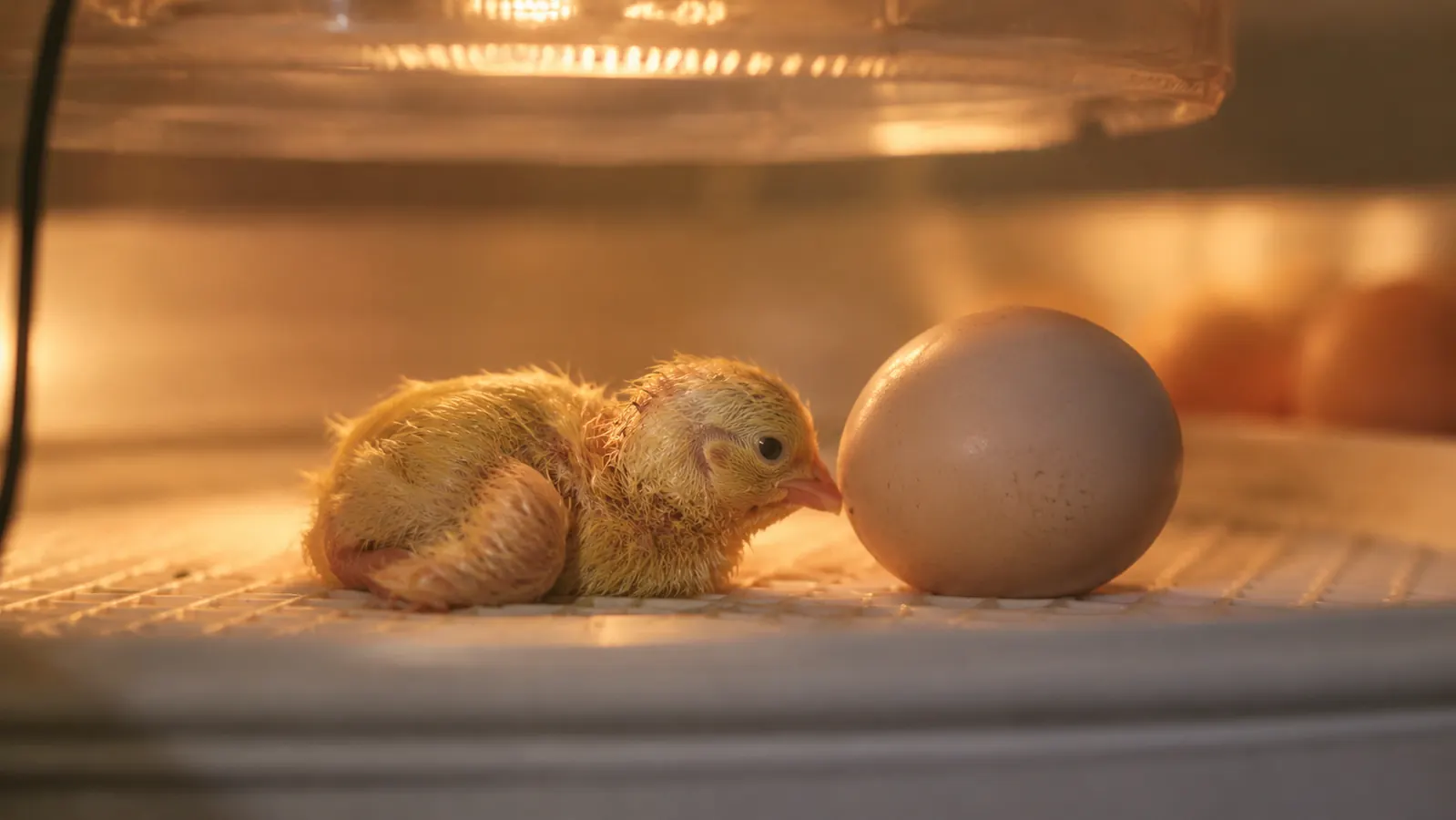
This one hurts to write because I have done it and it never ends well. If a chick is pipping but not zipping after 24 hours, it's tempting to help. In almost every case, the right move is to wait. A chick that genuinely cannot hatch unassisted usually has an underlying issue, and a chick that just needed more time gets damaged by interference. Humidity is usually the real problem, and the MATICOOPX's live display gives you the data to fix humidity before a chick gets stuck, which removes most of the situations where you'd feel tempted to intervene.
What I'd Skip
I'd skip any incubator that doesn't show you live humidity. Temperature-only displays put you in the dark for the variable that kills the most first-time hatches. I'd also skip manual-turn models if you have a day job, a commute, or kids. The convenience of automatic turning is not a luxury, it's a reliability guarantee. Budget foam box incubators under $40 are fine for one curiosity hatch but they'll have you guessing all three weeks. If you're going to invest in eggs, fertilized or shipped, put them in an incubator with the monitoring tools to actually protect them. That's why I keep pointing back to the MATICOOPX. It's the incubator I'd hand to a first-timer and say 'start here.'
If you want to dig into a full walkthrough of an actual hatch start to finish, my MATICOOPX review covers three back-to-back hatches with real numbers. And if none of your hens will sit and you're wondering whether incubating is the right call, I wrote a full guide on how to hatch eggs when your hens refuse to go broody that walks through the whole setup.
You've read the mistakes. Now give your eggs an incubator that shows you everything in real time.
The MATICOOPX 30-Egg Incubator has live humidity and temperature displays, automatic turning, a built-in egg candler, and a transparent lid for lockdown monitoring. Rated 4.4 stars across nearly 2,000 hatchers.
Amazon Check Today's Price on Amazon →