
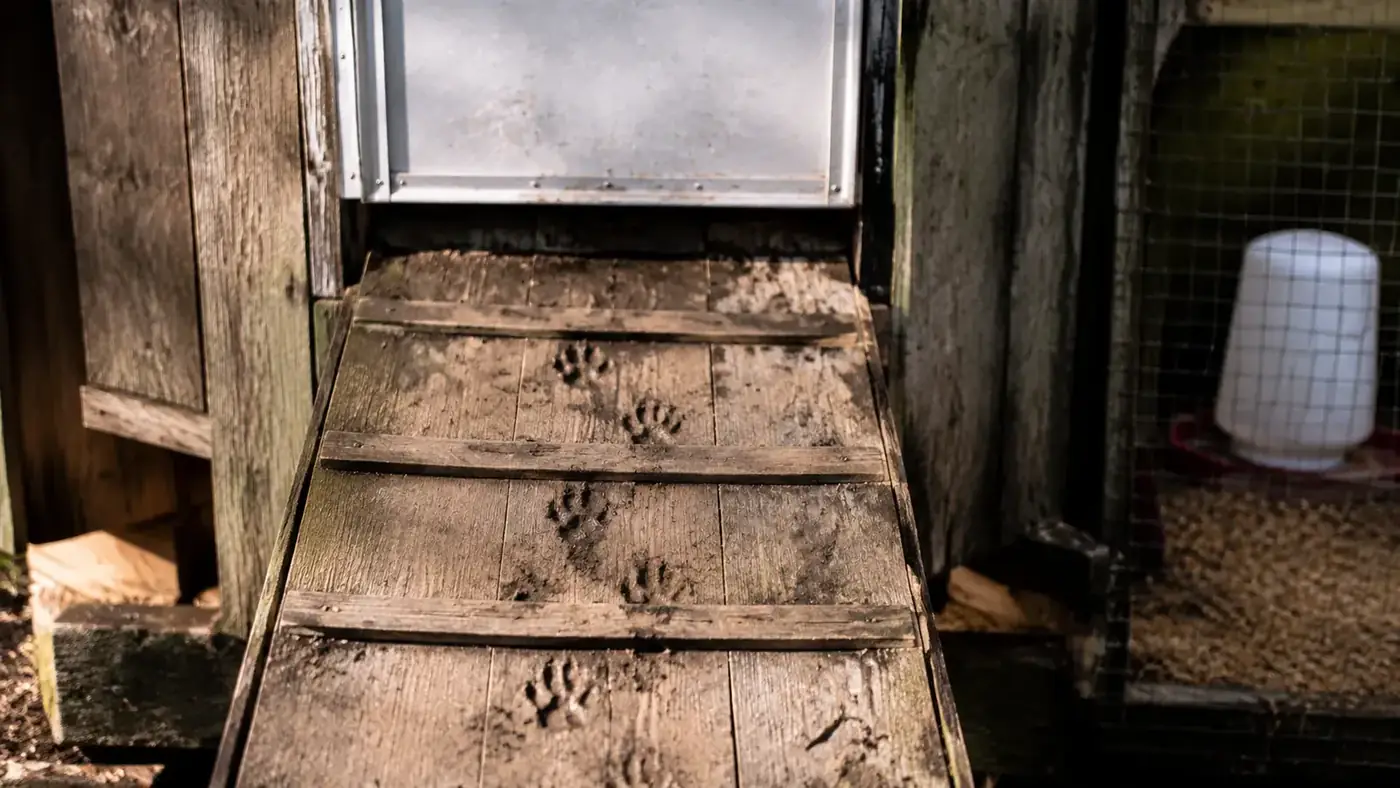
It was a Thursday in late September when I got the text. My neighbor Carol, who checks on my girls when I am out of town, sent me a photo at 6:48 in the morning. I was two hours away, still in bed at my sister's place, and my stomach dropped the moment I saw it. Raccoon tracks. Thick, deliberate paw prints pressed into the mud on the coop ramp, leading all the way up to the door. And stopping there.
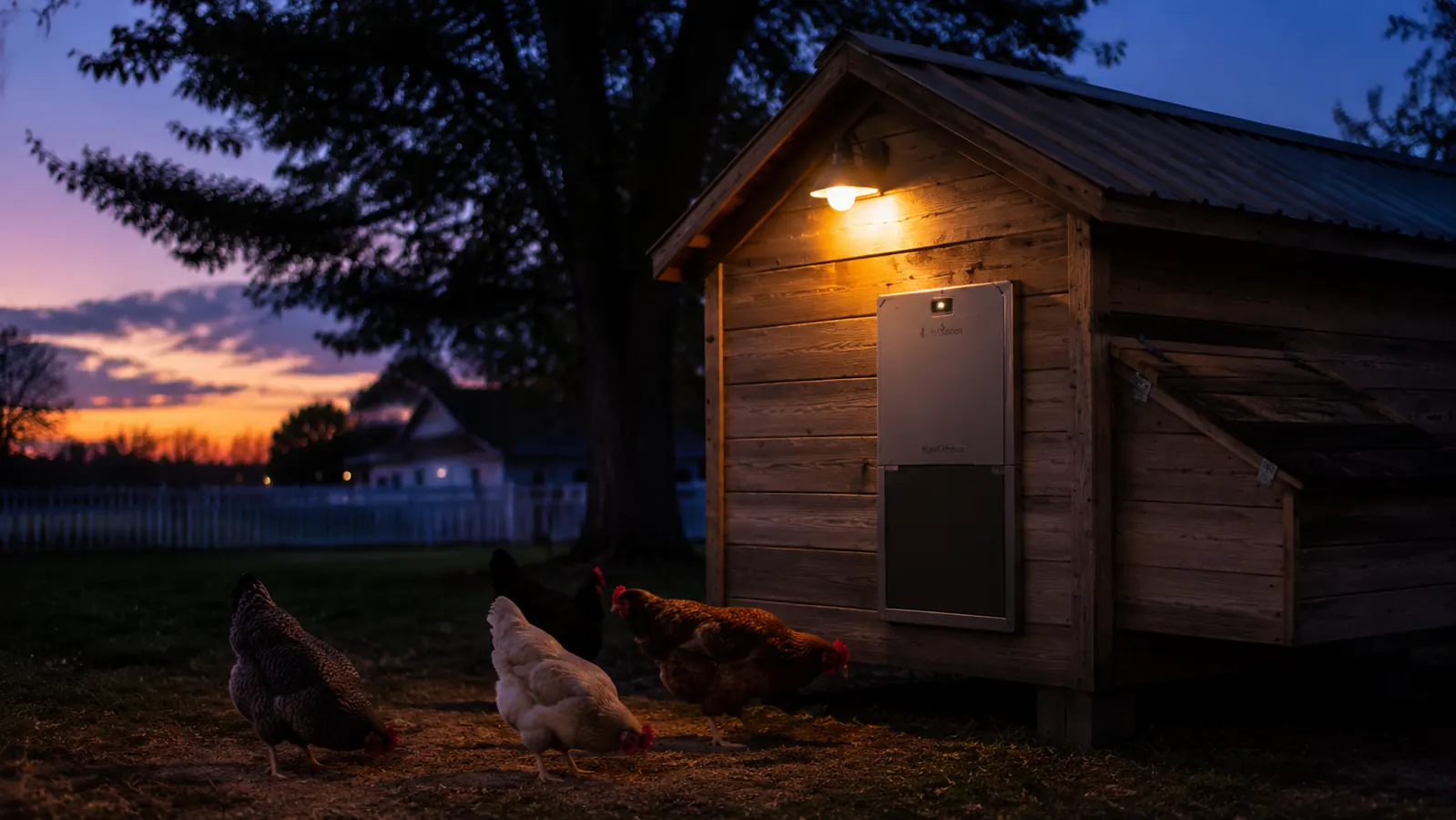
The door had held. Not because I was there, not because Carol had remembered to check at sundown, but because the RUN-CHICKEN T50 had closed itself automatically when the light faded the night before, just like it does every single evening. Something had come for my hens and found a locked aluminum door instead of the wooden flip-latch I had been trusting for two years.
I want to back up, because buying this door was not something I did proactively. I bought it because I had already made the mistake once. The summer before, I lost Biscuit, a three-year-old Buff Orpington who had survived three winters and a red-tailed hawk scare, to a raccoon that got in because I forgot to close up on a Friday night. I had come home from dinner with my husband, assumed I had closed it earlier, and went to bed. By morning, Biscuit was gone and two of my other girls were badly shaken. I sat on the floor of that coop and cried, which I am not ashamed to admit.
Something had come for my hens and found a locked aluminum door instead of the wooden flip-latch I had been trusting for two years.
After that, I started the routine most chicken keepers know well. Set a phone alarm for 8:30pm. Go out, close the door. Set another alarm for 6:15am to let them out. And it worked, until it didn't. The alarms got snoozed. I was sick one night and asked my husband to do it and he forgot. We went camping for a weekend and relied on a neighbor who got the time wrong two nights in a row. The whole thing was held together with good intentions and anxiety.
I researched the RUN-CHICKEN T50 for about a month before I bought it. I watched videos, read forum threads on BackYard Chickens, and debated whether I really needed to spend that much when I could theoretically just be more disciplined. Then I booked the trip to my sister's and knew I could not ask Carol to come out twice a day, every day, for five nights. I ordered it.
If you have ever forgotten to close your coop, this door is the fix.
The RUN-CHICKEN T50 runs on four AA batteries, opens and closes by light sensor, and has over 3,000 reviews. It is what I have on my coop right now.
Amazon Check Today's Price on Amazon →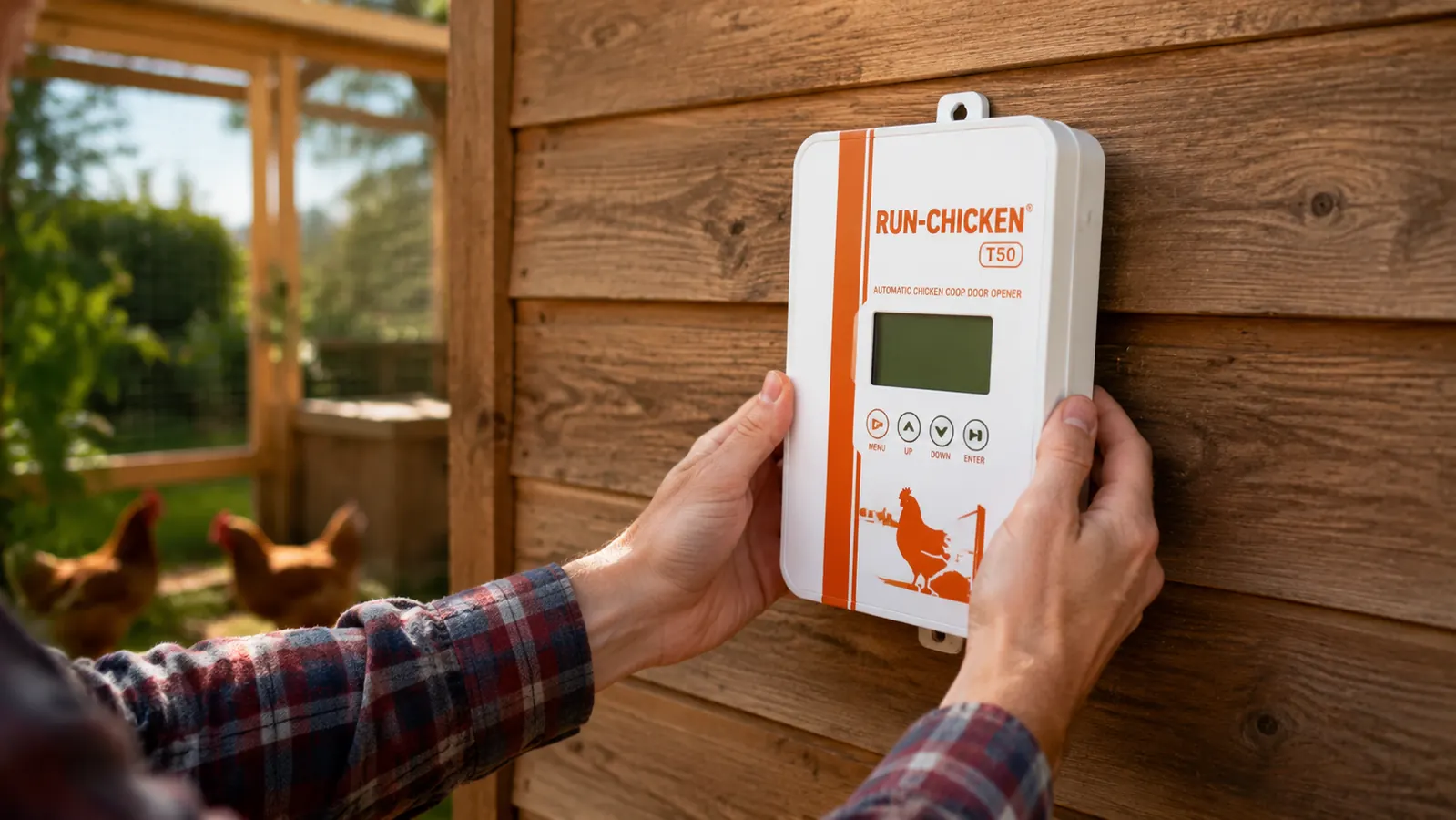
Setup took me about forty-five minutes on a Saturday morning. The door mounts directly to the coop wall with the included screws, the aluminum door panel drops into the track, and the light sensor sits on top. You run four AA batteries in the housing and that is genuinely it. No wiring, no drill-through for an electrical cord, no app to configure. I did read the instructions twice because I was nervous, but they are short and clear. The door opened itself that evening right at dusk, just as promised.
What I did not expect was how much mental weight it would lift. The 8:30pm alarm is gone. I do not think about it when I am out late at dinner. When we drove to see my sister in September, I did not spend the five-hour drive doing math about whether Carol would remember. I knew the door would close. That sounds small but it isn't. Three years of nightly anxiety about a flip-latch is a lot of overhead to carry.
What I'd Tell You If We Were Sitting at My Kitchen Table
The RUN-CHICKEN T50 is not fancy. There is no app, no camera feed, no notification that says your flock is locked in for the night. Some people want those things and there are doors that offer them. For me, that is not the point. The point is that the door closes itself every single evening whether I am standing in my yard with a cup of tea or sitting in a hotel room two states away. It has not missed a night in the eight months I have had it.
There are a couple of things worth knowing. The light sensor is sensitive, meaning on heavily overcast winter days it will sometimes try to close mid-afternoon. I solved this by adjusting the light threshold dial, which takes about thirty seconds. Also, the AA batteries last most people through winter but I swap mine every fall out of habit, which costs me maybe three dollars a year. These are minor things.
The honest version of this recommendation is the one I give my neighbor Diane, who keeps six Easter Eggers in a coop about half a mile down the road from me. She asked me last spring whether she really needed one, and I told her the same thing I'm telling you now. You don't need it until the night you need it, and by then it's too late to order it. I lost Biscuit on a night I was sure I had things handled. I won't make that mistake again, and I don't think you should have to make it either.
If you want to read a full breakdown of how the T50 performs over time, including the one quirk with cold-weather sensor drift, I have a longer review here: RUN-CHICKEN T50 Review: One Year of Automated Coop Lock-Down. And if you are still on the fence about whether an automatic door is worth it at all, this piece lays out the ten most common reasons chicken keepers finally pull the trigger: 10 Reasons Every Backyard Keeper Should Have an Automatic Coop Door.
The raccoon that hit my coop that September is probably still out there. The T50 is still closing every night.
Four AA batteries, light sensor, aluminum door panel. That is what stands between your flock and whatever is working your yard after dark.
Amazon Check Today's Price on Amazon →