
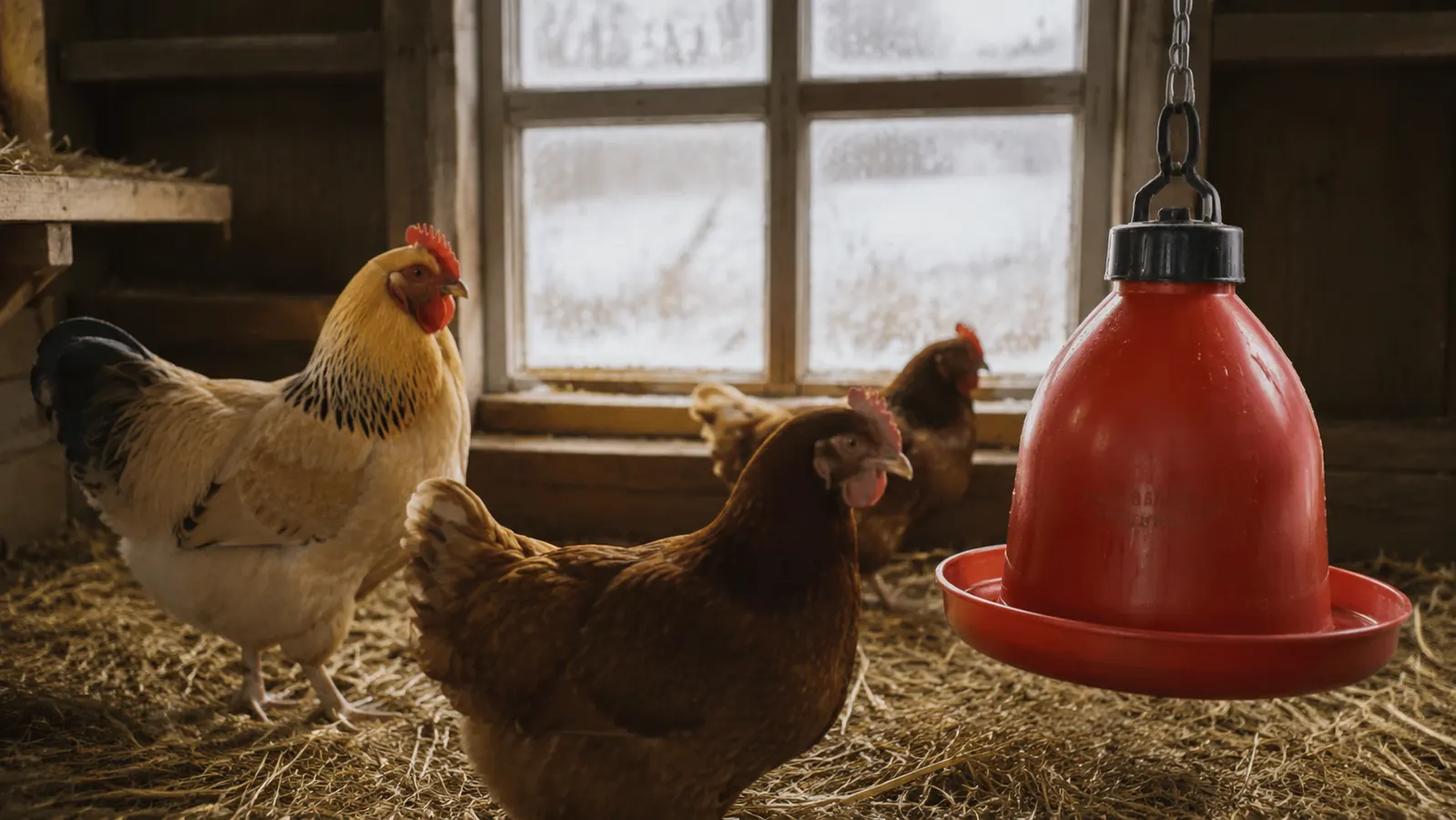
The winter my five Buff Orpingtons and two Rhode Island Reds went without liquid water for a full day, I was standing in my coop at 6am with a rubber mallet, banging on the base of a rubber bowl that had turned into a solid puck overnight. The temperature outside was minus 14 degrees Fahrenheit. I had tried the tennis ball trick, the black rubber bowl in the sun trick, and the dunk-it-in-hot-water-every-few-hours trick. All of them failed once we hit single digits. That same week I ordered the Farm Innovators 3-Gallon Heated Chicken Waterer, and I have been running it through every Minnesota winter since. That was three winters ago.
This review covers what I actually learned over three seasons of use, not just the first cold snap. I will tell you what surprised me, what annoyed me, the one time I caused a problem myself by ignoring the fill line, and whether I would buy it again if mine died tomorrow. Short answer: yes. But there are a few things worth knowing first.
The Quick Verdict
The Farm Innovators heated waterer is the most reliable way I have found to keep water liquid below zero, and at under $60 it is far cheaper than nursing a sick hen through dehydration in January.
Amazon Check Today's Price →If your flock has gone even one winter morning without liquid water, you already know the cost of waiting.
The Farm Innovators 3-gallon heated waterer has over 6,000 Amazon reviews for a reason. It is the waterer I trust when the temperature forecast shows a minus sign.
Amazon Check Today's Price on Amazon →How I've Used It: Three Seasons of Real Winter Testing
My setup is a 6x8 foot wooden coop with two small windows, no supplemental heat source, and a covered 10x12 run attached to the south side. I have seven hens total, a mix of heavy breeds built for cold weather. When I installed the Farm Innovators waterer in November of year one, I hung it from a chain hook at about mid-chest height on the hens, which keeps the nipples or trough edge at the right drinking level and allows some air circulation underneath the base. That positioning matters more than I expected, and I will come back to it.
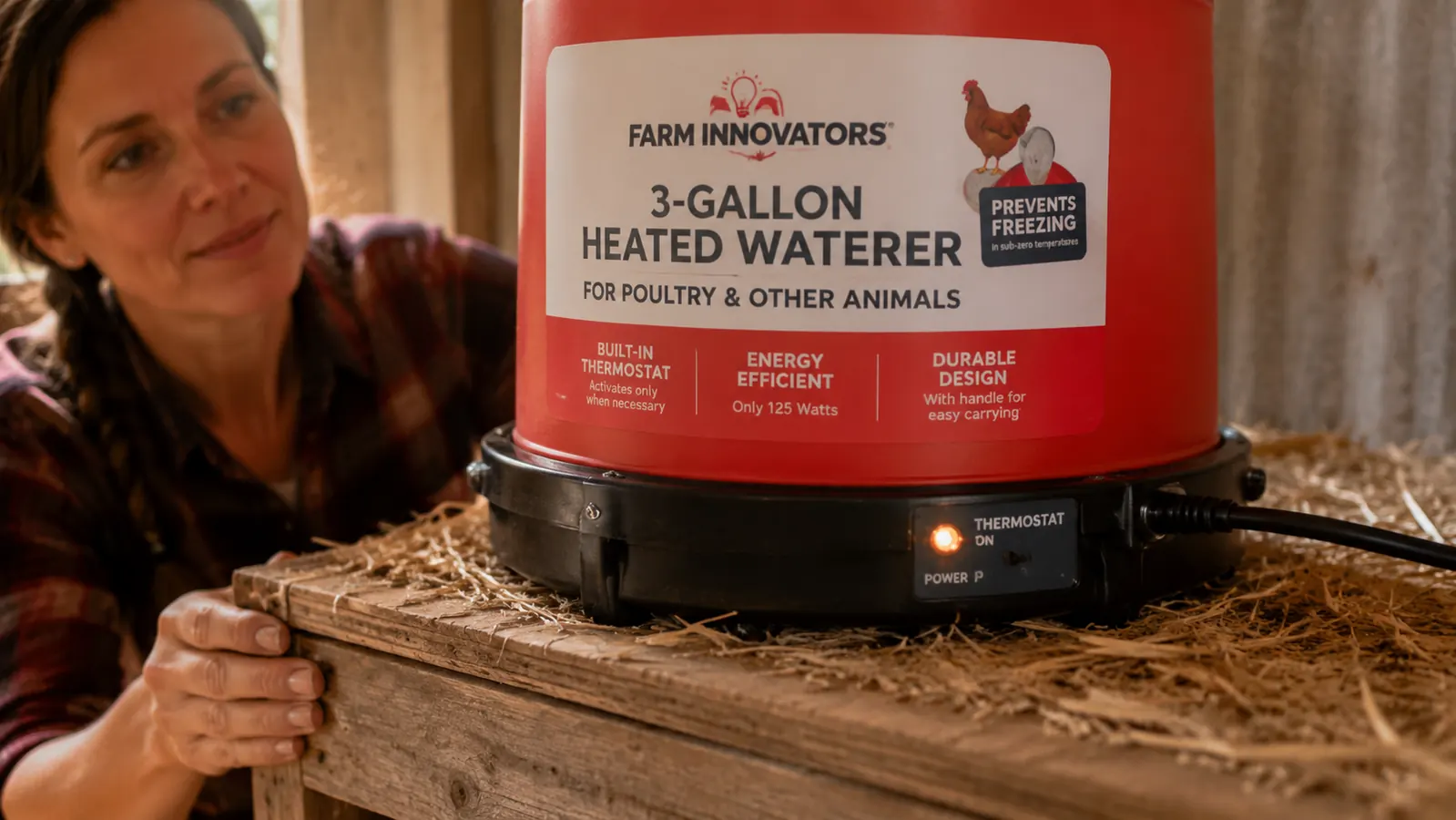
The setup took about 20 minutes. You fill the top reservoir, flip it over, set it on the base, and plug in the 6-foot cord. The thermostat inside the base is pre-set at the factory to kick the heating element on at 35 degrees Fahrenheit and shut off at around 45 degrees. That means the element is not running constantly, only when the ambient temperature around the base drops close to freezing. In a typical below-freezing night here, I can hear the relay click on at around 10pm and it runs until mid-morning when the coop warms up with body heat from the birds.
I refill every two days in winter when the flock is not ranging much outside. Seven hens drink roughly 1.5 to 2 gallons per day when it is cold, so a 3-gallon fill gets me through about 36 to 40 hours comfortably. In deep cold I check it daily because I would rather refill than have them run low.
What Actually Happens Below Zero
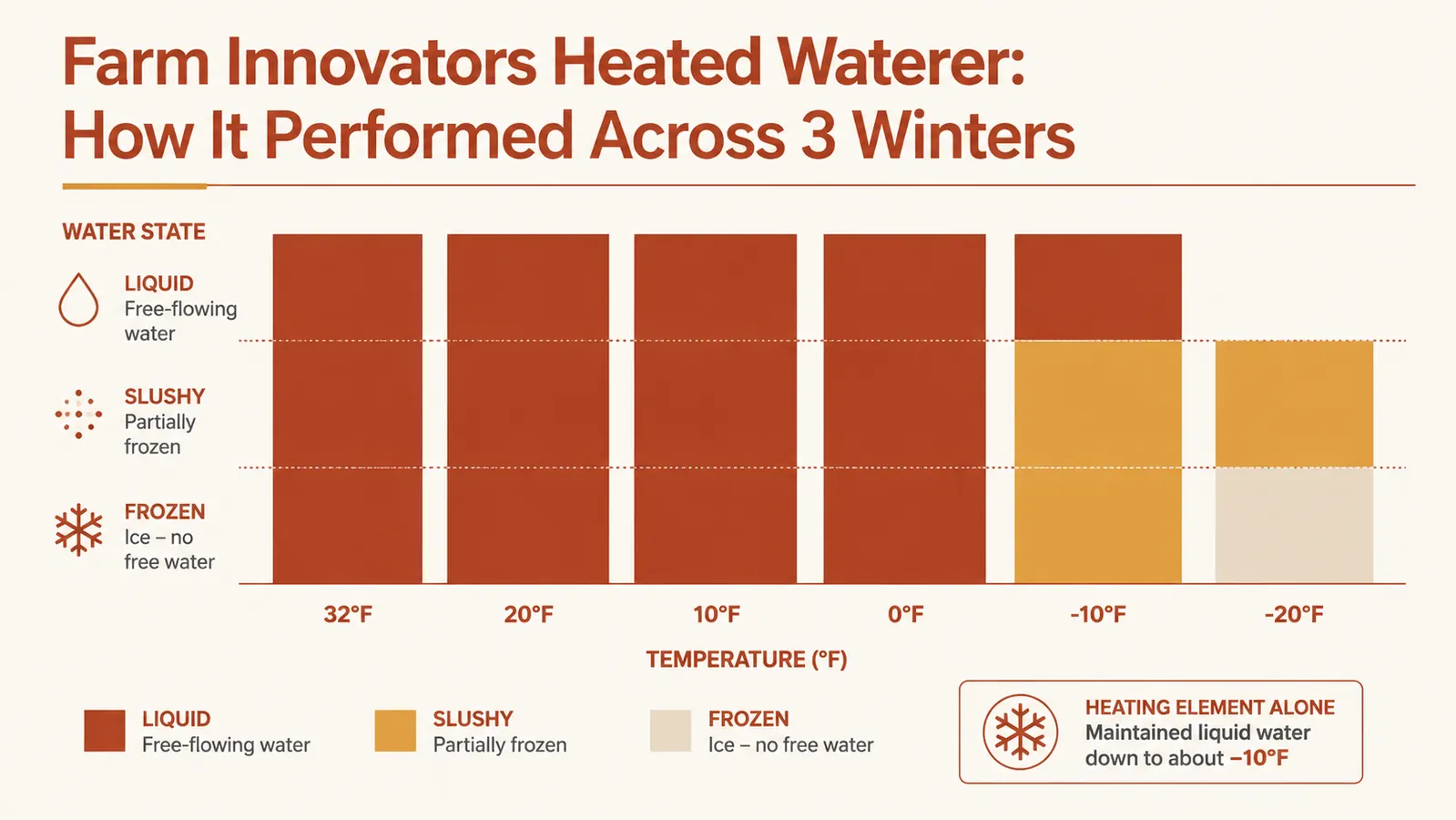
The question everyone asks about heated waterers is: how cold is too cold? My honest answer is that the Farm Innovators held liquid water reliably down to about minus 10 degrees Fahrenheit in my coop. Below that, I started seeing slush forming near the trough openings, but the water in the main body stayed liquid. The trough lip is the most exposed surface and the first place to freeze, so at minus 15 and below I would give it a quick stir with a stick first thing in the morning just to make sure the openings were clear.
During the worst stretch I have experienced, a nine-day cold snap where nighttime lows ran between minus 18 and minus 22, the waterer kept the main body liquid but the trough completely froze over twice. Both times, ten minutes of indoor warmth on the trough end cleared it. I would not call that a failure; I would call that the outer limits of what a 100-watt element in an uninsulated coop can do. The Farm Innovators listing does not promise performance at minus 20, and if you live somewhere that sees those temperatures regularly, you either need a second heat source in the coop or you need to pull the waterer inside at night and swap it in the morning.
One thing that genuinely surprised me: the thermostat is more accurate than I expected for a piece of equipment in this price range. I put a cheap probe thermometer in my coop and compared it against when I could hear the element cycling on and off. It was within a couple of degrees of the 35-degree trip point every time. That consistency matters because it means the element is not running when it does not need to, which protects both your electricity bill and the element itself.
The Fill Mistake I Made in Year One
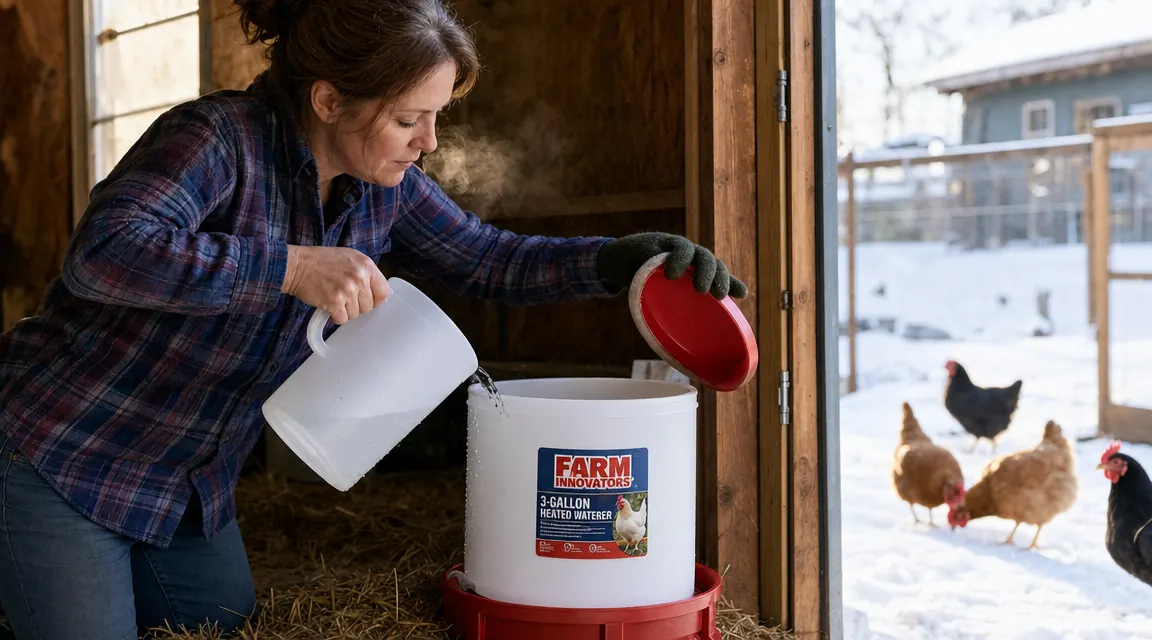
In my first winter with this waterer I overfilled it. The reservoir holds 3 gallons, but the instructions say to leave about an inch of space at the top before flipping it. I ignored that because I wanted to stretch refills as long as possible. What happened: when the water expanded slightly near freezing inside the reservoir, it pressurized the seal and pushed water out around the base, which pooled on the coop floor, froze, and created a slip hazard. I also had a hen with perpetually wet feet for a week before I figured out where the moisture was coming from. The fix was simply following the fill line marked on the inside of the reservoir. Once I did that, zero leaking.
The second thing I learned about refilling: in deep cold, bring warm water from inside rather than filling from an outdoor hose or a room-temperature bucket. Cold water poured into a unit sitting in a 10-degree coop will take longer to warm up to drinking temperature, and the hens will often wait rather than drink from water that is close to 32 degrees. Warm water from the kitchen tap means they are drinking within minutes of the refill, which matters most in those extreme cold snaps when hydration directly affects how well they handle the temperature.
Build Quality and What Has Held Up After Three Seasons
The body is heavy-duty red plastic, and after three winters of being hung, bumped by hens, dragged off the hook once when a hen flew into the cord, and stored in a barn over summer, it shows no cracking or warping. The handle on the base is solid. The trough lip has minor scuffs from roosting hens trying to perch on it, which I discourage because droppings in the water mean more frequent cleaning.
The element and thermostat are sealed inside the base, so I have never had a moisture issue with the electrical components even though my coop gets humidity from bird respiration in the winter. The cord is 6 feet long, which was just barely long enough for my setup. If your nearest outlet is more than 5 feet from where you want to hang the waterer, plan for an outdoor-rated extension cord. The Farm Innovators instructions specifically call out that you should use only a properly rated extension cord, and I agree with that. I use a 14-gauge outdoor extension cord and it has been trouble-free.
One honest note on the plastic lid and base fit: the seal is not perfect. On the initial flip and set, sometimes you get a small air bubble that causes a brief trickle until the seal seats. It always seats within 30 seconds, but the first time it happened I thought I had a broken unit. Wait 30 seconds before deciding there is a problem.
Three winters, two polar vortex warnings, one time a hen yanked the cord loose at 2am, and my girls have had liquid water every single morning. That is the whole review in one sentence.
Cleaning Cadence in Winter
I do a full disassembly clean every two weeks in winter. In summer I would go weekly because algae grows faster, but cold slows that down. The inside of the reservoir gets a scrub with a bottle brush and white vinegar solution, the trough gets wiped out, and the outside of the base gets cleaned with a damp cloth. Do not submerge the base. The electrical component is sealed but I would rather not test that. The cleaning takes about ten minutes. Reassembly is straightforward: fill, flip, set, plug in.
One thing I do not skip is checking the trough openings for biofilm every refill. Even in winter, if a hen scratches litter into the trough area, it can start to grow something unpleasant within a couple of days. A quick look and a wipe with a paper towel adds 60 seconds to the refill process and keeps the water cleaner between deep cleans.
Electricity Use: What It Costs to Run
The Farm Innovators draws 100 watts when the element is running. But because the thermostat only activates below 35 degrees, it is not running 24 hours a day, even in a Minnesota winter. In a typical month where nighttime lows average around 10 degrees Fahrenheit, I estimate it runs roughly 8 to 10 hours per day. At the average US residential rate of around 13 cents per kilowatt-hour, that works out to about $3 to $4 per month. Some months less. That is cheaper than a single vet visit for a dehydrated hen, and cheaper than buying new birds if the flock takes a health hit from going without water in extreme cold.
What I Would Do Differently If I Were Starting Over
I would buy a second unit immediately and keep it filled and ready to swap in. Not because the first one fails often, but because at minus 20 and the trough frozen over, being able to swap in a warm unit from inside the house takes two minutes instead of waiting for the frozen one to thaw. I also would have bought the outdoor-rated extension cord at the same time rather than ordering it separately when I discovered the 6-foot cord was two feet short of my outlet.
I also would hang it sooner in the season. I waited until the first hard freeze, which meant the first two days of cold were rough. Now I hang it in late October before we see our first sub-freezing night, and I leave it up through mid-April. That eliminates the scramble and gives me time to notice any issues before the actual dangerous cold arrives. If you want a full walkthrough of that process, I put together a step-by-step setup guide in the how to set up your heated waterer for winter article that covers timing, cord management, and the mistake I see newer keepers make with positioning.
What I Liked
- Keeps water liquid reliably down to about minus 10 degrees Fahrenheit with no extra heat source in the coop
- Built-in thermostat cycles the element intelligently, keeping electricity costs reasonable at around $3 to $4 per month during cold months
- Solid build quality, no cracking or warping after three full winters of use
- 3-gallon capacity covers 6 to 8 hens for roughly 36 to 40 hours between refills in cold weather
- Over 6,400 Amazon reviews and widely available replacement parts if something does go wrong
- Simple setup, no tools required, and the 6-foot cord works for most coop configurations
Where It Falls Short
- Trough openings can freeze over at minus 15 and below even when the main body stays liquid, requires a quick morning check
- 6-foot cord is barely long enough for some coop layouts, budget for a 14-gauge outdoor extension cord just in case
- Must follow the fill line strictly or you get pressure leaks when flipped, a small thing but worth knowing before your first fill
- No way to adjust the thermostat trip point if you want it to activate earlier in slightly milder climates
How It Compares to Other Options I Tried
Before the Farm Innovators I tried a heated base that you set a standard plastic waterer on top of. The concept is sound but the one I bought heated inconsistently and the plastic waterer above it cracked after one season when a hen knocked it off. I have also heard from other keepers about the API heated waterer, which has a very similar form factor and price point. I have not run the API side by side with the Farm Innovators, but I compared the specs and real-world reports in detail in my Farm Innovators vs API heated waterer comparison. The short version: both are solid, but the Farm Innovators has a larger installed base and more consistent user reports on below-zero performance.
I have had keepers ask about the nipple-style heated waterers that have become popular. I have not switched because the troughs on the Farm Innovators work fine with my heavy breeds and I do not have to train the birds to use a different drinking system mid-season. That said, nipple systems have the advantage of less litter contamination. If I were starting a new flock from scratch, I might try a heated nipple waterer and compare. For now, the Farm Innovators does what I need it to do.
Who This Is For
If you keep chickens anywhere that sees sustained below-freezing temperatures, meaning nights in the 20s or lower for more than a few days in a row, this waterer is worth every dollar. It is especially right for keepers with unheated coops and no interest in running a heat lamp all winter, because the waterer handles the one thing that a cold but dry coop cannot handle on its own. It is also the right pick if you have had even one morning of frozen water and the scramble that follows, because three winters in, I have not had that scramble since.
Who Should Skip It
If your winters are mild, meaning temperatures rarely drop below 28 degrees Fahrenheit at night, a rubber bowl with a submersible stock tank heater will cost less and do the same job. The Farm Innovators is built for real cold, and if you are not in real cold it is slightly more than you need. Also, if your coop has no electricity at all and you are not willing to run a cord, this is not the product for you regardless of how good it is.
Three winters at minus 20 and my flock has never gone a morning without liquid water.
The Farm Innovators 3-gallon heated waterer is the piece of equipment I would replace before anything else in my coop. Check current pricing on Amazon and read through the reviews from other cold-climate keepers who have put it through similar conditions.
Amazon Check Today's Price on Amazon →