
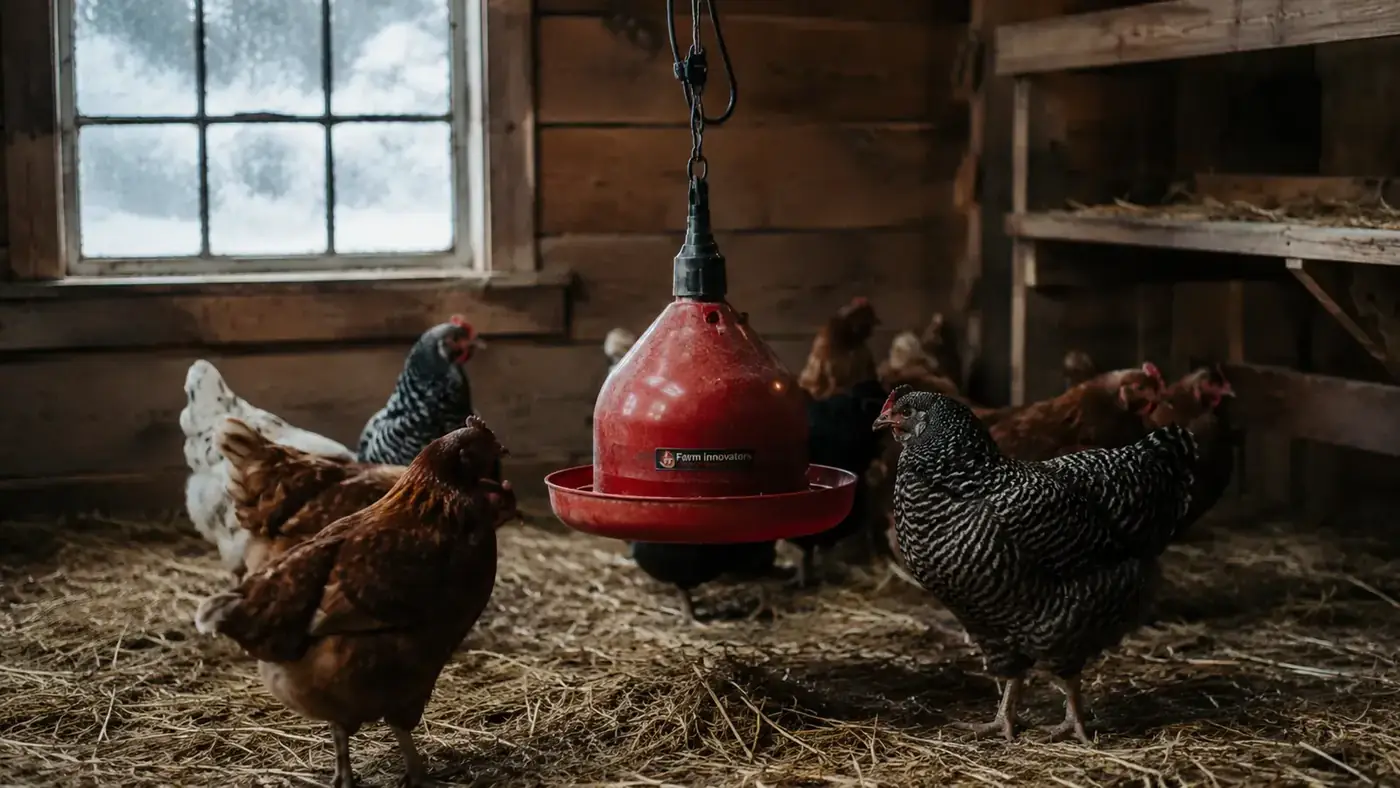
I want to tell you something the Amazon listing does not. The Farm Innovators 3-gallon heated waterer -- the one with over six thousand reviews and a 4.2-star average -- works. I've used it for three winters in central Wisconsin, temperatures down to minus 22 Fahrenheit, and my six hens have had liquid water on most of those mornings. But this is not the review that leads with that. This is the review that covers what caught me off guard, what still frustrates me on the worst nights, and who should actually skip this product and look elsewhere. If you want the long-term use deep-dive, I wrote that separately in my Farm Innovators review covering three full winters. This one is for the people who want to know the edge cases before they buy.
Here is the short version: for a small backyard flock in a cold but not extreme climate, this waterer is a solid choice at its price point. For anyone keeping more than eight birds, dealing with genuine sub-zero stretches that last more than a day or two, or managing a coop without easy access to a proper outdoor-rated outlet, read carefully before clicking Add to Cart.
The Quick Verdict
Does the job for small flocks in moderate cold, but the rim freeze issue, the refill logistics, and the extension cord requirements are real constraints the listing doesn't mention.
Amazon Check Today's Price →Already know this is the right fit? Check the current price before the next cold snap hits.
The Farm Innovators heated waterer sells out in October. If you're reading this in fall, ordering now is the move.
Amazon Check Today's Price on Amazon →The Extension Cord and GFCI Setup Nobody Warns You About
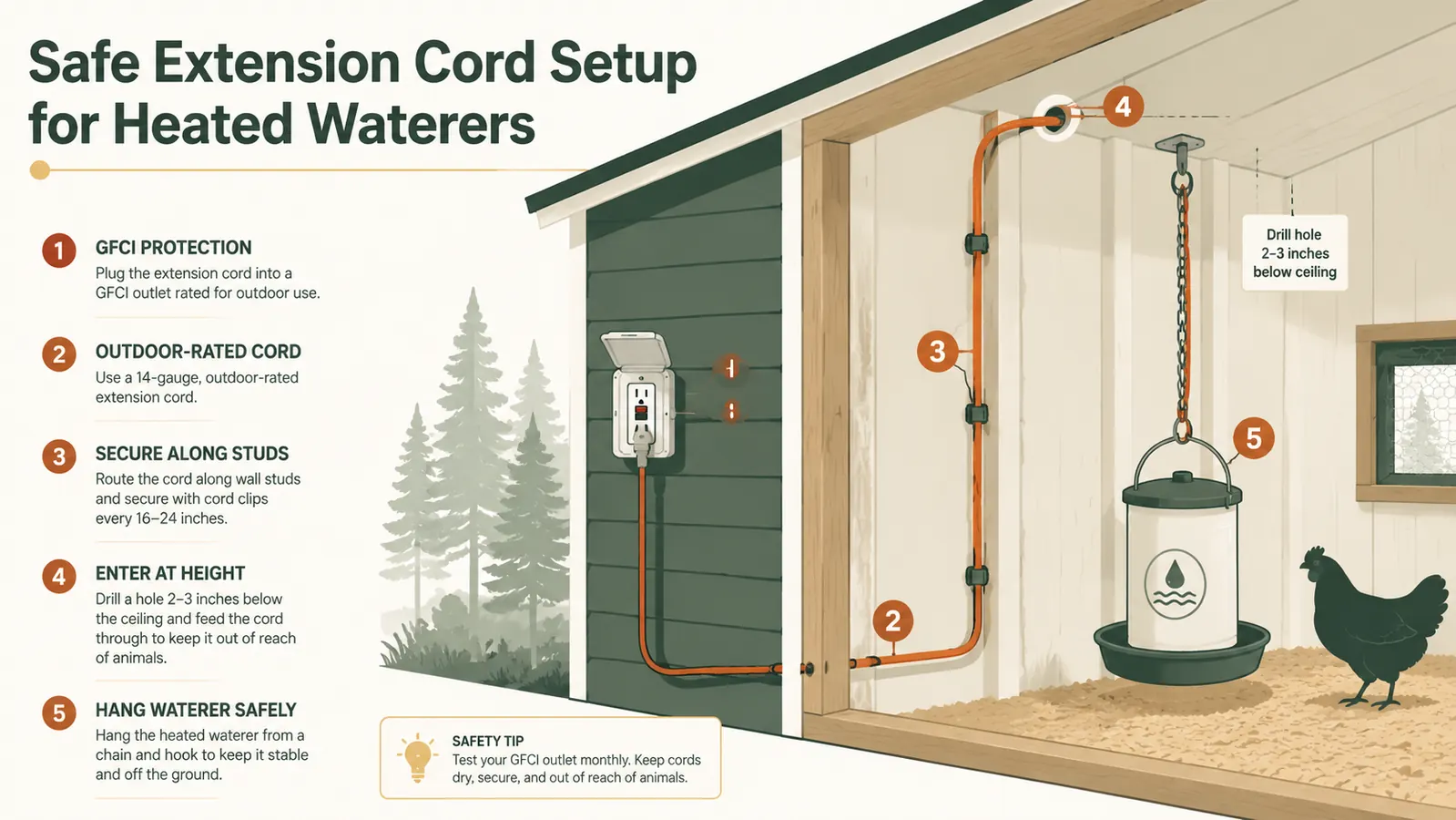
Let me start here because this is the thing that tripped me up hardest in year one. The Farm Innovators waterer draws 100 watts continuously whenever temps drop below its internal thermostat threshold, which is around 35 degrees Fahrenheit. That is not a huge draw, but it is a sustained one. Running a 100-watt heat load through a cheap indoor extension cord in a damp coop is a fire risk. Full stop.
What you need is a 14-gauge outdoor-rated extension cord, no longer than you actually need (resistance increases with length and that matters with a constant load), routed along a wall stud or rafter so it stays off the bedding. You also need to plug it into a GFCI-protected outlet. Most coops don't have GFCI outlets. Most people run an extension cord from the garage or house and just deal with it. If your cord is running through moisture or across a wet floor to reach an indoor outlet with no ground fault protection, you are gambling. Buy a GFCI adapter plug. They cost about twelve dollars and they are worth it.
None of this is in the Farm Innovators instructions. The instructions say plug it in. That's it. The chicken-keeping forums are full of people who learned about cord gauge and GFCI the hard way. Don't be one of them.
The Rim Freeze That Still Happens Below Minus 10
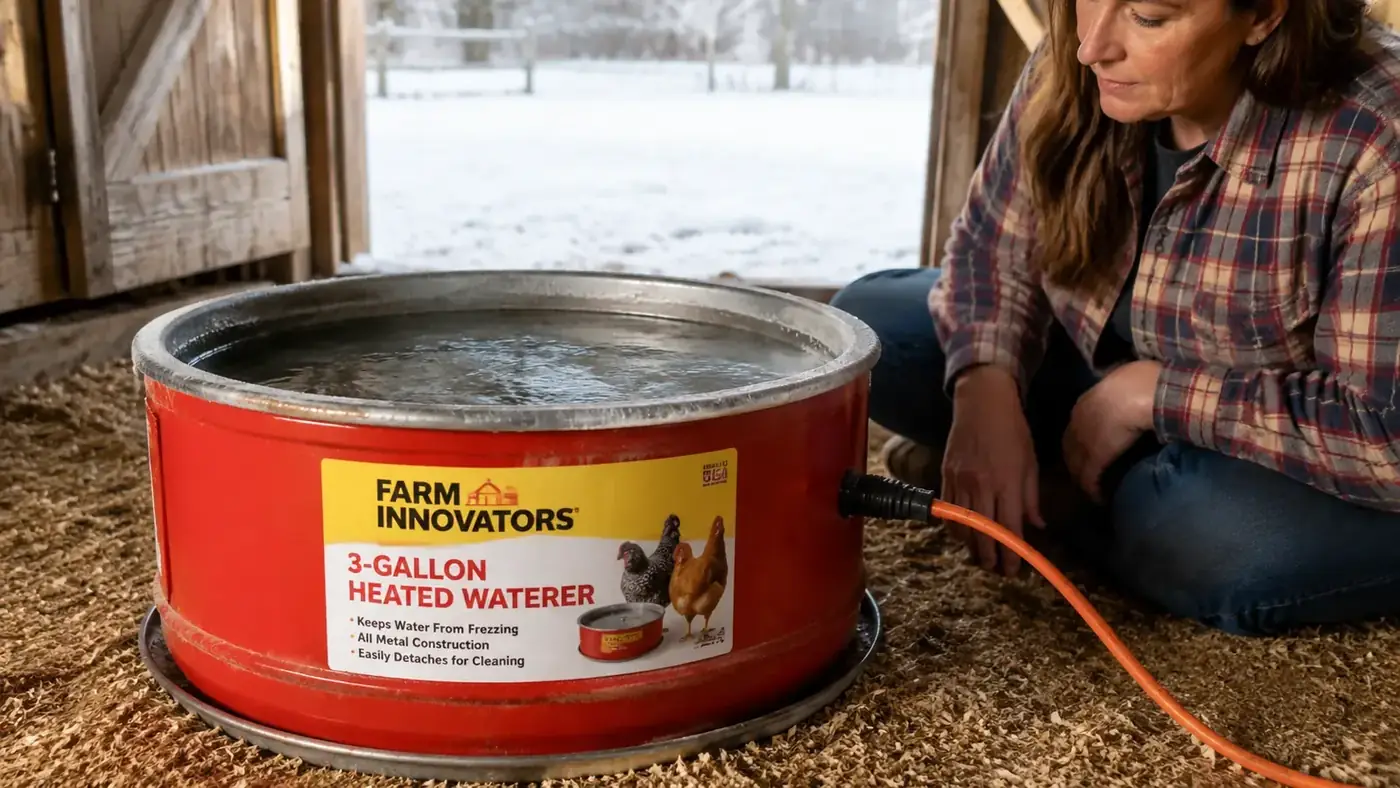
Here is the thing that surprised me most after my first real cold stretch. The heating element in this waterer heats the water column inside the base, not the rim trough where the birds actually drink. The rim is exposed metal. When ambient temps drop below about minus 10 Fahrenheit, the rate of heat loss at that rim outpaces what the element can compensate for. What you get is a thin ring of ice along the outer edge of the drinking trough. The water in the center stays liquid. But your hens have to reach past the ice rim to get to it, and some of them -- especially the more skittish birds -- won't bother.
Three of my six hens work around this without much trouble. Two of my Buff Orpingtons stand there, look at the rim ice like it personally offended them, and walk away. During a minus 14 stretch in February 2024, I was going out twice a day to knock the rim ice loose with a rubber mallet. Not ideal. The listing does not mention this at all. Some competing products, including a few with a more expensive internal heating design, handle sub-zero temperatures more completely. Worth knowing if you're in the upper Midwest or mountain West where stretches below minus 10 are not unusual.
Refilling This Thing in January Is a Workout
Three gallons sounds like plenty. With six hens in winter, I can get three days out of a fill if I'm lucky. But here is the part nobody mentions: to refill it, you have to unhook the chain, carry the unit out of the coop, flip it upside down over the base, fill it, then flip it right-side-up fast enough that you don't spill a gallon of cold water on yourself. The first time I did this in January I was wearing work gloves, the unit was slippery from condensation, and I soaked my right boot. The waterer weighs close to nothing when empty and about 25 pounds when full. That is manageable, but the flip mechanic gets old.
Some keepers I know have rigged a pulley system or lowered their hanging hook so the waterer sits close to the ground, which makes the refill flip easier. I've done that and it helps. Others switch to nipple waterers mounted on a bucket with a submersible aquarium heater -- more up-front work but zero flip drama. The Farm Innovators is a standard gravity-fill design and the refill ergonomics are what they are. If you have mobility issues in your hands or wrists, or you're refilling multiple waterers, this one will get annoying fast.
The first time I refilled it in January, I was wearing work gloves and the unit was slippery. I soaked my right boot. It happens to everyone once.
Debris Gets In and You Can't Really Prevent It
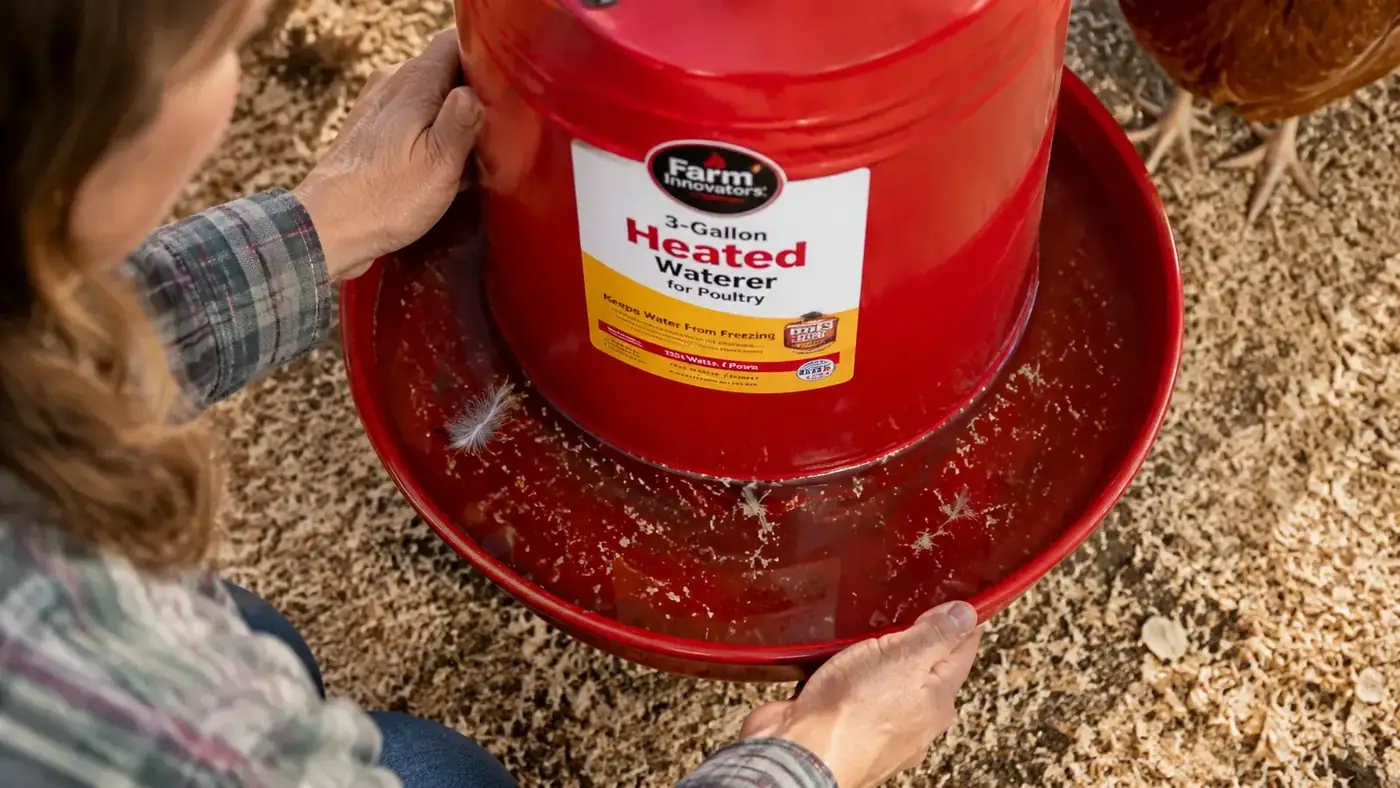
Chickens are chaotic. Specifically, my girls scratch aggressively at the bedding even in a small coop, and that fine pine shaving dust and the occasional feather fleck find their way into the water trough within a few hours of a fresh fill. This is not a design flaw unique to Farm Innovators -- it is a feature of all open-trough waterers. But it bothers me enough to mention because I've seen people in reviews say "the water is always dirty" and then blame the product. The product is fine. The product is in a coop with chickens in it.
Hanging the waterer at or just above back height is the standard advice and it works reasonably well. The higher it hangs, the less debris ends up in the trough. The lower it hangs, the easier refilling is. Pick your tradeoff. On high-shaving-traffic days I'm still rinsing the trough every time I refill, which is every two to three days. That is just waterer maintenance and you should factor it into your expectations.
Who Should Not Buy This Waterer
I want to be direct about this because it saves people money and frustration. If any of the following describes you, I'd suggest looking at different options before defaulting to this one because it's the bestseller.
First, large flocks. If you have more than ten birds, three gallons runs out fast and the refill process at that frequency is genuinely tedious. You'd be better served with a larger heated nipple system or two of these units, which doubles your cord-management headache. Second, true sub-zero climates. If you're in Minnesota, North Dakota, or a mountain zone where minus 15 to minus 25 is a regular occurrence across weeks at a time, the rim freeze issue becomes a daily problem, not an occasional one. The Farm Innovators works reliably down to about minus 10 on most mornings. Below that, you are supplementing it or fighting it. Third, coops without convenient power access. If running a proper outdoor-rated cord to your coop requires more than about 50 feet of run, or if you have no GFCI outlet nearby, the setup headache grows considerably and the fire risk compounds with a long cord. Finally, anyone who wants truly hands-off winter water management. This waterer reduces winter work compared to hauling hot water twice a day. It does not eliminate winter waterer management. You still inspect it, knock rim ice, and refill regularly.
Where It Actually Earns Its Reputation
After all of that, here is what the waterer genuinely does well, and why over six thousand people have left reviews averaging 4.2 stars. The thermostat is accurate and reliable. In three winters I have not had a single internal failure. The element turns on when it should and turns off when it should, and my electricity bill in winter goes up by less than two dollars a month. The build quality on the galvanized base is solid -- mine has no rust after three years of wet coop conditions. The hanging design keeps it off the floor, which means less bedding contamination than a ground-level waterer. And the price is genuinely fair for what you get.
When temperatures stay in the 5 to 30 degree Fahrenheit range -- which covers most of my winter -- this thing just works. I fill it, hang it, and my hens have water. That is what it promises. For the majority of backyard keepers in the continental US, that range covers most of their cold-weather days. The edge cases I described above are real, but they are edge cases for most buyers.
What I Liked
- Thermostat is accurate and reliable -- three winters, zero element failures
- Galvanized base resists rust even in damp coops
- 100-watt draw adds less than two dollars per month to the electric bill
- Hanging design keeps debris load lower than floor-level alternatives
- Widely stocked -- replacement parts and the unit itself are easy to find
- Works consistently down to about minus 10 Fahrenheit
Where It Falls Short
- Rim freeze occurs below minus 10F -- the outer drinking trough edge ices over while the center stays liquid
- Refill requires unhanging the unit and doing a wet flip -- clumsy in gloves at 6am
- Three-gallon capacity runs low fast with larger flocks -- refilling every 1 to 2 days is common
- No GFCI or proper cord-safety guidance in the instructions
- Open trough design means debris accumulates between fills
- Not a good fit for sub-zero climates or flocks over ten birds
A Note on the Comparison I Keep Getting Asked About
People regularly ask me whether the Farm Innovators or the API heated waterer is the better buy. I've run both. The short answer: they're closer than their Amazon ratings suggest, and the right choice depends on your specific temperatures and flock size. I cover that in detail in my Farm Innovators vs API heated waterer comparison if that's the decision you're trying to make.
Who This Is For
This waterer is a strong fit for backyard keepers with four to ten hens, a coop that can be reached by a 25 to 35-foot outdoor-rated cord, and winters that stay mostly above minus 10. If that's your situation -- and it's the situation for most people in USDA zones 5 through 7 -- you will likely be happy with this purchase. It keeps water liquid, it doesn't break, and it costs less than sixty dollars. For the mainstream backyard keeper, that is a reasonable deal.
Who Should Skip It
Skip this one if you're in zone 4 or colder with regular multi-week stretches below minus 10, if your flock is over ten birds and you're not willing to refill every day or two, or if your coop power setup would require a long cord through wet conditions without GFCI protection. In those situations, the frustrations I described above stop being occasional and become regular. Your time is worth more than that. Look at heated nipple bucket systems or a more expensive waterer with a full internal heating jacket instead of a base element.
For small flocks in moderate cold, this is still one of the best deals in heated waterers.
Three winters in, mine is still running. Check current availability -- this model sells out every October and doesn't always come back in stock before the first hard freeze.
Amazon Check Today's Price on Amazon →