
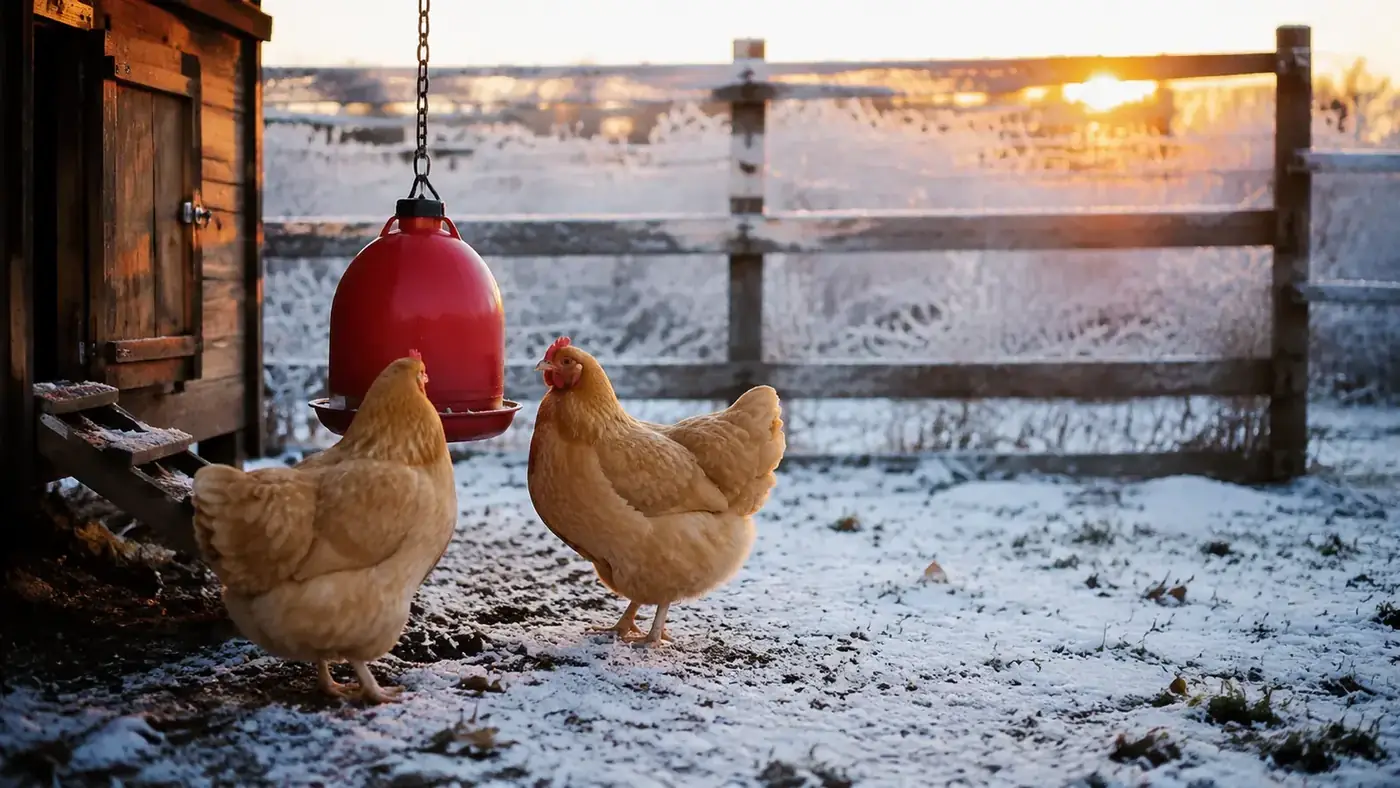
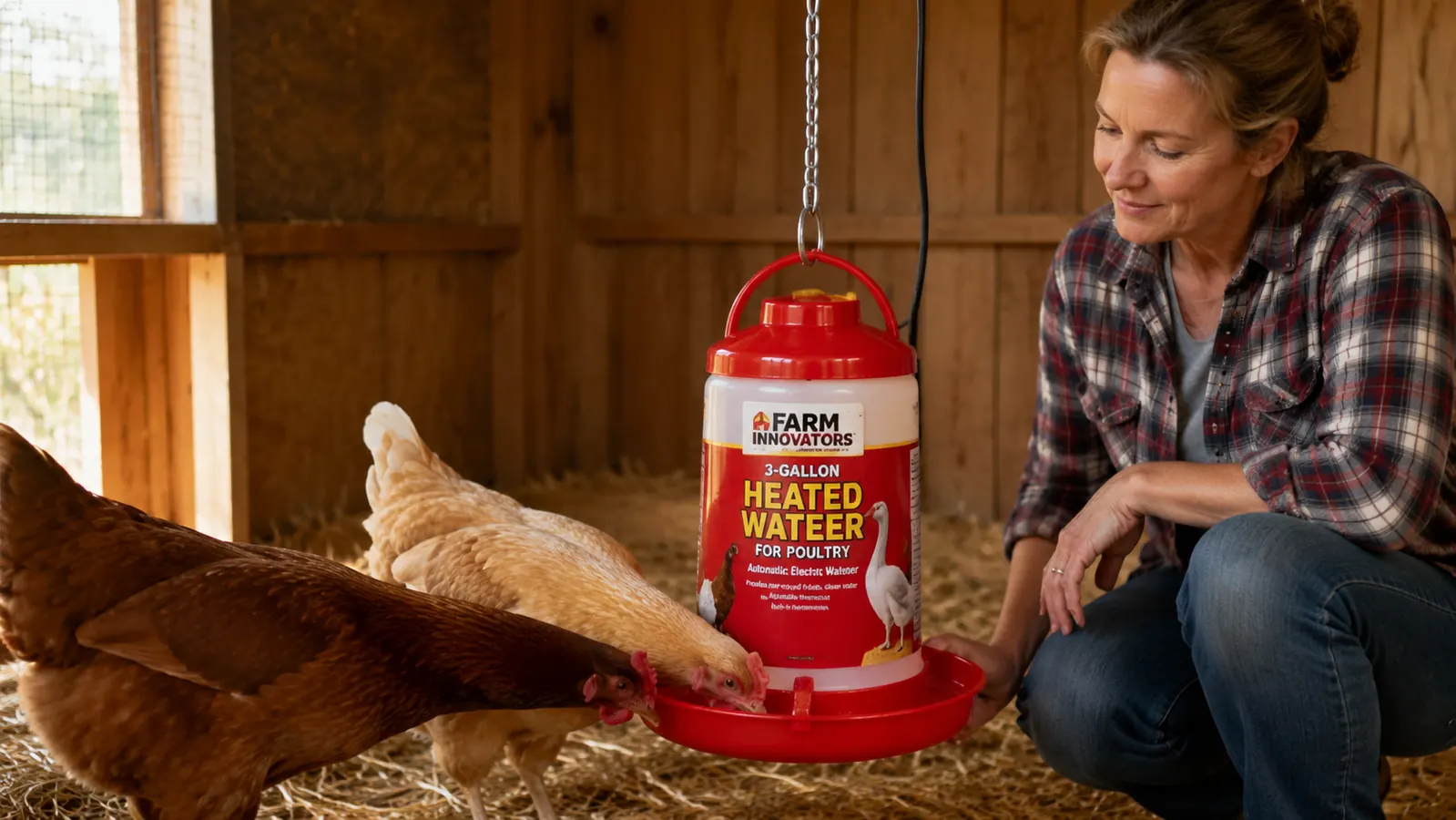
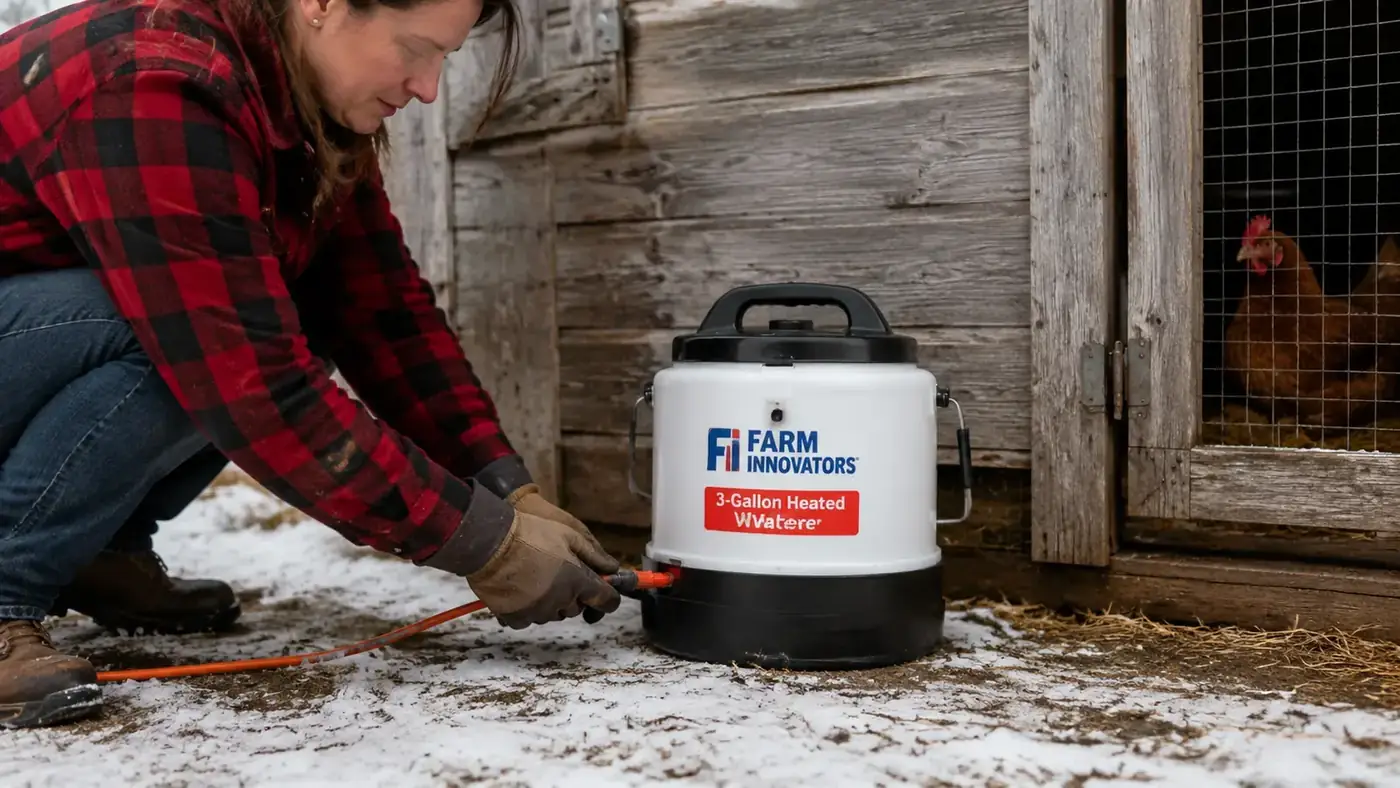
The fastest fix on this list is the Farm Innovators 3-Gallon heated waterer, it is the only method that ended the morning ice-haul for my flock for good. Every winter, I go through the same five stages. First I tell myself it will not get that cold. Then it gets that cold. Then I trudge out at 7am to find a waterer that is a solid cylinder of ice. Then I haul it inside, thaw it in the sink, and vow to do something about this before next week. Then I forget until next week. If that sounds familiar, you are not alone. Frozen waterers are the number one cold-weather complaint in every backyard chicken group I have ever been in, and chicken keepers have invented about a thousand ways to deal with it.
Some of those tricks are genuinely useful for mild freezes in the 28 to 32 degree range. A few are clever enough to earn a permanent spot in your winter routine. And one of them is the actual answer -- the thing that ends the frozen-waterer problem for good. I have tried most of these myself over four winters with my flock of nine, including two Australorps, three Buff Orpingtons, a Speckled Sussex named Gertrude, and a handful of Easter Eggers that act like the cold is a personal offense. Here is the full list, starting with what works best.
Skip to the method that works below zero without you doing a thing each morning.
The Farm Innovators 3-Gallon Heated Waterer has over 6,400 Amazon reviews from cold-climate keepers. It runs on 100 watts and keeps water liquid down to roughly minus 10 degrees Fahrenheit. See current price and check availability.
Amazon Check Today's Price on Amazon →Use a Thermostatically Controlled Heated Waterer
This is the real fix. A purpose-built heated waterer -- like the Farm Innovators 3-Gallon model -- has a built-in thermostat that kicks the heating element on only when temperatures drop near freezing and shuts it off when they rise back up. You hang it in the coop, plug it in, and it runs itself. No checking. No hauling ice. No refilling a bowl that is frozen before you finish walking back to the house. I installed mine three winters ago after my rubber tub froze solid at 4 in the morning and one of my hens had nothing to drink for six hours before I noticed. The Farm Innovators holds 3 gallons, which is enough for a flock of 6 to 12 for a day or two. The waterer costs about what two months of daily frozen-waterer frustration is worth in sanity alone.
Float a Ping Pong Ball (or Tennis Ball) on the Surface
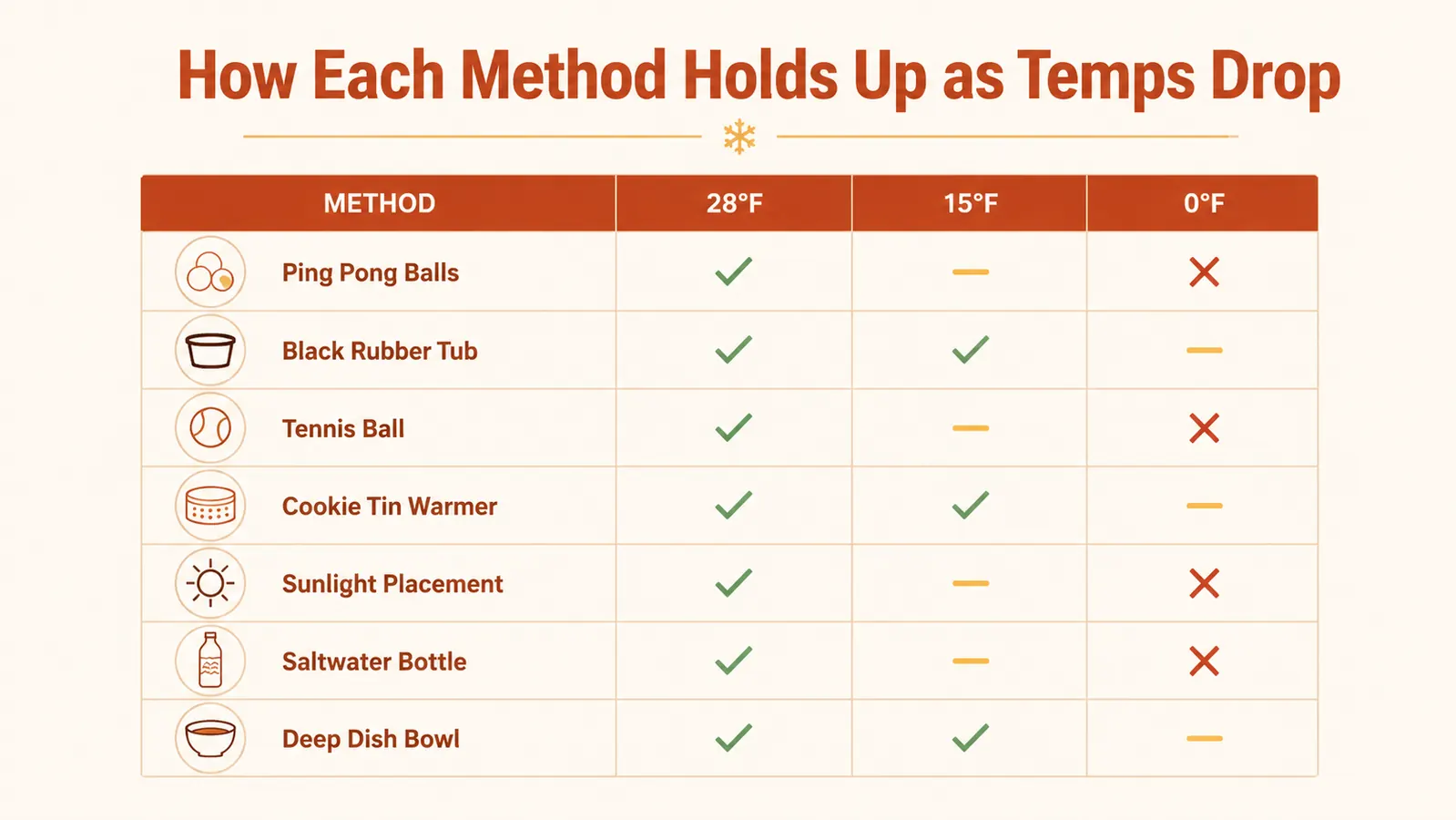
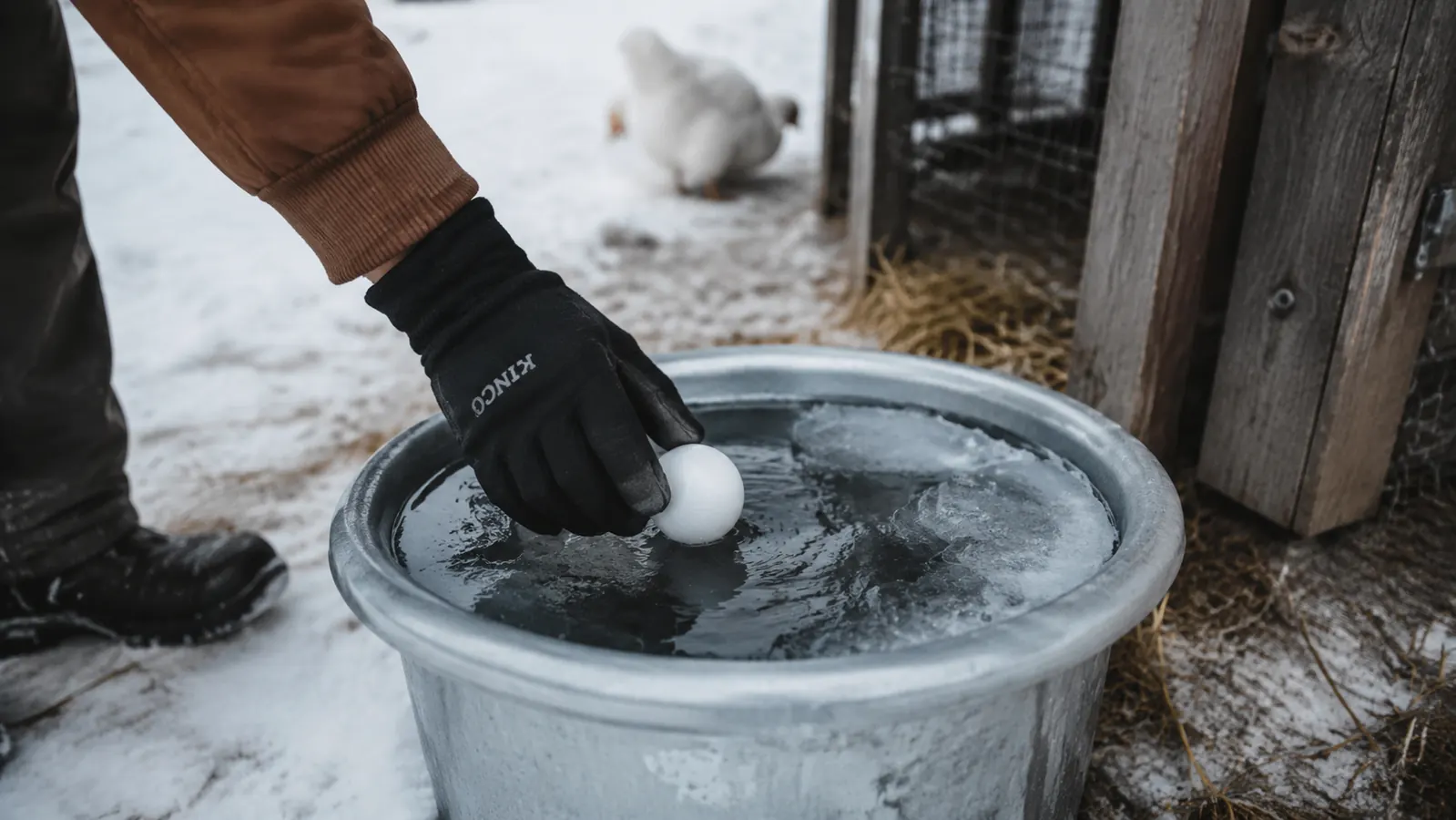
Drop a ping pong ball or a clean tennis ball into your waterer. Wind and even mild chicken traffic near the coop keep the ball moving, and that surface movement delays ice formation. It works surprisingly well at 28 to 30 degrees. At 20 degrees and below it buys you maybe an hour of extra open water before the freeze wins anyway. Good to know if you are in a pinch, but it is not a system you can rely on. The ball also tends to gross out fussier hens -- my Easter Eggers would not drink near it for three days the first time I tried.
Amazon Want something that works whether it's 28 or 8 degrees? Check the Farm Innovators Waterer → →
Switch to a Black Rubber Tub
Black absorbs solar radiation, and a wide shallow rubber tub placed in a patch of direct winter sun will stay unfrozen an hour or two longer than a white or galvanized metal container. Rubber is also easy to pop a frozen disc out of -- just flip the tub over and stomp. For climates that rarely see temps below 25 degrees, a black rubber tub positioned in full morning sun is a legitimate low-effort solution. If you regularly see teens or single digits, it is a delay tactic, not a solution. The water freezes. You just have a slightly later problem.
Amazon For days when the sun never comes out, a heated waterer is the only thing that covers you → →
Position the Waterer to Catch Direct Sunlight
Placement matters more than most people realize. A waterer in full morning sun, even in February, will stay liquid two to three hours longer than one sitting in the shadow of the coop wall. Angle the coop opening or run panel so sunlight hits the waterer from about 8am to noon if you can. Pair this with a black rubber tub and you have a decent free strategy for mild-winter climates. But once cloud cover rolls in for three days straight or a cold front drops you into the single digits, sun placement gives you nothing.
Build a Cookie Tin Warmer (Light Bulb Base)
This is a classic DIY fix you will see in every old-school chicken forum. You put a 40-watt incandescent bulb inside a metal cookie tin, cut a hole for the cord, and set the waterer on top of the tin. The bulb radiates just enough heat to slow freezing down. It works reasonably well at 20 to 25 degrees. The cons: incandescent bulbs are getting harder to find, the setup is a fire hazard if the tin tips or bedding piles against it, and there is no thermostat so it runs 24 hours whether you need heat or not. A few chicken keepers have lost coops to this setup. I stopped recommending it after reading one too many forum threads about it.
Amazon A heated waterer with a built-in thermostat is safer and uses roughly the same wattage → →
Add a Small Saltwater Bottle to the Waterer
A sealed plastic bottle with a strong saltwater solution inside floats in the waterer and releases heat as it slowly cools, similar to a hand warmer. The salt lowers the freezing point of the water inside the bottle and that bottle radiates a bit of warmth to the surrounding drinking water. You need to fill and freeze a few bottles each evening, swap them out at morning chores, and rinse the waterer. It sounds like more work than it is, and it genuinely buys you an extra hour or two on cold nights. The catch is that it requires you to actually do something every single day, which stops working the first morning you oversleep or the roads are bad and you are slow getting out to the coop.
Use a Deep Dish or Insulated Bowl
A larger, deeper water container freezes more slowly than a shallow dish because there is more total water mass to cool down. Some keepers use a 5-gallon bucket with the top mostly covered so only a small opening remains exposed to cold air. The smaller the surface area, the slower the freeze. For small flocks in climates that hover around 28 to 32 degrees, a deep bucket with a small drinking hole cut in a foam insulation lid is a pretty effective low-tech solution. Below 20 degrees the volume advantage shrinks and you are back to chipping ice by mid-morning.
Move the Waterer Inside the Coop Overnight
A closed coop with 8 to 12 hens in it generates a surprising amount of body heat. If your coop is reasonably well-insulated, inside temps on a 10-degree night can stay 10 to 20 degrees warmer than outside. Moving the waterer inside at dusk can delay freezing until well after your morning chore time. The downside is that chickens will knock it over, splash water into the bedding, and wet litter is a fast track to respiratory illness and bumblefoot. You also have to remember to move it every single evening. If you do this, use a nipple-style waterer or a hanging style to reduce splash. And still bring it in only if your coop is genuinely well-insulated.
Wrap the Waterer in Pipe Insulation Foam
Foam pipe insulation, the kind sold in rolls at any hardware store, can be wrapped around the outside of a metal or plastic waterer and taped in place. It slows heat loss from the water significantly and is cheap enough that most people already have some in their garage. At mild temperatures it is a real help. The foam does not add any heat -- it only slows the loss of existing heat -- so on genuinely cold days the water still freezes, just a little more slowly. Pair it with a deep rubber tub and morning sunlight positioning and you have a reasonable free-to-low-cost setup for climates that rarely see hard freezes.
Fill With Warm Water at Morning and Noon Chores
The most manual solution on the list, but sometimes the most practical if you only have an occasional freeze day and do not want to buy anything. Hot or warm water from the house gives hens immediate access to liquid water, and if temperatures are hovering right around freezing it can stay open for several hours before refreezing. Some keepers add a second mid-day fill as part of their routine and that covers most mild-winter days completely. The obvious limit: if temperatures drop below 20 degrees, warm water freezes within 30 to 60 minutes in an uninsulated outdoor container. You would need to fill it every hour to keep up, which is not realistic for anyone with a job.
What I Would Skip
Two methods you will see suggested all the time that I have given up on. First, apple cider vinegar in the water. Some people add it hoping the acidity lowers the freezing point. It does not. A tablespoon in a gallon of water changes the freezing point by less than a single degree. It is fine as a flock supplement in moderation, but it will not stop your water from freezing. Second, heat tape wrapped around waterer tubing. Heat tape is designed for pipes, not chicken drinkers, and the uneven heat distribution combined with chicken-proof wiring requirements makes it more trouble than it is worth. Stick to the methods on the list above -- or just get the heated waterer and stop thinking about it entirely.
The morning I walked out at 6am and found liquid water when it was 4 degrees outside -- that was the morning I stopped thinking of winter chores as a crisis I needed to manage.
Most of the DIY tricks on this list are worth trying if you are in a mild-winter climate or if you want to reduce how often you need to check the waterer. But if your winters regularly hit the teens or below, there is no substitute for the Farm Innovators heated waterer. It has over 6,400 Amazon reviews, almost all from keepers in real winter states -- Minnesota, Wisconsin, Maine, Montana. The thermostat means it only runs when it needs to. The 3-gallon capacity handles most small to mid-size flocks for a full day or more. And the biggest thing it gives you is not just unfrozen water. It is the mental quiet of knowing that problem is handled, every morning, without you doing anything. If you want to see how to actually set it up before winter hits, the step-by-step installation guide at how to set up a heated chicken waterer for winter covers everything from cord routing to placement. And if you want the full three-season review before you buy, the Farm Innovators heated waterer review goes into everything that happened in years two and three.
Stop chipping ice every morning. One plug-in, one hanging hook, done.
The Farm Innovators 3-Gallon Heated Waterer is built for real winter climates and has a built-in thermostat so it only runs when temperatures drop near freezing. Rated 4.2 stars from over 6,400 verified reviews. Check today's price and shipping availability on Amazon.
Amazon Check Today's Price on Amazon →