
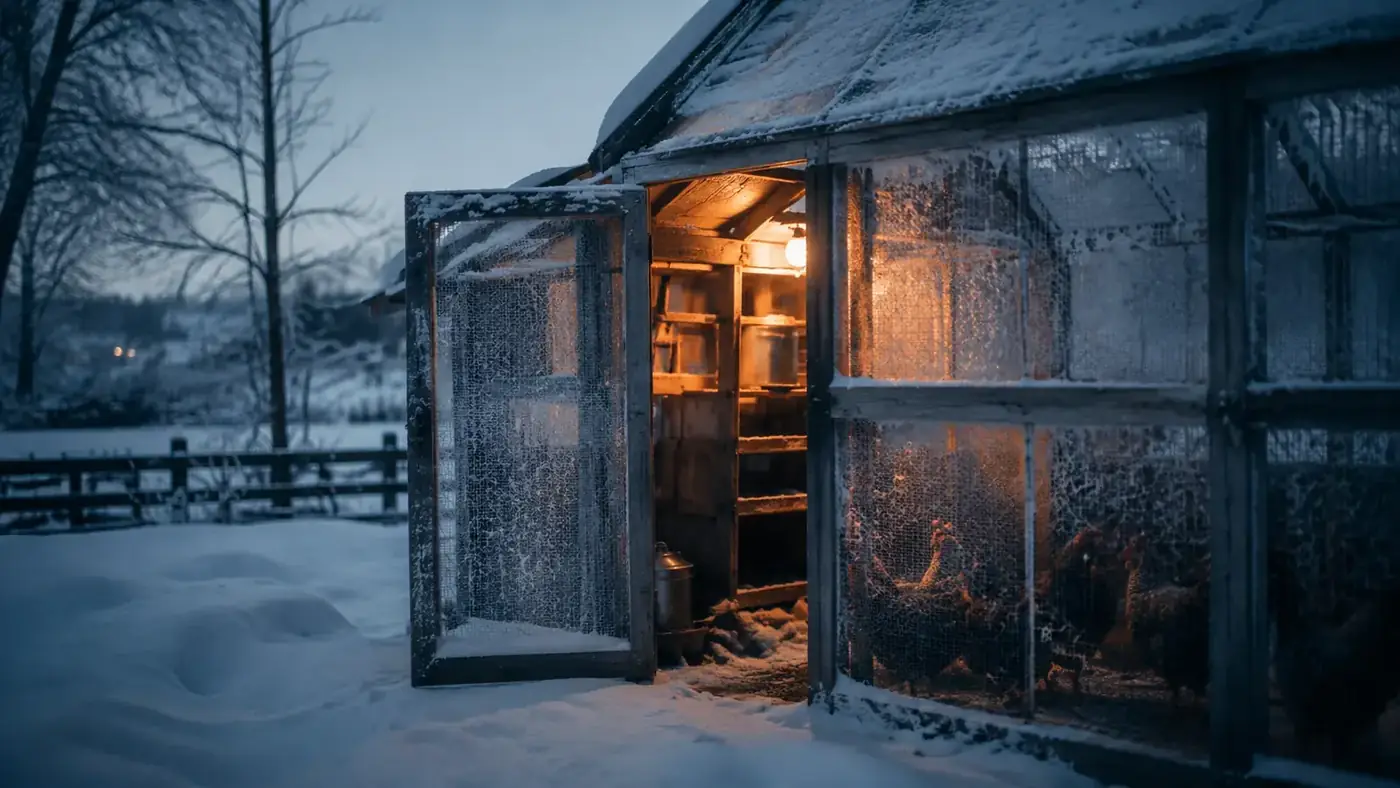
I want to tell you about the week I almost lost Biscuit. Biscuit is my oldest hen, a fat little Buff Orpington who has survived two hawk scares, a dog incident I still don't like to talk about, and approximately eleven thousand broody episodes where she sat on absolutely nothing with great conviction. She is nine years old and she is dramatic, but she is mine. And last January, during the polar vortex that dropped us to minus 22 degrees for four straight days, she came closer to real trouble than I'd like to admit.
I'd been hauling water every morning for three winters before I finally bought a heated waterer. My old setup was a rubber feed pan I'd fill before bed and a backup metal pan I kept inside overnight to thaw. Every morning at 5am, I'd pull on my wool layers, dig out the frozen pan, bring it inside to run hot water over the lip until I could pry it apart, carry the thawed pan back out, and repeat the whole ritual at lunch because it'd be solid again by noon. In deep cold, we're talking three or four trips a day. My neighbor thought I was performing some kind of penance.
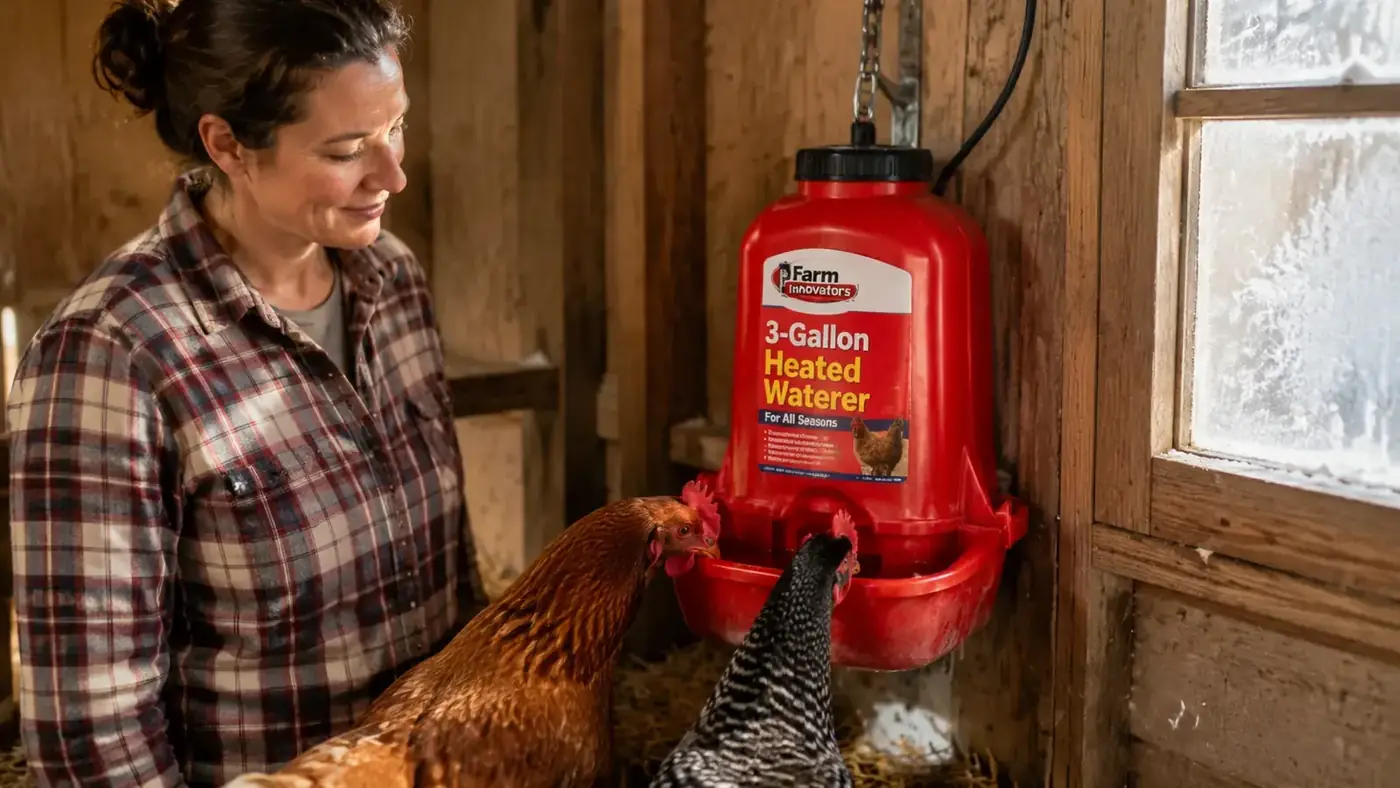
The polar vortex that hit us in January wasn't a normal cold snap. The forecast showed four days at minus 10 or colder, with two nights dipping below minus 20 with windchill. The meteorologist on my phone kept using the phrase 'dangerously cold' with what I felt was unnecessary enthusiasm. I had eight birds in the coop: Biscuit, two Black Australorps named Pepper and Clove, a Easter Egger I call Lemon Drop, and four younger Barred Rocks who were in their first real winter. Dehydration kills chickens faster than cold does. Without liquid water, they stop eating. Without eating, they can't generate body heat. I've seen what that spiral looks like and I wasn't going to watch it happen.
I'd ordered the Farm Innovators 3-gallon heated waterer the previous October after reading too many forum threads about people losing birds to dehydration in exactly this kind of cold. I plugged it in and hung it from the ceiling joist the week before Thanksgiving. Three gallons holds enough for eight birds through a full day without refilling, which matters a lot when the walk to the coop involves wading through knee-deep drifts in the dark.
I walked into the coop at 6am with a headlamp and a lot of dread. All eight birds were standing. Biscuit was at the waterer first. The water was liquid.
Your flock can't tell you they're thirsty. Don't let frozen water be the reason you lose a bird this winter.
The Farm Innovators 3-gallon heated waterer runs 100 watts and keeps water thawed down to extreme temperatures. Over 6,400 reviews on Amazon. Check current availability before winter stock runs low.
Amazon Check Today's Price on Amazon →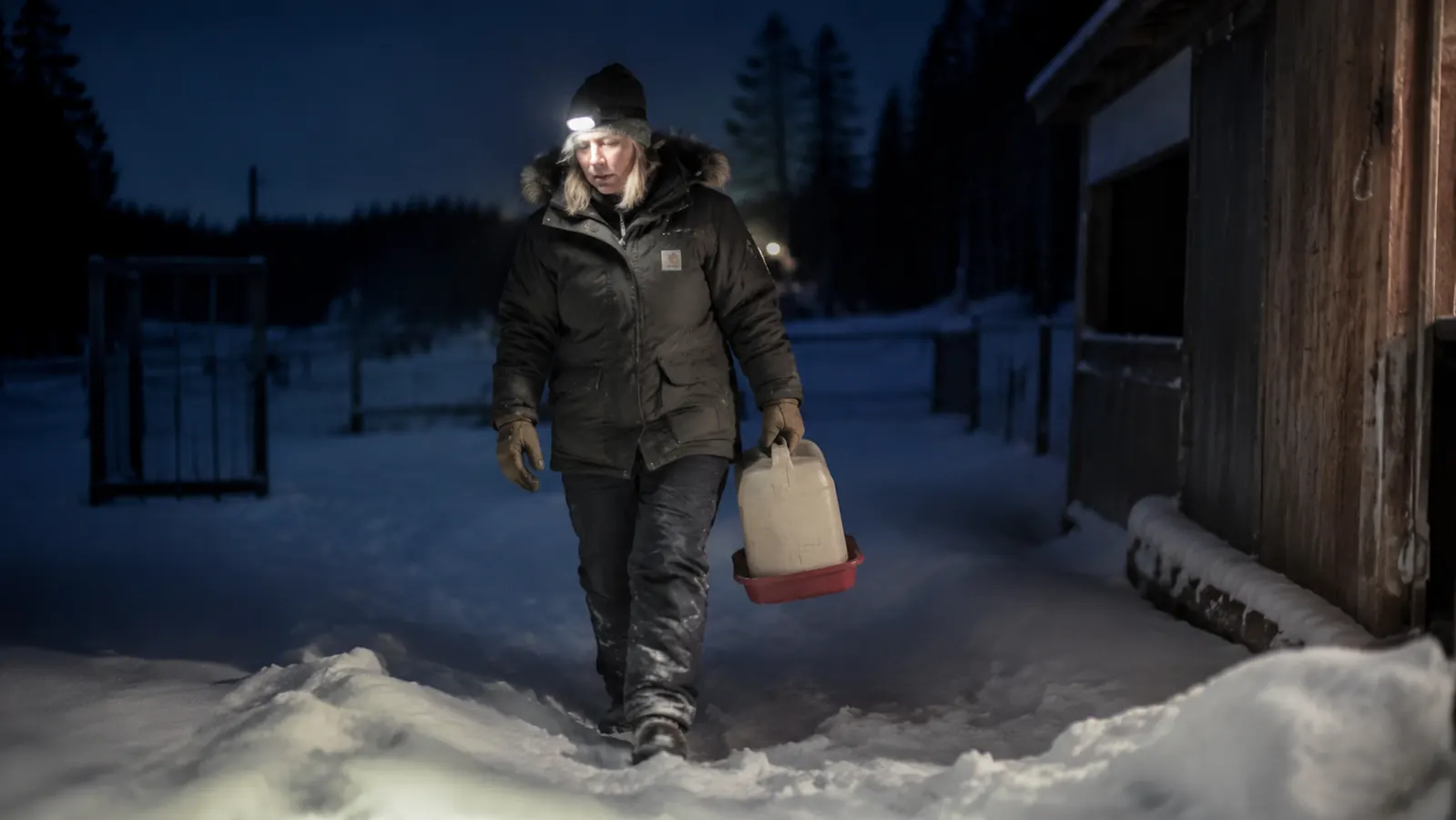
The first real test came on day two of the vortex. I woke up at 5:45am to a wind that was making the kind of sound that means nothing good. The outdoor thermometer on my back porch read minus 18. I will be honest with you: I sat in bed for a solid four minutes dreading what I was about to find. I had checked the waterer specs before buying and it claimed it would keep water above freezing all the way down to extreme cold, and the heating element runs constantly at 100 watts. But specs are one thing. Minus 18 is another thing entirely.
I walked into the coop with a headlamp and a lot of quiet dread. All eight birds were on their roost or moving around. Biscuit was already down and at the waterer. I put my finger in the water. Liquid. Not warm, not even close. But fully liquid. I stood there in the dark coop in my parka with my headlamp on and felt something I can only describe as relief so strong it made me a little embarrassed about how worried I'd been. The birds drank. They ate. They had a normal morning.
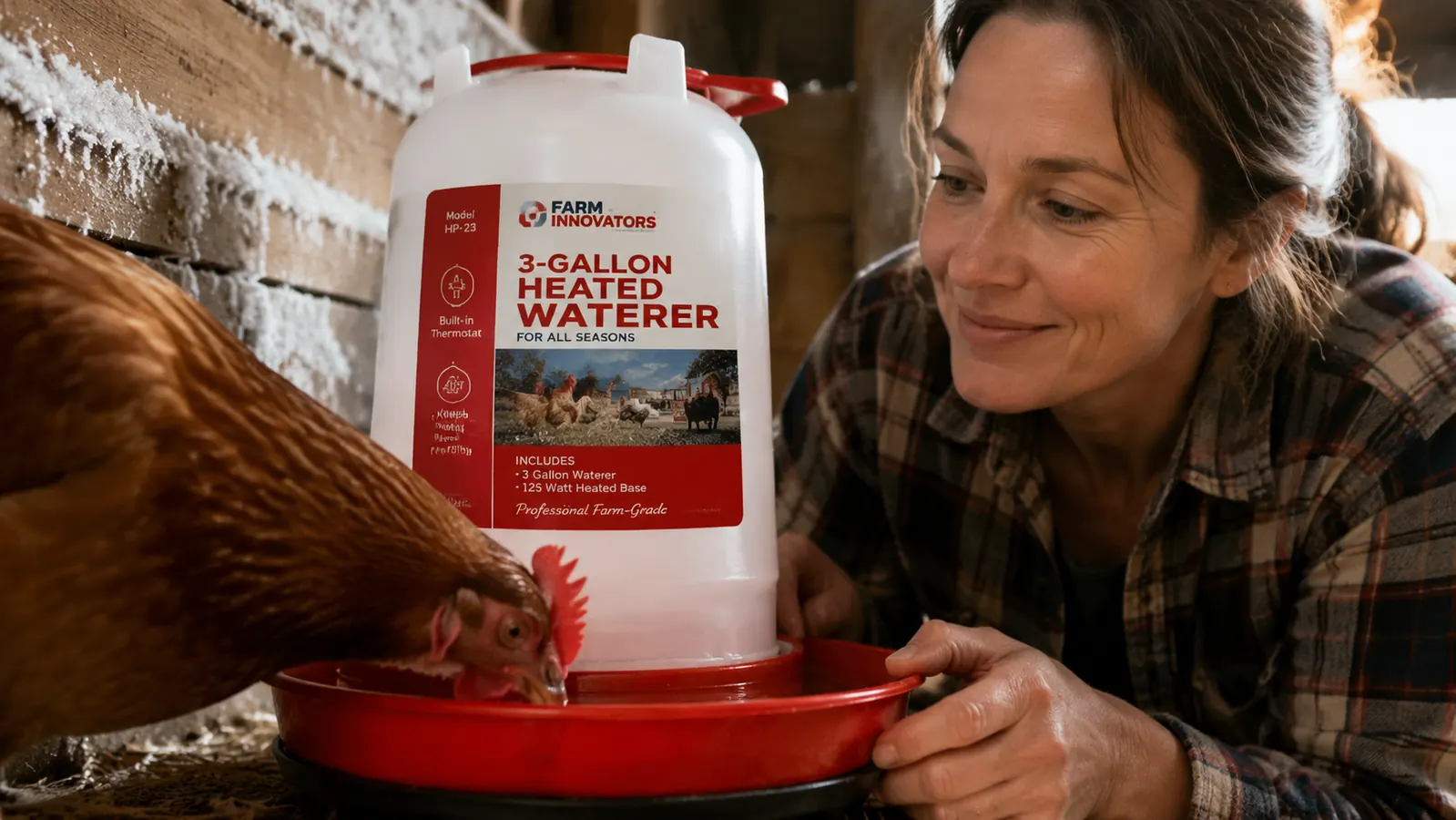
It held through all four days. I still went out morning and evening to check the water level and add fresh water once a day, but there was no hauling, no thawing, no midday crisis. The heated base on the Farm Innovators unit wraps the whole bottom of the jug. The trough where they drink stays liquid because the heat wicks up through the plastic into the water channel. On the coldest nights, there was a very thin skim of ice on the surface by morning, but the trough itself stayed clear and the birds drank freely.
I'm not going to oversell it. The cord is a little short and I needed a heavy-duty extension cord for my setup. And you do need to run it on electricity, which means it only works if you have an outlet in or near your coop. The cord situation annoyed me for about ten minutes until I realized I was complaining about the minor inconveniences of a device that had just saved me four days of 5am ice-hauling in the worst cold snap of the decade. I got over it.
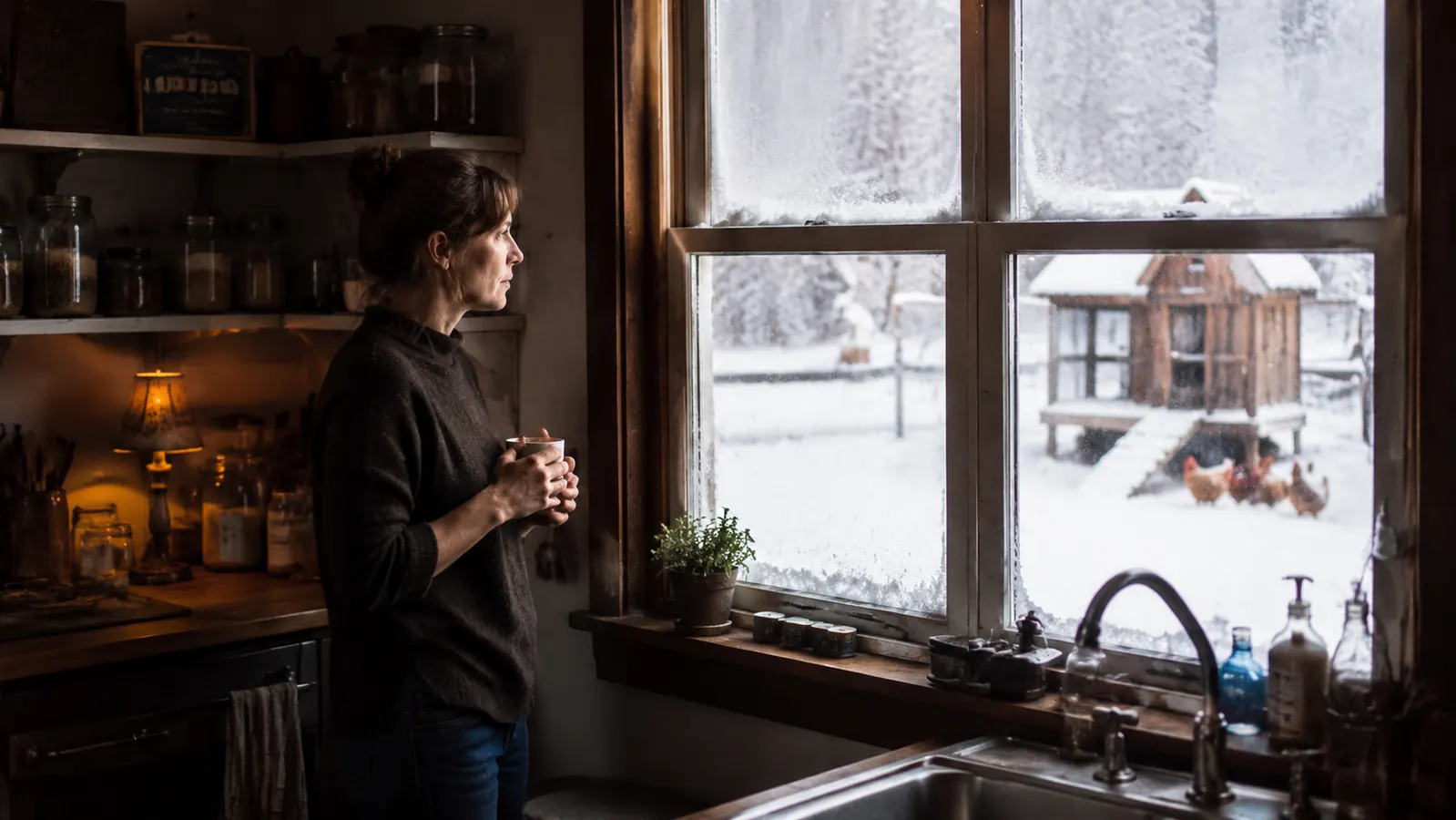
Biscuit made it through just fine. So did the Barred Rocks and Lemon Drop and all the rest. I didn't lose a single bird that week. I'm not certain I can say the same thing would have been true with my rubber pan and my optimism.
What I'd Tell You If We Were Sitting at My Kitchen Table
If you're still hauling water to your coop every winter morning and telling yourself it's not that big a deal, I hear you. I told myself the same thing for three years. And it isn't a big deal on a normal cold January day. It becomes a very big deal at 5am on the fourth day of a polar vortex when you're tired and it's minus 20 and you already know the pan is solid before you even get outside.
The Farm Innovators heated waterer isn't perfect. The plastic scuffs up over time. You'll need to clean algae out of the trough come spring. The cord situation is what it is. But it held liquid water at minus 22 degrees for four straight days without me touching it except to refill it once, and my flock came through a genuinely dangerous cold event without any losses. That's the whole job. It did the whole job. I'd buy it again without hesitating, and I'd tell you to buy it before the first hard freeze, not after, because the shipping delays start right around the time everyone else decides they should have bought one last month.
Don't wait until you're staring at a solid-frozen waterer at 5am to wish you'd bought one.
The Farm Innovators 3-gallon heated waterer has over 6,400 reviews and is one of the most trusted heated waterers for backyard flocks in cold climates. Check today's price and availability on Amazon.
Amazon Check Today's Price on Amazon →