
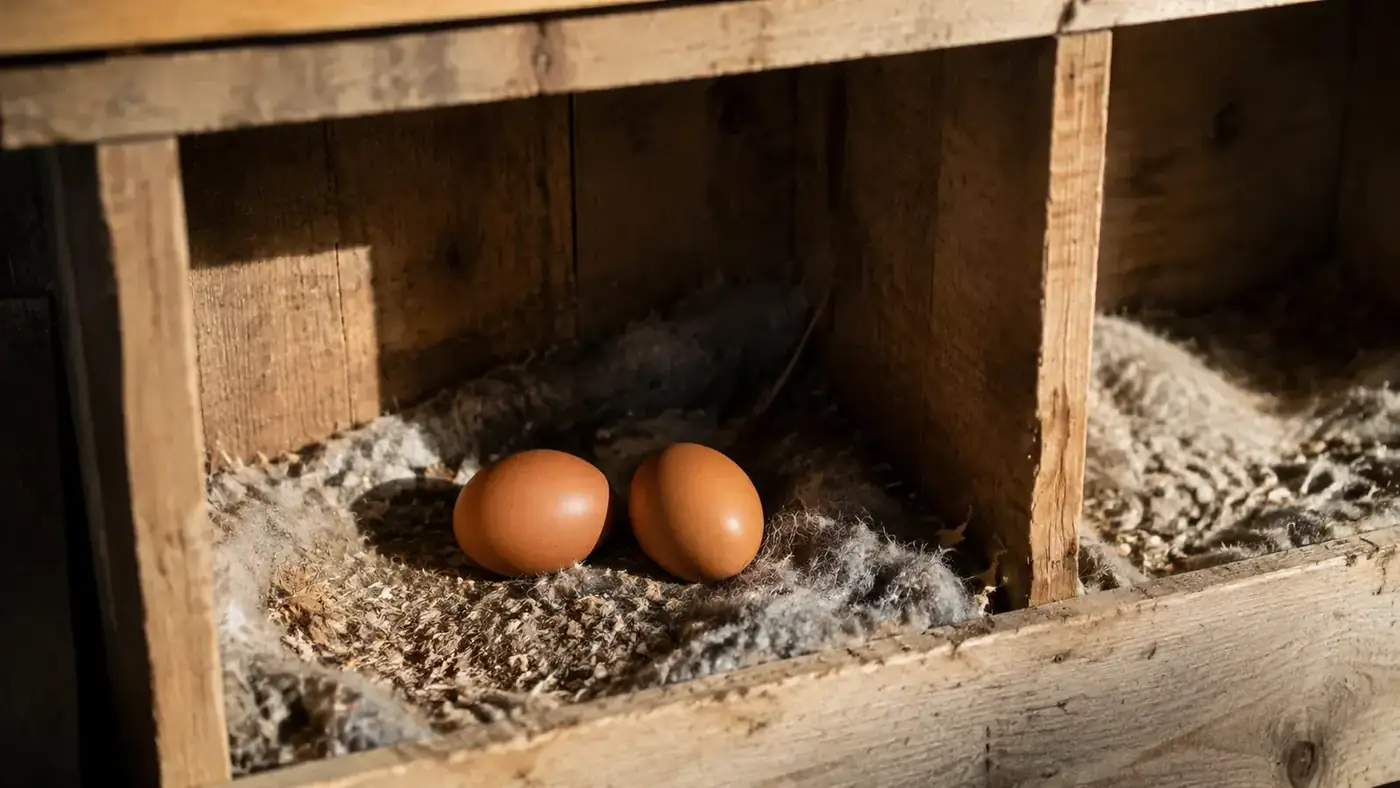
After six weeks of floor eggs, switching to Precision Pet nesting pads was the one change that finally got my most stubborn hen laying in the nest box instead of the coop corner.
For about six weeks last fall, I was starting every single morning the same way. Coffee in hand, shuffle out to the coop in my rubber boots, open the door, and find at least one egg sitting directly on the floor. Sometimes two. Once, three.
I have seven hens. Marigold, Dottie, Cressida, two Barred Rocks I never bothered naming individually so I just call them the Twins, and then the two newest girls, Biscuit and Clover, a pair of Buff Orpington pullets I added to the flock in August. The floor eggs started almost exactly when Biscuit and Clover came online as layers.
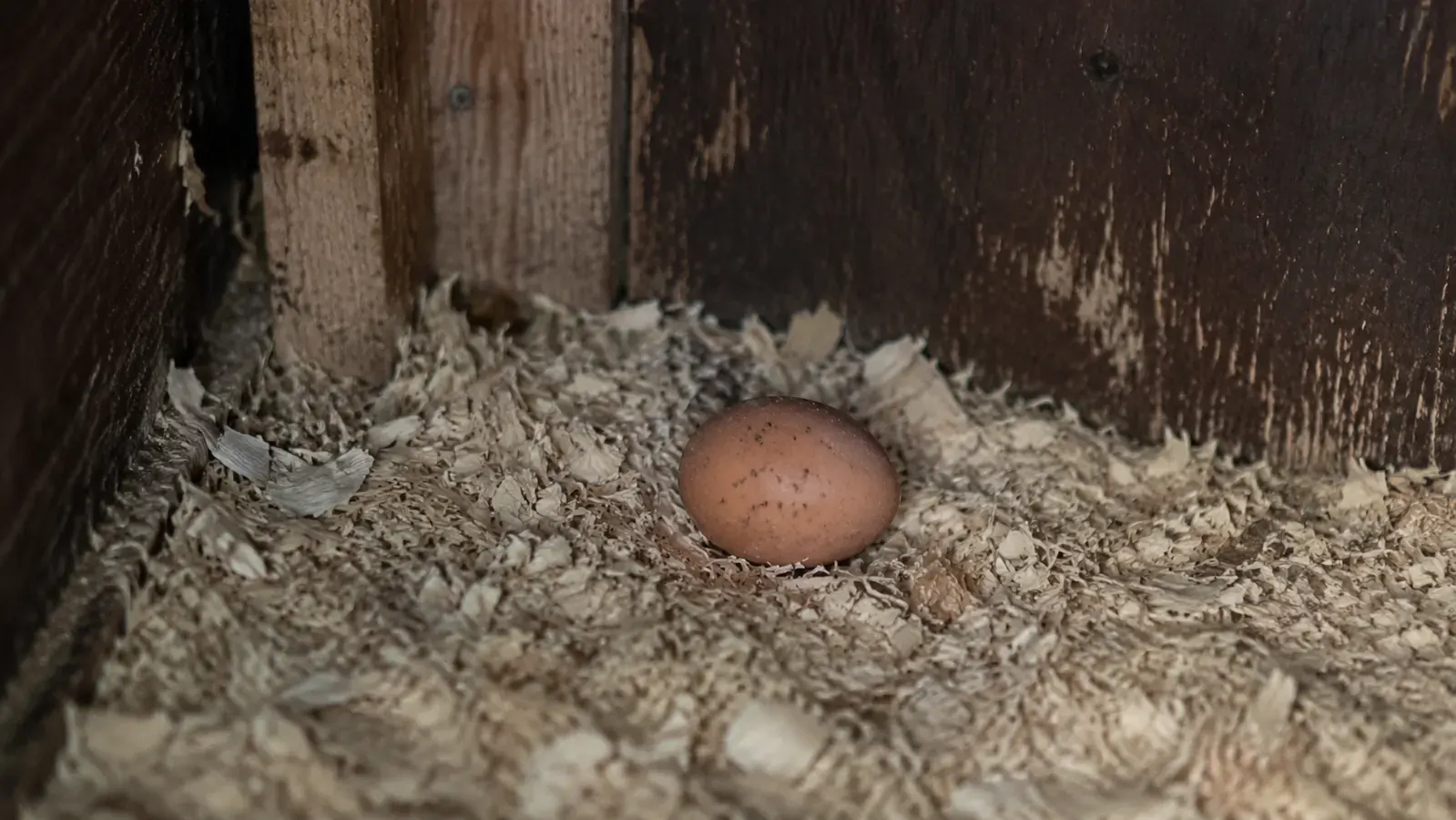
Biscuit took to the nest boxes fine. Found her in one of the lower boxes within her first week of laying, did the whole settle-and-wiggle routine, popped out an egg, and that was that. Clover, though. Clover decided the northeast corner of the coop floor, wedged behind the feeder, was her personal laying spot. Every morning, one egg back there in the shavings, sometimes cracked, always coated in whatever she'd walked through.
I tried the things you try. I put a fake ceramic egg in the nest box I wanted her to use. I watched her inspect it, peck it once, and walk away to the corner. I read that nest boxes should be darker, so I tacked a piece of burlap over the front of the box like a curtain. She ignored it. I adjusted the roost height so it was higher than the nest boxes, thinking maybe she was roosting in the boxes and getting confused about where to lay. Still, floor eggs.
What I hadn't thought much about was the nest box bedding itself. My boxes had pine shavings in them, same as the coop floor. Same smell, same texture, same visual cue. From Clover's perspective, the floor and the nest box probably felt pretty similar. When she got the urge to lay, she went to the spot she'd already claimed as hers.
From Clover's perspective, the floor and the nest box probably felt pretty similar. I hadn't given her any real reason to choose one over the other.
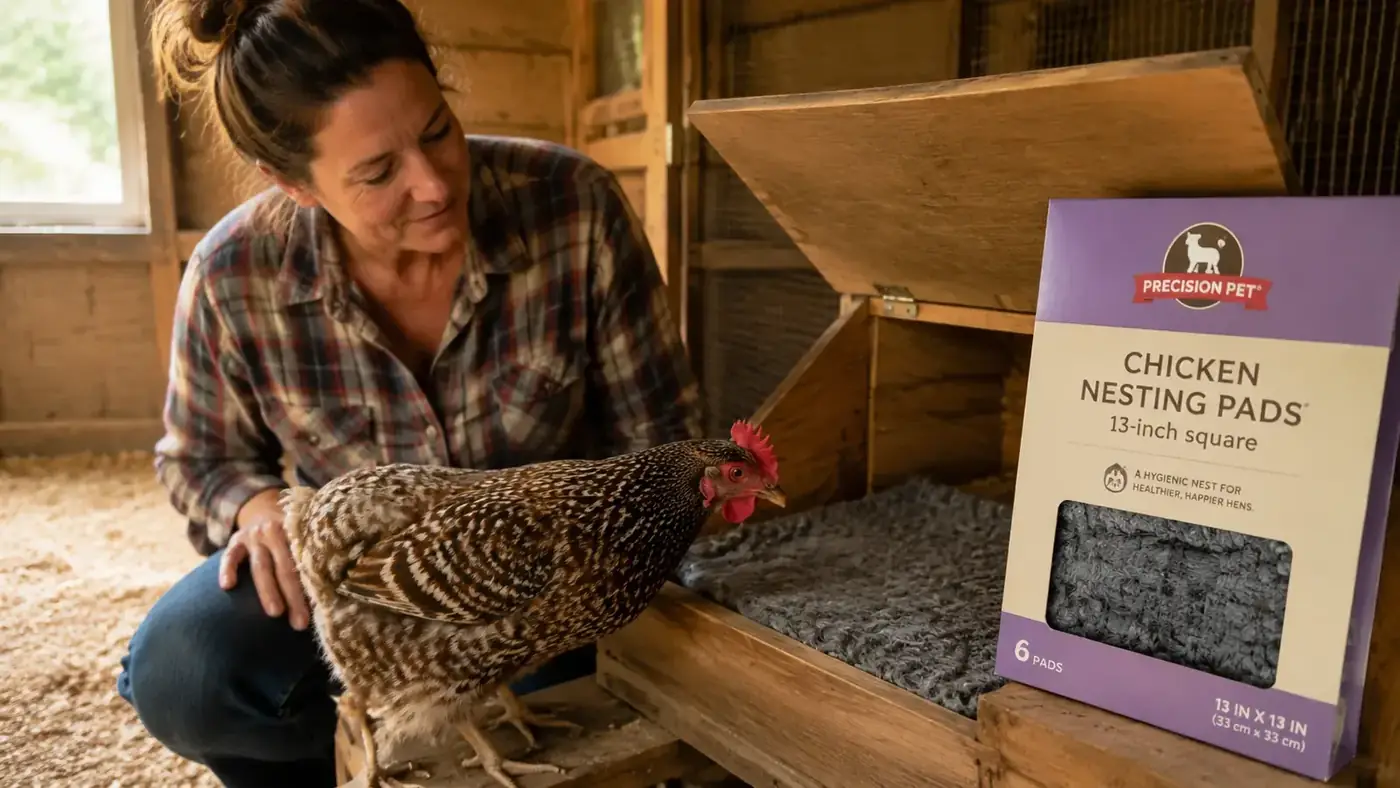
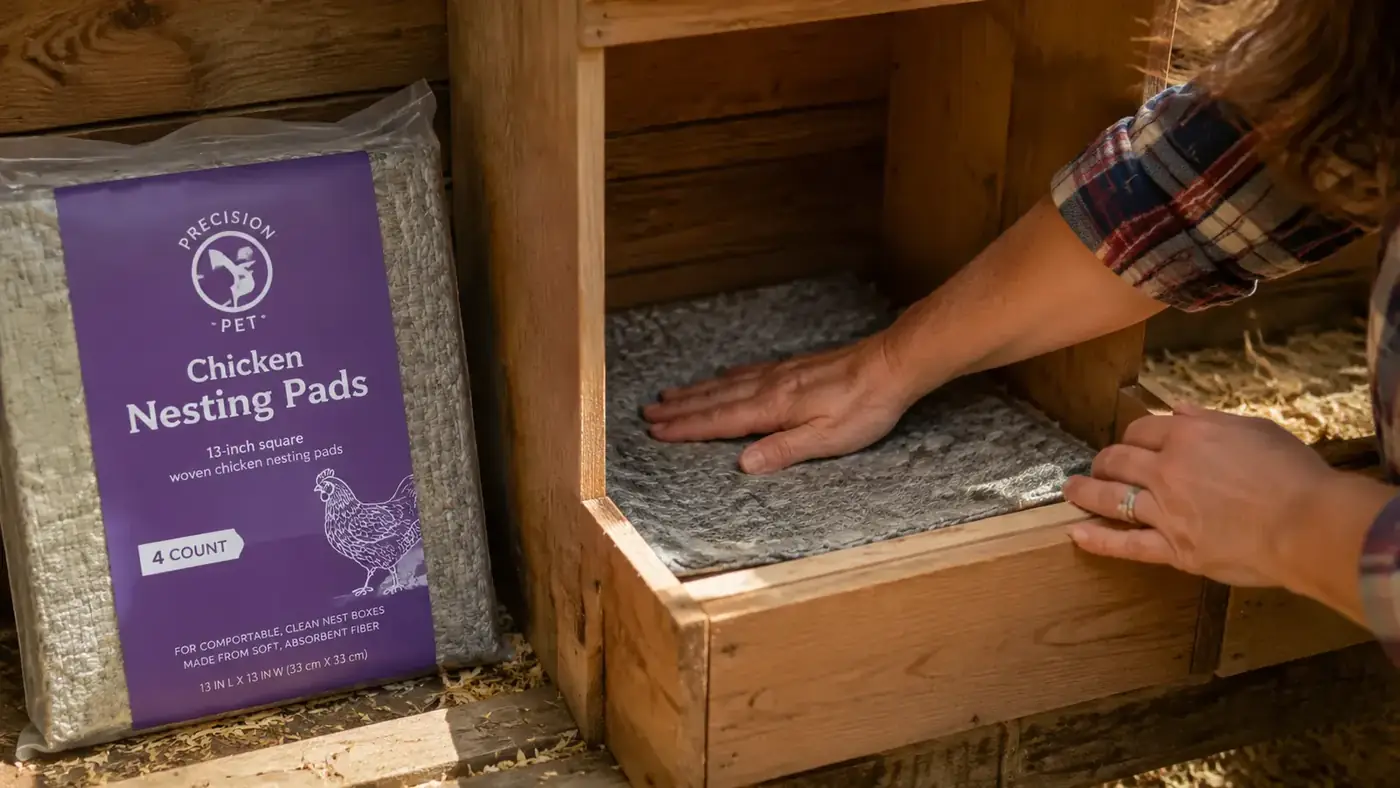
I came across the Precision Pet Nesting Pads while I was ordering other supplies. They're 13x13 inch pressed fiber pads, sized to fit standard nest boxes. The listing had over 5,800 reviews and a 4.6-star average, which for a nesting box product is pretty remarkable. Most of the reviews mentioned the same thing: cleaner eggs and hens that actually seemed to prefer the boxes. I ordered a pack for a few dollars a pad and figured I had nothing to lose.
If your hens are laying on the floor, different nest box bedding might be the fix you haven't tried yet
The Precision Pet Nesting Pads fit standard 13x13 boxes, have a distinct texture hens seem to prefer over loose shavings, and keep eggs cleaner by eliminating the shifting bedding problem. Check the current price on Amazon.
Amazon Check Today's Price on Amazon →I pulled the pine shavings out of the two lower boxes, pressed a pad flat into each one, and stood back. The pads have a different texture than shavings. They're a dense, slightly scratchy fiber mat, more like a doormat than a bed. I wasn't sure if that would appeal to a hen or put her off. I left the shavings on the coop floor as they were, so the only change was what was inside the boxes.
The next morning I found Biscuit in the padded box doing her thing. Normal. She'd used the boxes before. What I didn't expect was to come back two hours later and find Clover walking out of the same box. She had used it. There was a clean, uncracked egg sitting right in the center of the pad, which has a slight bowl shape that kept it from rolling to the edge.
I don't want to oversell this. One good day doesn't mean a solved problem. So I kept watching. Day two: one egg in Clover's old corner, one in the box. Day three: both in the box. By day five she was using the box consistently and the corner had been empty for two mornings running. It has stayed empty since.
The secondary benefit I hadn't anticipated was how much easier cleanup got. Pine shavings shift around and get poopy and damp. You're scooping them out and replacing them every week or so if you're being diligent, and the eggs still come out with bits of shaving stuck to them. The pads don't shift. They stay flat, and because there's no loose material moving around, the eggs sit clean. I'm wiping maybe one egg a week now versus wiping almost every single egg before.
The pads do need replacing eventually. I get about six to eight weeks out of each one before they start breaking down in a way that makes me want to swap them. At the price point, that works out to maybe a few dollars a month per box, which I'm fine with. Some keepers flip them and get more life out of both sides. I haven't tried that yet but I probably should.
What I'd Tell You If We Were Sitting at My Kitchen Table
If you've got a hen laying on the floor and you've already tried the fake egg trick, the roost-height adjustment, the darkened box, and she's still picking the floor, take a hard look at what's actually in your nest boxes. If your boxes feel the same as your floor, she has no real reason to choose one over the other. A pad gives the box a distinct look, a distinct texture, and a shape that cups the egg so it doesn't roll. Sometimes that's the difference.
The Precision Pet pads aren't magic. Clover still took a couple of days to fully commit. But they gave her a reason to prefer the box, and that turned out to be the thing I'd been missing for six weeks of floor eggs. Marigold still occasionally lays in the box and then scratches the pad into a little nest pile, which defeats the point, but even she doesn't go to the floor. At this point I'll call that a win.
If your nest boxes feel the same as your coop floor, your hens notice that, even if you don't
The Precision Pet Nesting Pads are a low-cost fix that gives the nest box a distinct texture, keeps eggs cleaner, and cuts down on weekly bedding changes. If floor eggs are a daily frustration, this is worth trying before you redesign your whole coop setup.
Amazon Check Today's Price on Amazon →