
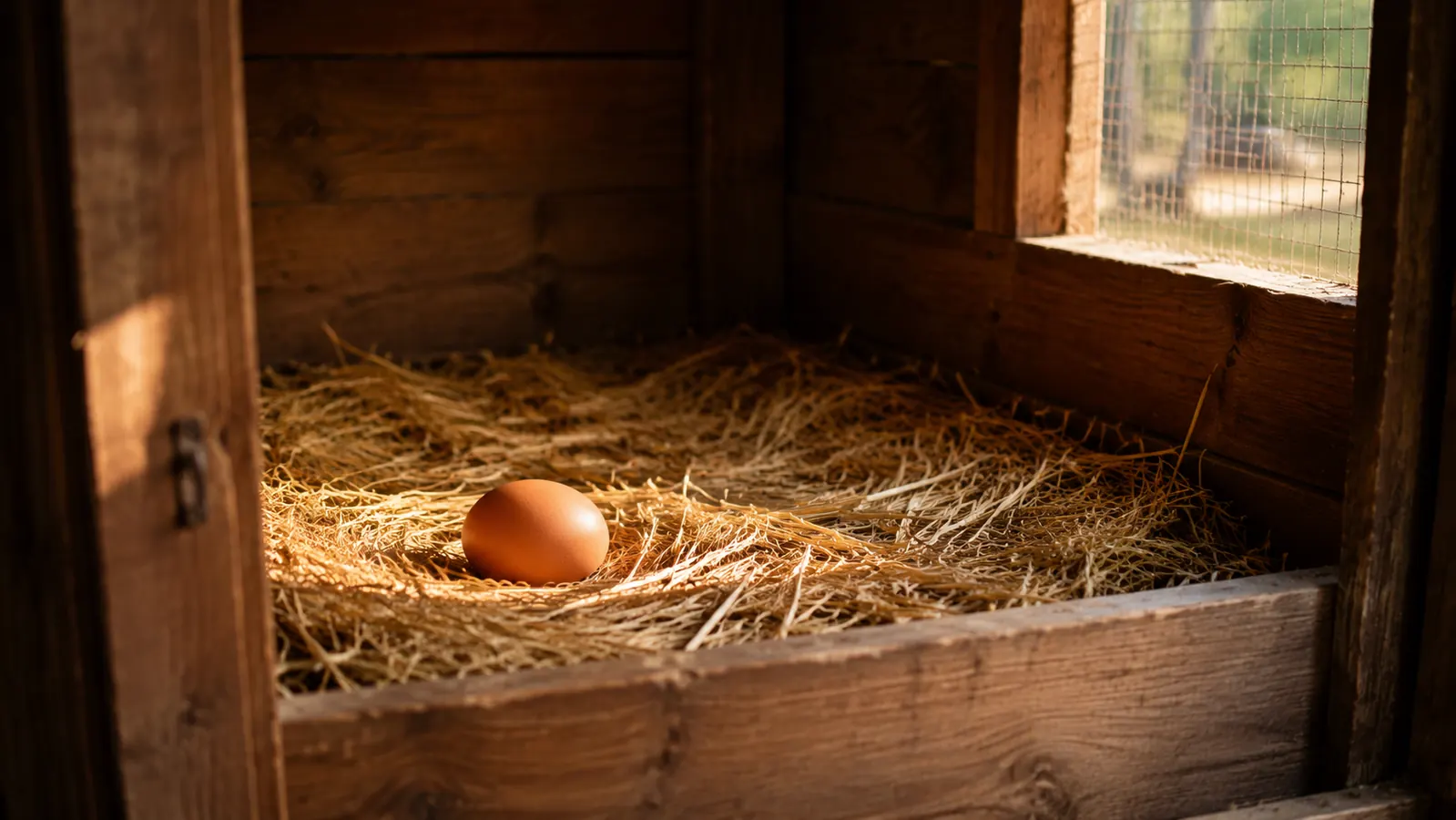
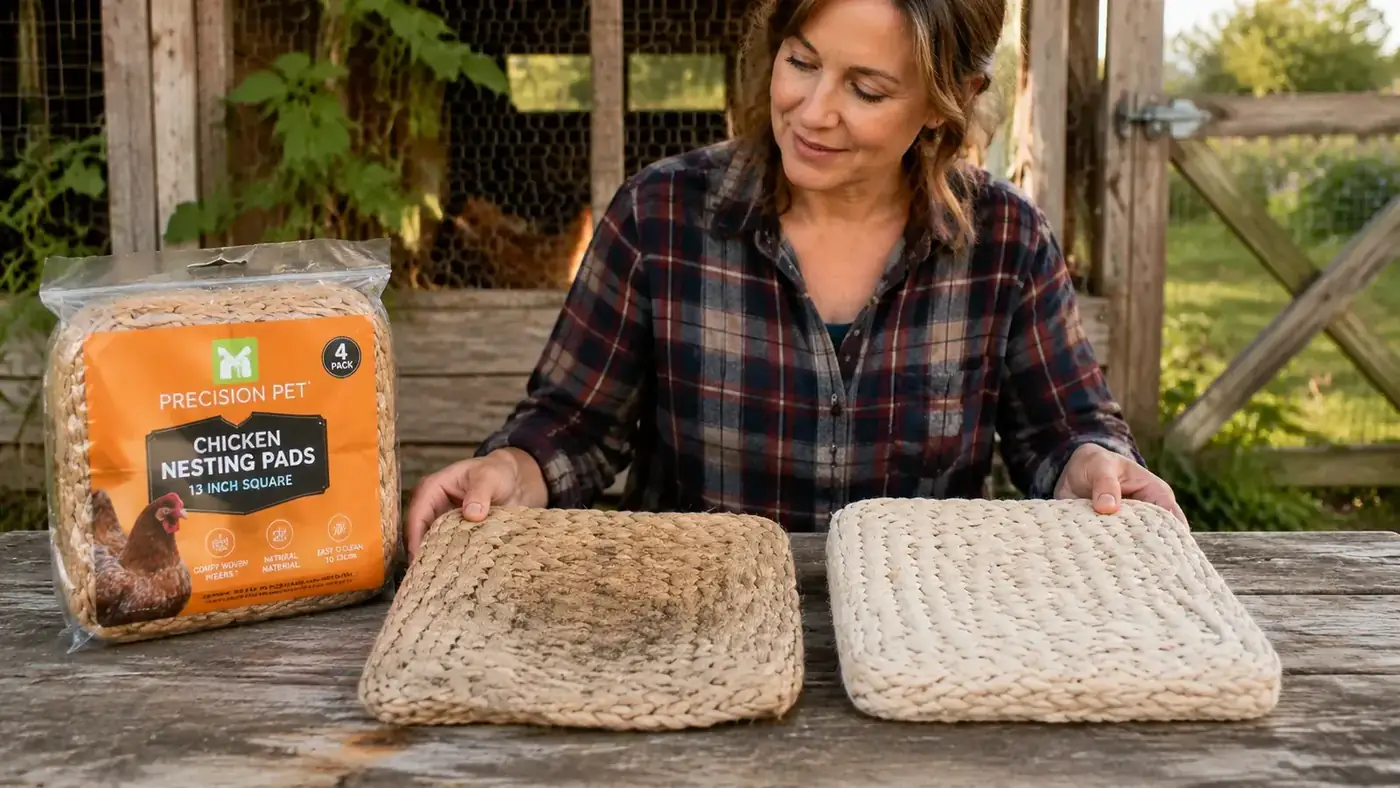
Last October I got tired of scooping pine shavings out of the nesting boxes every single week. My seven hens, Dolly, Biscuit, Marigold, and the four Black Australorps I call the Dark Squad, had a habit of scratching the shavings into a pile on one side and laying their eggs directly on bare wood. Eggs were coming in with dried manure smeared across them three mornings a week. I knew the problem was the bedding, not the hens. So I ordered two packs of Precision Pet Chicken Nesting Pads by Petmate, the 13x13 size, and pulled the shavings out completely. That was about six months ago. I have kept loose notes since then, and here is what I found.
Fair warning up front: I went in skeptical. A pressed-straw mat for under $25 felt like a solution somebody invented just to sell chicken keepers something. Six months later I have a more complicated opinion, which is basically that they work really well for about ten weeks, and then you need a plan for what comes next.
The Quick Verdict
Precision Pet nesting pads cut my dirty-egg rate by more than half, held up well through one broody stretch, and made weekly coop checks genuinely faster. The lifespan is shorter than the listing implies, but at this price point that is manageable.
Amazon Check Today's Price →If dirty eggs and weekly shavings-scooping are wearing you out, these pads are worth a try.
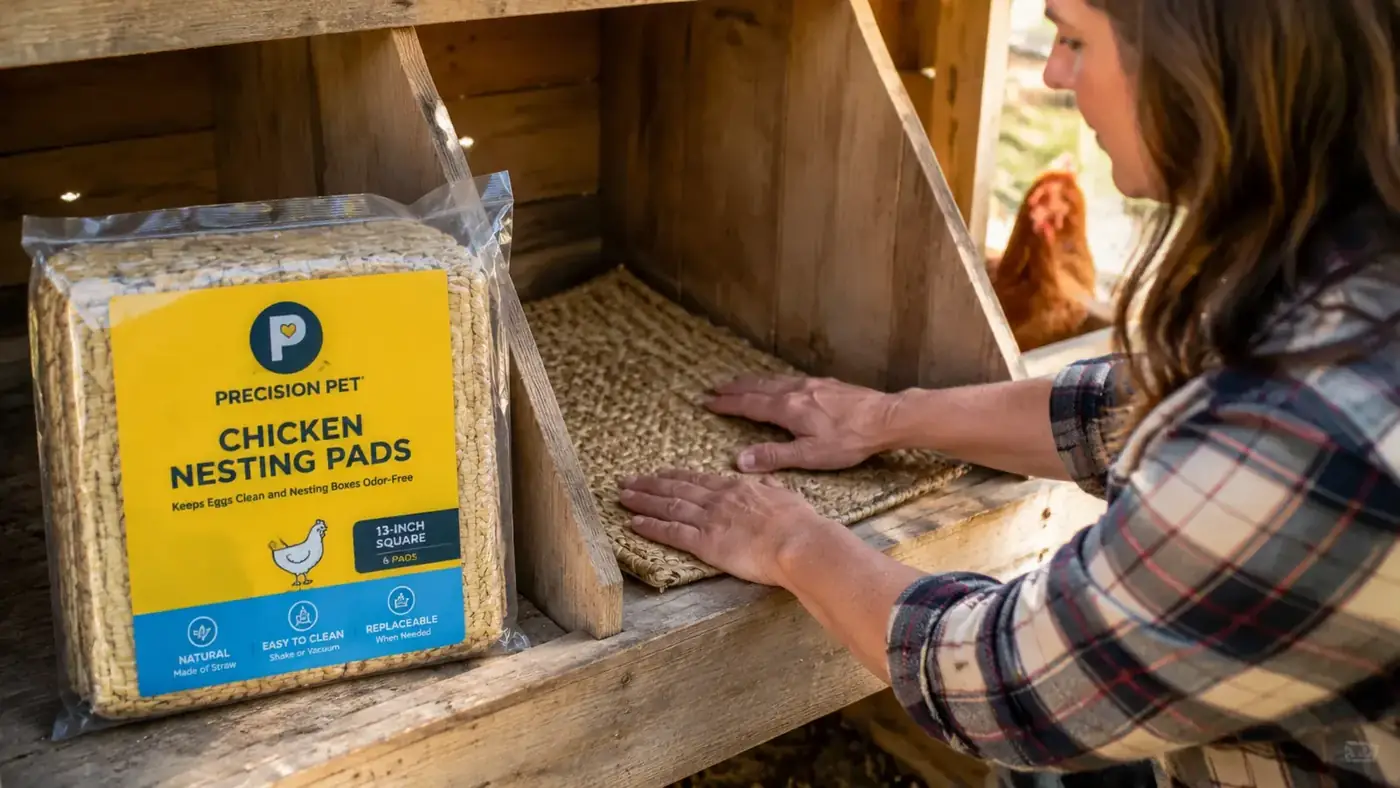
Precision Pet Nesting Pads by Petmate fit standard 13x13 nesting boxes. Rated 4.6 stars across nearly 6,000 reviews. Sold in multi-packs so you can rotate and replace without scrambling.
Amazon Check Today's Price on Amazon →How I've Used Them
I have four nesting boxes in my main coop, a 6x8 shed conversion I built in 2022. The boxes are wooden, built-in, and measure right at 13 inches square, so the Precision Pet pads drop in with maybe a quarter inch of clearance on the sides. No trimming needed. I put one pad per box, flat on the floor of each, and nothing underneath. I did not add shavings on top, which some people do. I wanted to test the pads straight.
My routine is to check the boxes every morning when I open the coop, pull any eggs, and scan the pads for visible soiling. I do a full swap of soiled pads whenever they hit what I think of as the point of no return: visible dark staining that a quick wipe will not fix, significant flattening in the center from hen weight, or any real smell. I track this in a notes app. Over six months I replaced pads at roughly the eight-to-ten-week mark per box, though one box that gets double the traffic (Dolly and Biscuit both prefer the leftmost box and will not negotiate) needed a swap closer to seven weeks.
One thing I noticed immediately: my hens accepted the pads with zero fussing. I had read that some keepers have to leave old shavings on top during a transition period, but my girls just walked in, scratched at the pad once, seemed confused there was nothing to fling around, and settled in. By day three, nobody had any complaints. If you have been putting off the switch because you are worried about a standoff, I would not stress about it.
The Floor-Egg Problem and What the Pads Actually Fixed
Before the switch, I was averaging about two floor eggs per week. Not catastrophic, but annoying, and floor eggs are almost always dirtier than nest-laid eggs because the coop floor is where all the real business happens. My theory was that the hens were scratching the shavings thin, decided the nest was not cushy enough, and wandered off to lay in a corner. The pads changed that almost immediately.
In the first four weeks after switching, I found exactly one floor egg, and I am pretty sure that was Biscuit being dramatic about something else because she stopped after that. Weeks five through twelve: zero floor eggs. The pads hold their shape better than loose shavings do after scratching, so there is always a slightly cupped, soft surface waiting. That seems to be what the hens wanted all along.
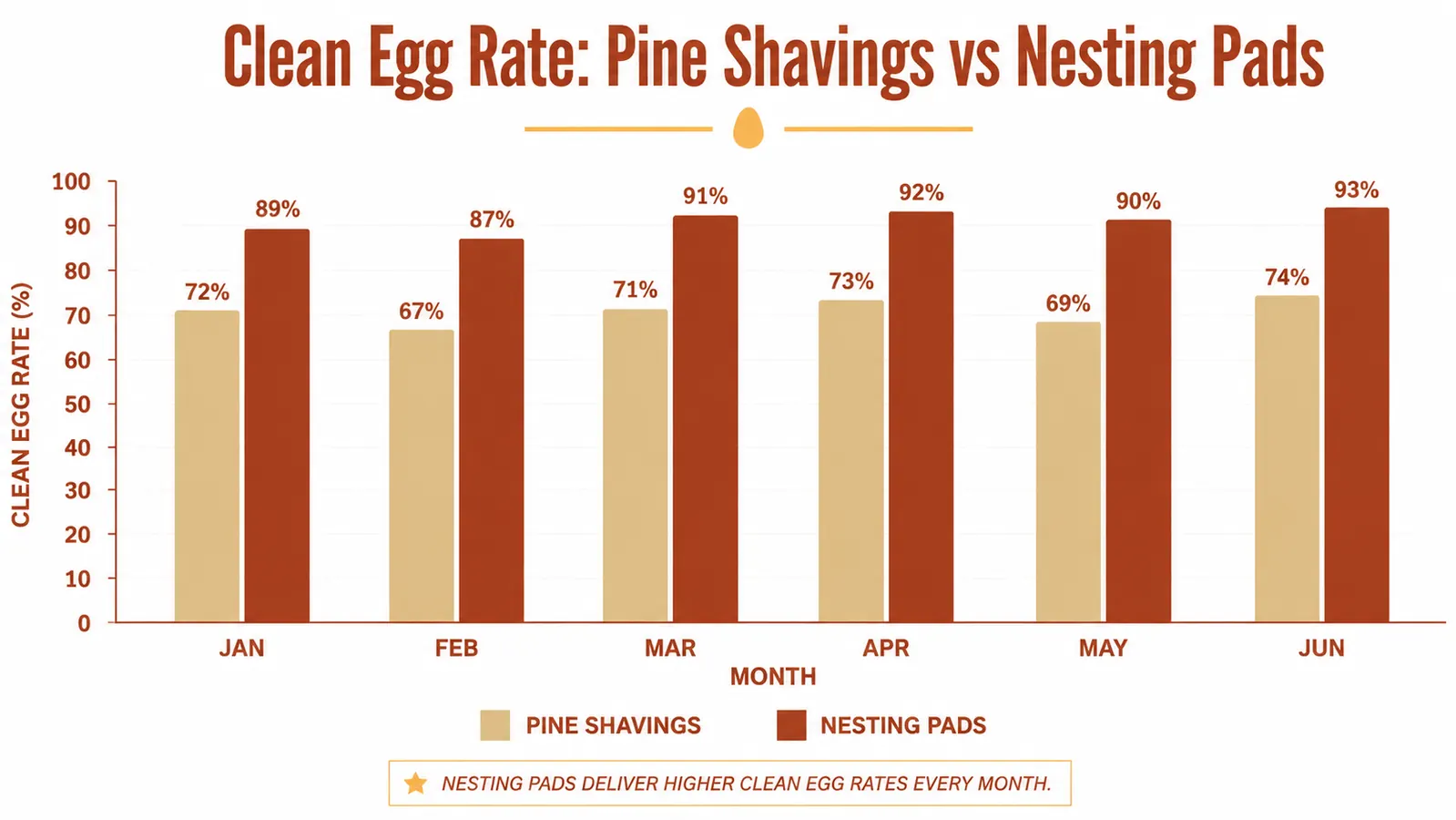
Egg cleanliness is harder to measure perfectly, but I tracked dirty-on-collection rates. With pine shavings, about 30 percent of my eggs had some visible debris when I pulled them from the boxes. With the pads, that dropped to around 12 percent over the first three months, and the soiling that did happen tended to be light and dry rather than the caked-on mess I was getting before. My egg washing routine went from a daily chore to a twice-a-week light wipe.
What Happened When Marigold Went Broody
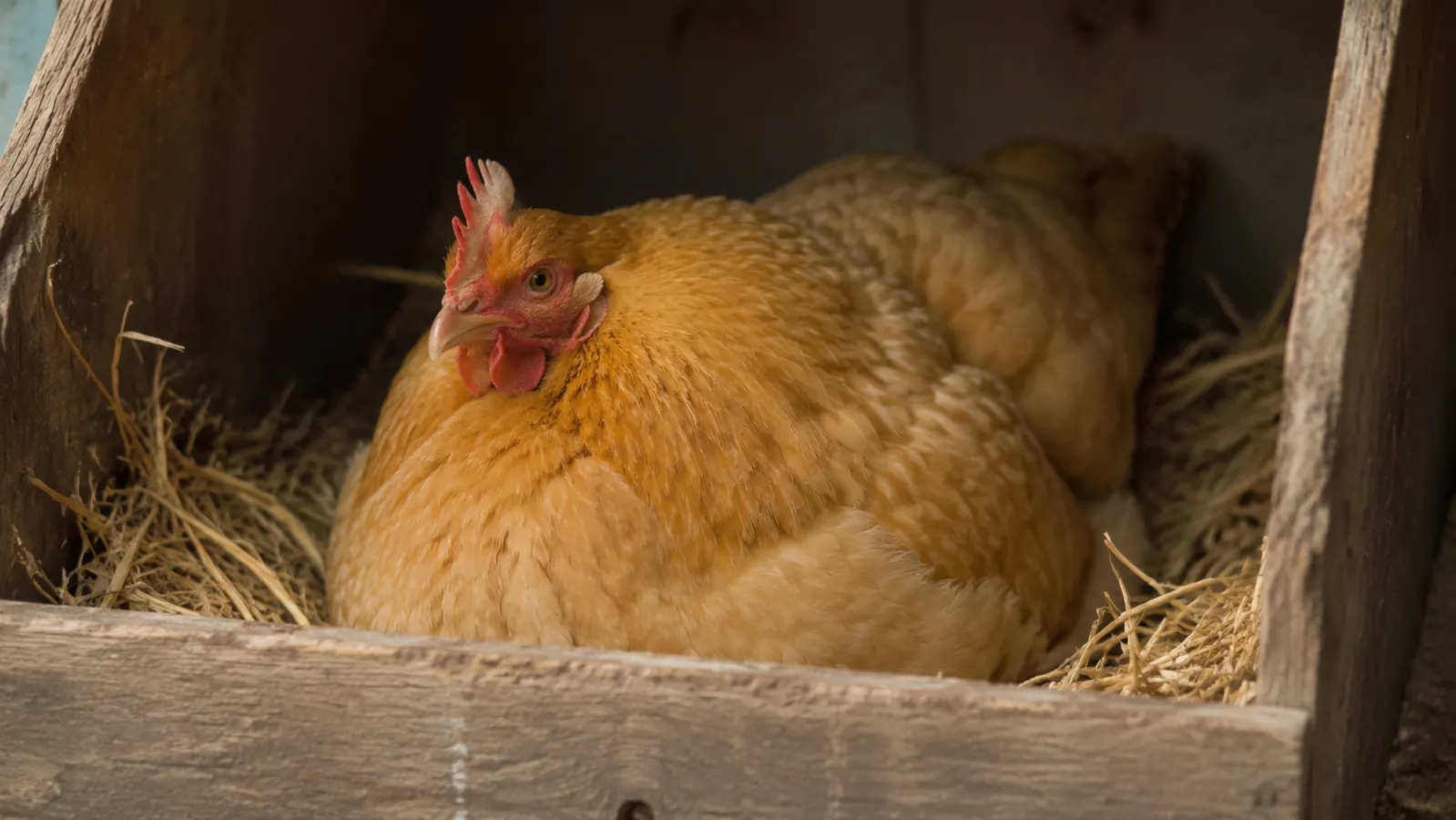
About eight weeks after I switched to the pads, Marigold, my three-year-old Buff Orpington, decided she was done laying and was going to hatch every egg on earth instead. She went broody hard. For 23 days she parked herself in the far-right nesting box and refused to leave except for a sulky ten-minute food-and-water break each afternoon.
I was curious how the pad would hold up under that kind of extended, concentrated use. A broody hen does not get up and rearrange things. She just sits, rocks slightly, and radiates heat for three weeks straight. The pad under Marigold compressed more than I expected by week two, but it did not fall apart. There was significant center flattening and some discoloration from the heat and moisture, but the edges held their shape and the pad did not bunch or shred. I replaced it the day after she finally broke, and the box was back to normal within an hour.
The comparison to pine shavings here is significant. When I had a broody hen on shavings, I would find the box basically stripped by the end, with a bare-wood depression in the center and a ring of shavings pushed to the edges. The pad gave Marigold a consistent surface for the full three weeks. Whether that matters to the hen I cannot say for certain, but she seemed settled and comfortable, and I did not have to intervene to add bedding mid-broody, which I used to do every five days.
A broody hen on pine shavings strips the box bare in two weeks. A broody hen on these pads stays put on a consistent surface for the full stretch, no mid-broody bedding top-ups required.
Precision Pet Pads vs Pine Shavings Underneath: The Real Tradeoff
I want to be direct about this because it is the question I had before I switched, and the online reviews are weirdly vague about it. Pine shavings are cheaper per use if you buy in bulk. A 4-cubic-foot bag of pine shavings runs about $8 at my local farm store, and I can top off four nesting boxes twice a month for about six months before I burn through a bag. Running the math, pine shavings cost me roughly $16 a year for nesting boxes only. The Precision Pet pads, at current prices and my replacement rate, cost me closer to $60 a year for four boxes.
So the pads cost more. But the time math is different. With shavings, I was spending about 15 minutes a week on nesting box maintenance: topping off, raking out wet spots, dumping and replacing the worst boxes. With pads, I spend maybe four minutes a week on nesting boxes total. I check them, pull eggs, and move on. The monthly full-swap takes about eight minutes for all four boxes. Over six months that comes out to roughly four to five hours of coop time I got back. Whether that is worth $44 extra per year is completely personal, but for me it is not a close call.
The other thing shavings do that pads do not is act as a mite and lice habitat. I have not had a serious mite problem in my coop, but pine shavings are notoriously good at hiding early-stage mite populations in a way that pressed-straw pads simply are not. When I replace a pad, I can see the entire surface and the box floor clearly. There is nowhere for anything to hide. That alone has made my quarterly pest checks faster and more confident.
How to Clean Them (And When to Just Replace)
The pads are listed as washable, and technically that is true. I have rinsed two of them with the garden hose and let them dry in the sun, and they came back looking decent. But the honest answer is that rinsing adds a full day of drying time, and a wet pad put back in the box too soon is worse than a worn dry one. I have largely given up on washing them and just swap them out. At roughly $3 to $4 per pad when you buy in a multi-pack, I am not losing sleep over it.
What I do instead is a quick shake over the compost bin when I pull a pad. Most of the dry debris falls right off, and the pad composts along with it. My compost pile has loved this, actually. The pressed-straw breaks down fast and adds good carbon material. Nothing goes to waste.
What Surprised Me After Six Months
Two things I did not expect. First, how much less noise I hear in the morning. This sounds strange, but when hens settle into a nesting box lined with loose shavings, there is a lot of scratching and rearranging and low-grade fussing. With the pads, the hens walk in, do one or two paw-adjustments, and settle. My coop is quieter at peak laying hours. I have no scientific explanation for this. I just noticed it.
Second, the smell. Pine shavings have that fresh-wood smell when new, which most chicken keepers love. It masks coop odor beautifully for the first week. But by week three, wet pine shavings in a nesting box have a distinct sour smell that builds if you miss a cleaning day. The pads do not have that. They do not smell like pine, but they also do not go sour the way wet shavings do. The nesting area smells more neutral overall, which I prefer.
What did not surprise me: the hens occasionally try to pull at the edges of the pad and rearrange it. The Dark Squad in particular are determined nest-remodelers and two of them will grab a corner and drag the pad sideways if they can. This is mildly annoying and I sometimes straighten the pads on my morning check. It is not a deal-breaker, but if you have scratch-happy hens you should know it happens.
What I Liked
- Cut dirty-egg rate from about 30 percent down to 12 percent in the first three months
- Eliminated floor eggs almost completely within the first month
- Held up through a 23-day broody stretch without falling apart
- Fit my 13-inch boxes perfectly with no trimming
- Hens accepted them immediately, no transition drama
- Nesting box maintenance dropped from 15 minutes a week to about 4
- Easier to spot pest activity at swap time, no shavings to dig through
- Composts cleanly and quickly
Where It Falls Short
- Shorter usable lifespan than the listing suggests, plan on 8-10 weeks per box under normal use
- More expensive per year than pine shavings if you buy bulk shavings
- Scratch-happy hens will drag and shift the pad, needs occasional straightening
- Washing and re-drying is a day-long process, not the quick rinse it sounds like
- Do not have the pleasant pine scent that fresh shavings provide
Who This Is For
If you are collecting dirty eggs more than once a week, losing track of floor eggs, or spending real weekend time on nesting box cleanup, these pads will probably make your coop life meaningfully easier. They are also the right call if you have had pest pressure in the past and want a bedding option that is harder to colonize. Small flocks of three to eight hens are the sweet spot. The more boxes you have, the more you spend annually on replacements, but even at ten boxes the math still makes sense against the time savings.
Who Should Skip It
If you are keeping a large flock of 20 or more birds with a lot of box traffic, the replacement cost climbs quickly and bulk pine shavings become genuinely more economical. If you have a broody hen management system that involves heavy nesting box intervention anyway, you may not see much difference in the broody experience. And if your hens are extreme scratchers who turn a pristine box into chaos in under an hour, know that the pads will shift around and you will be straightening them constantly. Some keepers put a small cleat at the front lip of the box to keep the pad from migrating forward, which helps, but it is extra work.
Six months in, I would buy these again. If your nesting boxes are eating your Saturday mornings, this is the cleanest fix I have found.
Precision Pet Nesting Pads by Petmate, 13x13 inch, rated 4.6 stars from nearly 6,000 chicken keepers. Available in multi-packs. Check today's price and see if they are in stock.
Amazon Check Today's Price on Amazon →