
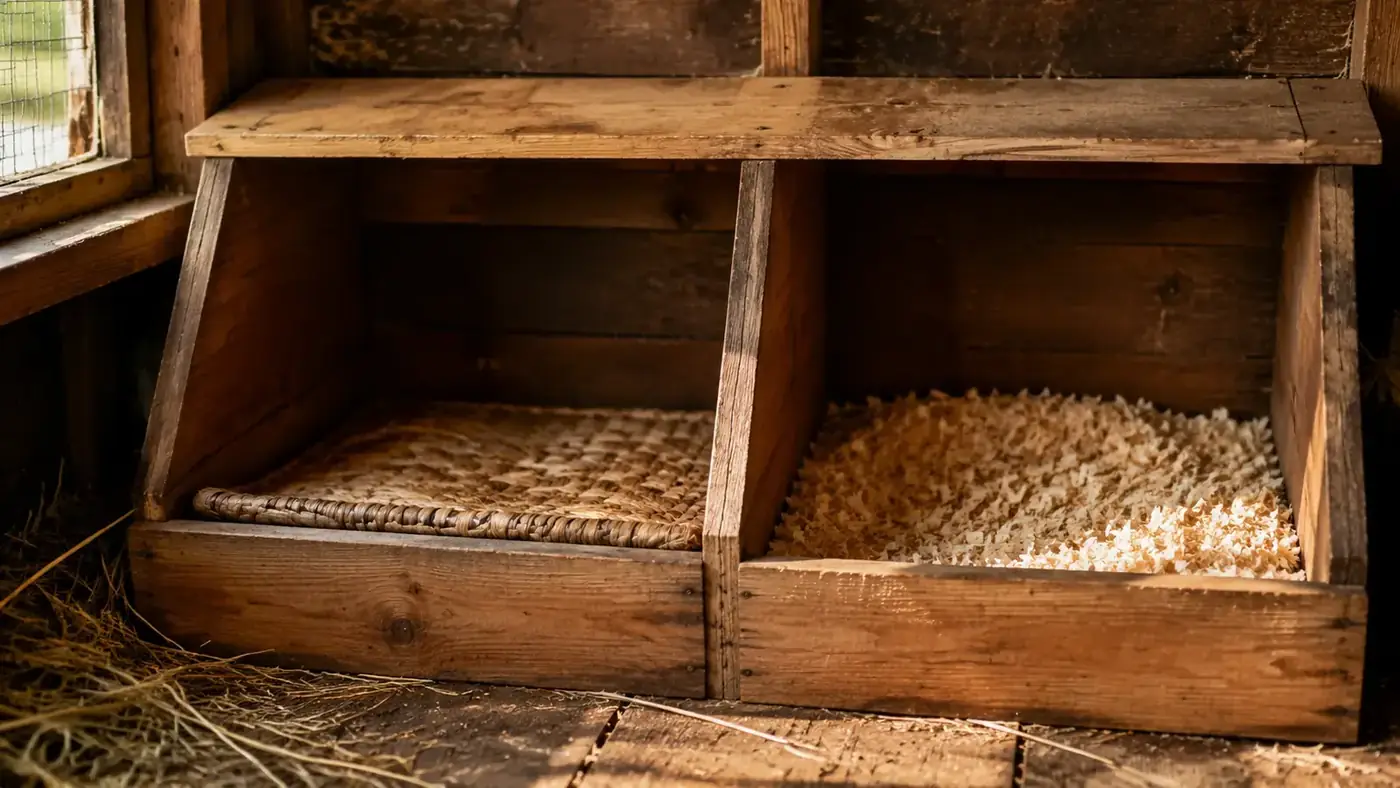
If you've kept chickens for more than a season, you already know the pine shavings routine. You bag them, haul them out to the run, rake the boxes, refill them, and then two days later find half the shavings kicked onto the coop floor and a hen sitting directly on bare wood. I ran pine shavings in all six of my nesting boxes for almost three years before I got tired enough of the mess to try something different. What I switched to were the Precision Pet nesting pads, and I've had enough time with both now to give you an honest side-by-side.
Short answer: nesting pads win on egg cleanliness, dust, and maintenance time. Pine shavings win on upfront cost. Which one makes more sense for your setup depends on how many boxes you run, whether you have a dust problem, and whether you've got a broody hen who treats your nesting material like a personal enemy.
| Factor | Precision Pet Nesting Pads | Pine Shavings |
|---|---|---|
| Upfront cost (6 boxes) | ~$23 for a pack of 10 | ~$8-12 per bag |
| Annual replacement cost | ~$55 (replace every 4-6 weeks) | ~$35-50 (replace weekly or bi-weekly |
| Egg cleanliness | Significantly cleaner, less poop contact | Variable, shavings stick to wet eggs |
| Dust generation | Very low | High, fine dust coats everything |
| Broody hen behavior | Stays in place, harder to kick out | Gets kicked out constantly |
| Mite harborage | Low, no deep material for mites to hide in | Higher risk, mites hide in shavings |
| Smell control | Decent, absorbs moisture | Good when fresh, sours quickly when wet |
| Setup time | 30 seconds per box | 2-3 minutes per box with raking |
| Works when wet/soiled | Needs replacement when saturated | Needs replacement when soiled |
Where Nesting Pads Win
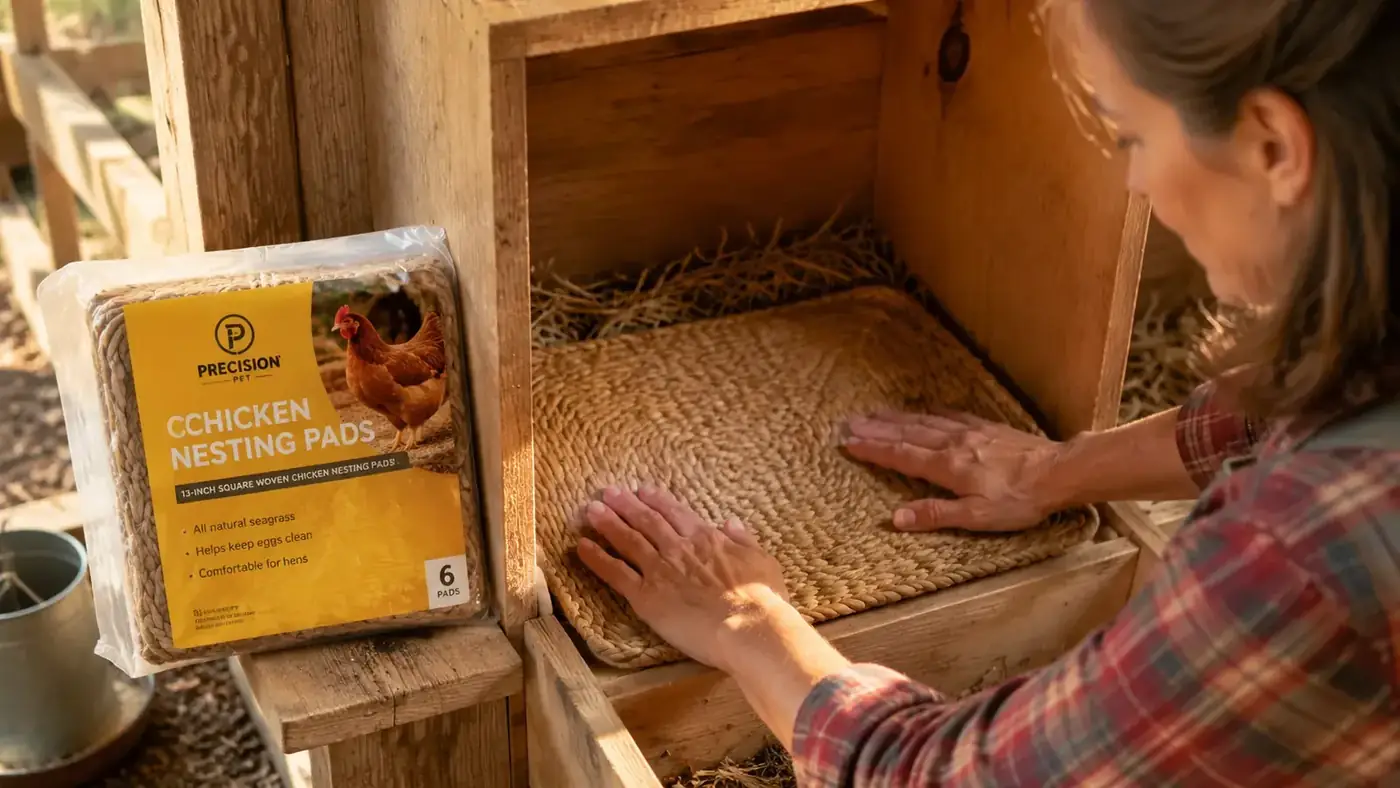
The single biggest difference I noticed after switching four of my six boxes to nesting pads was how clean the eggs came out. With shavings, you constantly get eggs with a little streak of dried poop on one side because shavings shift and pile up and the egg ends up resting against material that was damp and then dried. Nesting pads sit flat. The egg rolls slightly into the center of the pad, the surface is consistent, and there's nothing loose to get pressed against the shell while the hen is sitting. Over a full week of collecting, I was washing maybe one egg out of a dozen instead of three or four.
The dust situation is the other major win. Pine shavings, even the premium kiln-dried bags, release a constant fine dust that coats your waterers, your feeders, the walls, and your lungs if you're in the coop every morning. I run a small mixed flock with eight hens and I was wiping down the waterer nipples twice a week just from shavings dust. Since switching four boxes over, the dust load inside the coop dropped noticeably. The remaining two shavings boxes are still the main dust source, which tells me exactly what was causing it.
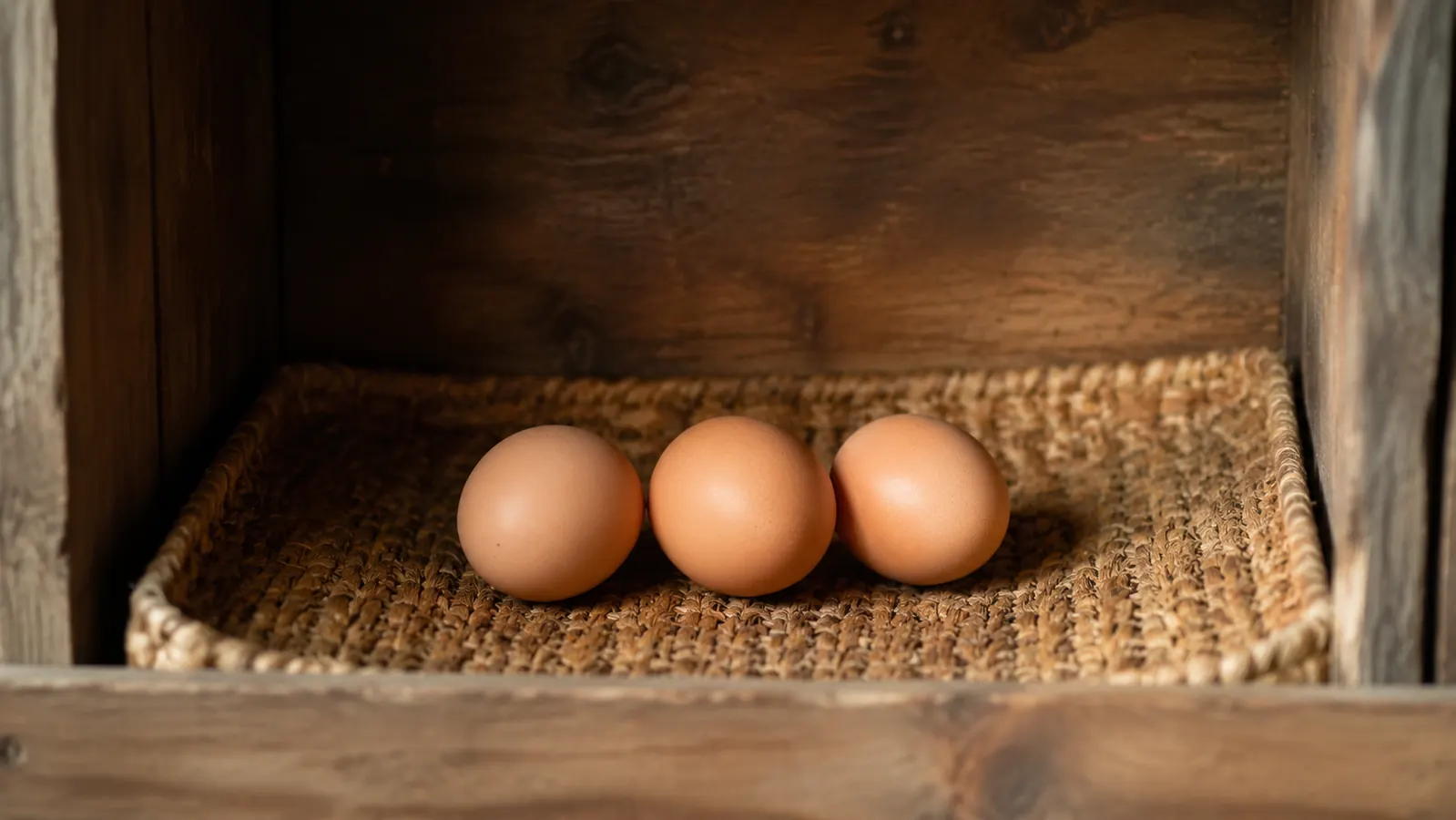
The egg was clean, sitting flat in the center of the pad like it was placed there on purpose. No poop streak, no shavings stuck to it. I actually laughed out loud in the coop.
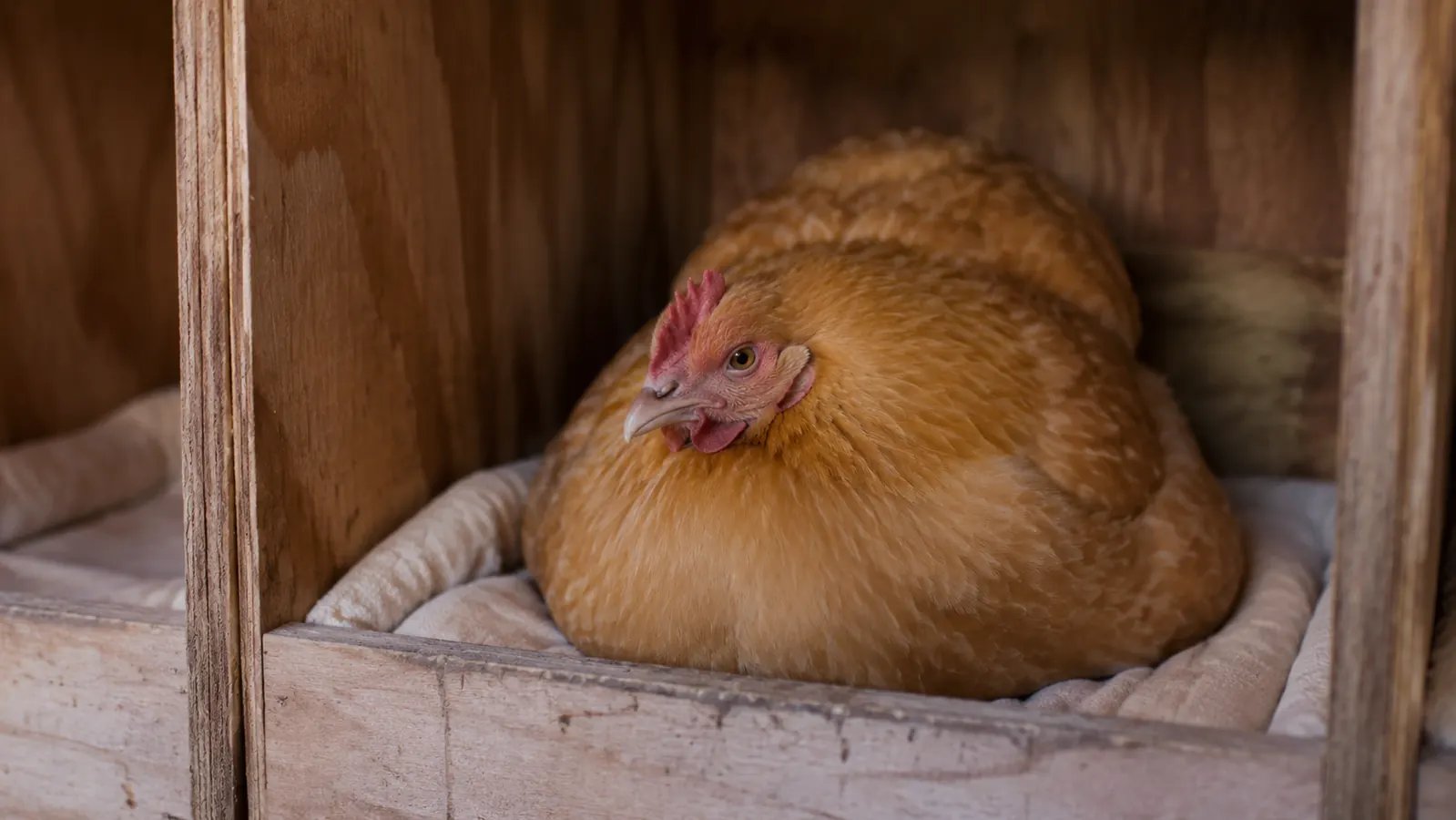
Broody hens are where nesting pads truly earn their keep. If you've ever had a hen go broody in a shavings box, you know what the box looks like after she's been in there for three days. She digs down through everything, rearranges, scratches, and you end up with a pile of shavings in one corner and a hen sitting on bare wood. The nesting pad has nowhere to go. She can scratch it and adjust it but it doesn't scatter. It stays under her. My last broody, a Black Australorp I call Margaret who goes broody every single spring with no sense of timing whatsoever, sat a full three weeks on a nesting pad and it barely moved.
Where Pine Shavings Win
Cost is the honest answer here. A bag of pine shavings from the feed store runs $8 to $12 for a large compressed bale that fills every box multiple times. The Precision Pet pads are priced per pack and you go through them at a rate of roughly one pad per box every four to six weeks depending on how much traffic your boxes see. Over a full year with six boxes, shavings come out a bit cheaper, though the gap narrows once you factor in the time you spend cleaning and replacing them more frequently.
Shavings also have a softer, deeper cushion that some hens genuinely prefer when they're not broody. A newer layer who's still a little nervous about the process will sometimes choose the deeper shavings box over the firmer pad, at least until she gets used to the pad. I kept my two heaviest-trafficked boxes on shavings for the first month after switching just to make sure my more anxious hens had somewhere familiar while they adjusted. It took about two weeks before the pad boxes were getting equal traffic.
Ready to stop washing poop-streaked eggs every morning?
The Precision Pet nesting pads have over 5,800 reviews and a 4.6-star rating on Amazon. A single pack covers most backyard flocks for months.
Amazon Check Today's Price on Amazon →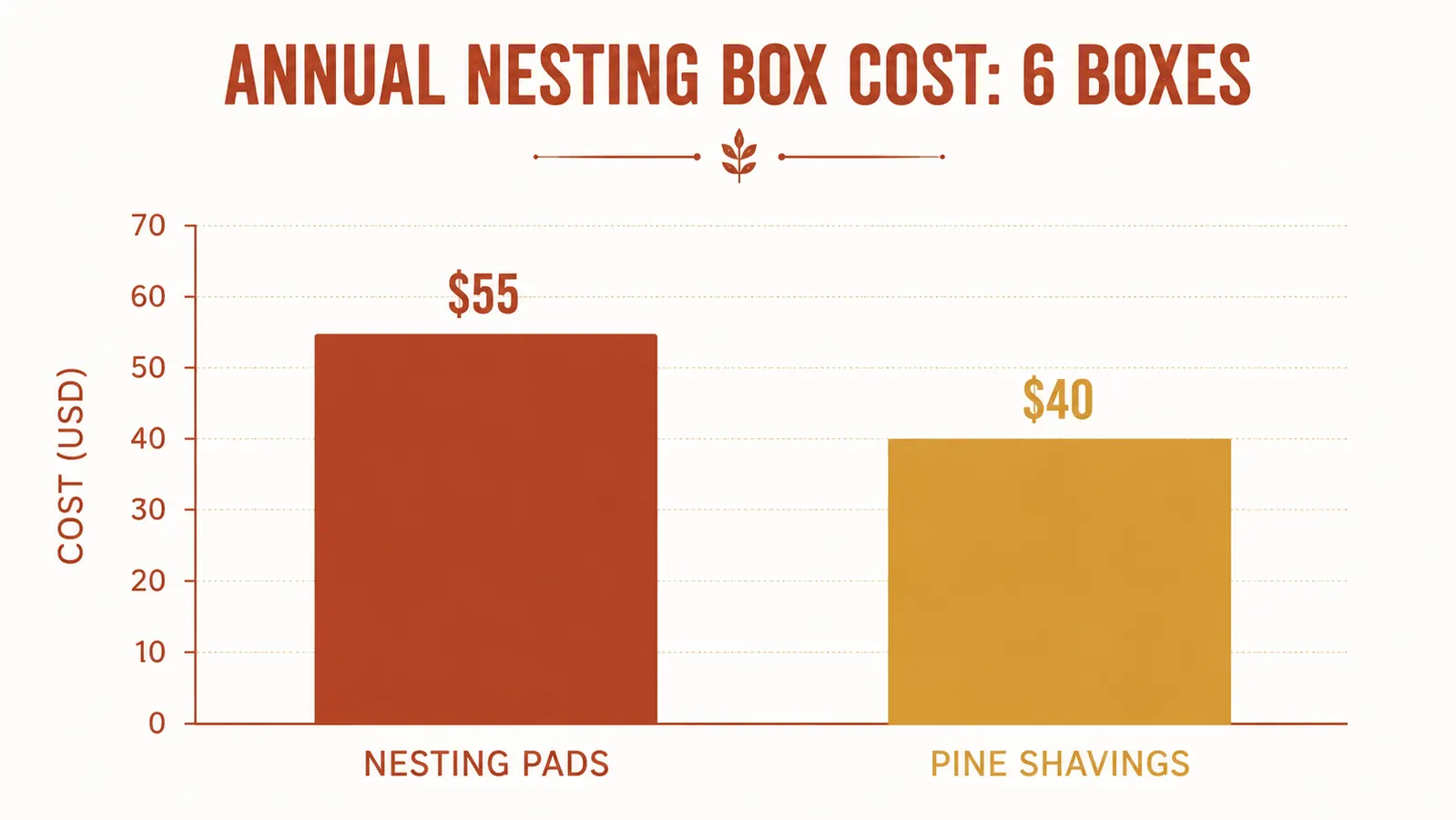
The Real Cost Over a Full Year
I ran the numbers on six nesting boxes over twelve months. With pine shavings, I replaced each box every seven to ten days, using roughly half a bag per full refresh across all six boxes. At $10 a bag, that's about $36 to $50 per year in shavings alone, plus the time cost of raking, bagging, and hauling out dirty material. With nesting pads, each pad lasts four to six weeks before it needs replacing due to saturation or heavy soiling. At that rate, you're going through about eight to nine pads per box per year. A ten-pack of the Precision Pet pads runs around $23, so for six boxes you're looking at roughly $55 to $70 annually.
So shavings are still cheaper in raw dollars, by about $15 to $25 per year on a six-box setup. But the swap takes thirty seconds per box versus three to five minutes of raking and refilling with shavings. If your time has any value at all, and if cleaner eggs mean fewer eggs you have to wash before you can give them away or sell them, the math starts to tilt toward pads. I'm not going to pretend the savings are dramatic, but I'm also not going back to shavings in any box that sees a broody hen.
What About Smell?
Smell is the category where both options perform about the same, with a slight edge to shavings when they're fresh. A freshly filled shavings box smells like a lumber yard in the best possible way. Nesting pads don't have that fresh-wood smell. They're neutral. But shavings go sour faster than pads once they get wet from a hen who's drinking and then immediately going to the box, which happens constantly. A wet shaving pile starts to smell ammonia-ish within forty-eight hours in warm weather. A damp pad is unpleasant but doesn't generate the same ammonia punch. I replace pads on a schedule rather than reacting to smell, which is a more predictable maintenance pattern.
Mites: The Reason I'd Never Go Back to Full Shavings
Last summer I had a red mite problem. It started in one box, which happened to be a deep shavings box, and spread to two more before I caught it. Mites hide in the base of deep shavings, in the corners, in the cracks of the wood under the shavings, and they come out at night to feed on roosting hens. Nesting pads don't give them the same real estate. There's no deep material layer to burrow into. When I treat for mites now, I pull the pad, treat the box wood, and drop a fresh pad back in. I can visually inspect the pad surface in about five seconds. With deep shavings, mites can be in there for weeks before you find them on a hen.
I'm not saying nesting pads prevent mites, because nothing prevents them if your flock brings them in. But the surface is easier to inspect, easier to replace, and doesn't provide the same warm, dark harborage. After my mite experience last summer, I switched my last two shavings boxes to pads and I haven't looked back.
Who Should Use Nesting Pads
Nesting pads are the better choice if you've got a hen who goes broody regularly, if you sell or give away eggs and care about them arriving clean, if you've ever had a mite problem you traced back to the nesting boxes, or if you're just tired of the fine dust that comes with shavings. They're also the better choice if your coop is small and you want to keep the air quality as clean as possible. The Precision Pet 13-by-13-inch pads fit most standard boxes snugly, they're easy to order on a subscription so you don't run out, and the replacement swap is genuinely fast.
Who Should Stick With Pine Shavings
If you're running a large flock with a lot of boxes and you already buy shavings in bulk at the feed store for $8 a bale, the economics are harder to argue with. Shavings also work fine for pullets who haven't established laying habits yet and don't have a strong preference either way. If egg cleanliness isn't a concern because you're keeping a strictly backyard flock and eating the eggs yourself, shavings are a perfectly reasonable choice. They've worked for backyard keepers for generations. I'm not here to tell you they're wrong. I'm just saying I personally switched and I'm glad I did.
If you've had mite trouble in the nesting boxes, this is the easiest swap you can make.
Precision Pet nesting pads are available in packs of 10 on Amazon. They fit 13-inch by 13-inch boxes and most standard backyard nesting box setups.
Amazon Check Today's Price on Amazon →